The machine was not the biggest problem

Today I was in Nieuwkoop at a couple's home who own a Sage Barista Express Impress. They had owned the machine for about ten months, and honestly, the basics were well in place. Fresh coffee from Little Roastery in Amersfoort, a WDT tool, puck screen, shot glass, knock box, and beautiful cups. They had already tried a lot, watched a lot, and learned a lot. Yet, one frustration kept recurring: the espresso lacked crema and body. Additionally, frothing milk was not yet successful to their hopes. During such a workshop, I don't just look at grind size or technique, but also at a simple question: what kind of coffee are you actually trying to get out of your espresso machine?

Single origin koffiebonen uit Ethiopië Costa Rica en Colombia tijdens barista-workshop over weinig crema en espressoblend keuze

Plenty of good stuff, but inconsistent espresso

This workshop was relatable for many home baristas. The equipment is good, the coffee is fresh, and the motivation is there. Yet, they still don't get a full-bodied, syrupy espresso.

See which tools help with espresso

Why single origin coffee can be more difficult for espresso

Espresso-extractie uit een Sage Barista Express Impress in een shotglas tijdens een workshop over crema body en koffiekeuze

Crema starts with your choice of coffee

Many people immediately look for the cause in grinding, tamping, or flow time. These are important components, but coffee beans also determine how easily you achieve body and crema.

View the bean selection module

Why an espresso blend often yields more crema and body
When I explained what an espresso blend does, it really clicked for them. A blend is usually not just any mixture. A good espresso blend is composed to give a fuller, rounder, and more stable result in an espresso machine.

That doesn't mean single origin is bad. Not at all. But single origin is often more sensitive. Especially if the coffee is lightly roasted. Then you get more pronounced flavors, but also more quickly an espresso that feels thinner, shows less crema, or is harder to balance. For a cappuccino, you often want a classic coffee base that stands up to the milk.

When I took my own fresh espresso blend and we started working with it, you immediately saw a difference. The espresso became more viscous, fuller, and smoother. Precisely that moment is often more important than ten individual tips. You suddenly see that the problem was not only in your actions, but also in the coffee you were trying to work with.

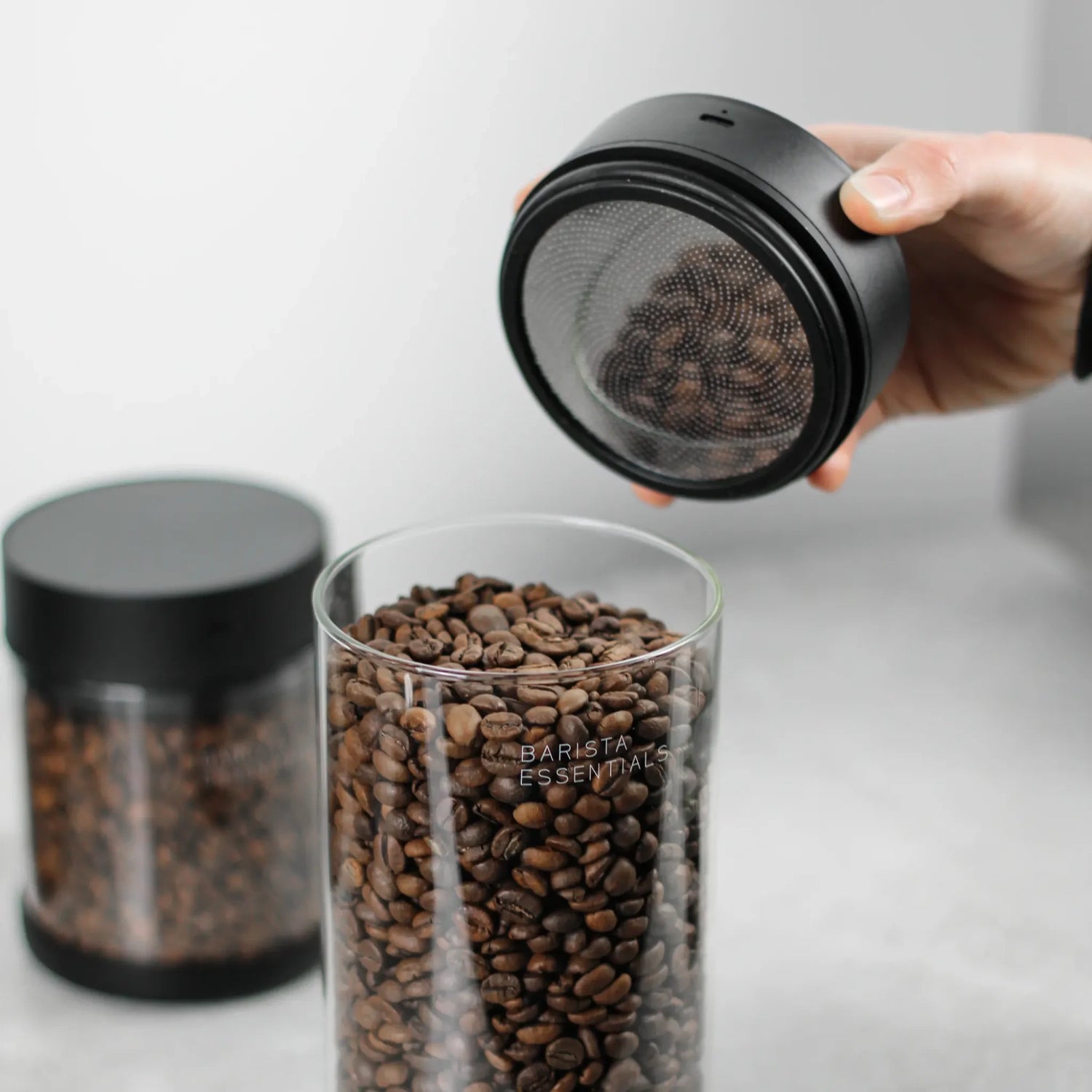
Open bewaarbus voor koffiebonen met vacuümdop – eenvoudig bijvullen en luchtdicht afsluiten

Light roasts demand more control

Much specialty coffee is lighter roasted. That results in beautiful flavors, but at home, it also demands more from your grinder, machine, and adjustments.

Learn what branding does to espresso

Why light roast single origin behaves differently in your espresso machine

With light roast, many original flavors of the coffee remain more recognizable. Think of fruit, flowers, freshness, or spiciness. This is interesting if you enjoy analyzing coffee, but in espresso, it can also become challenging. A lighter roast is often harder, more compact, and less easy to extract.

In practice, this means: you need to grind more precisely, adjust better, and more quickly accept that the espresso feels different from a classic, full espresso shot. With this Sage Barista Express Impress, we eventually ground the blend slightly coarser than with the lighter single origins. Not a huge jump, but enough to notice the difference in extraction and mouthfeel.

For many home baristas, this is a relief. You don't have to write off single origin, but you do need to know what you're trying to achieve with it. Do you mainly want to practice, make cappuccinos, and get more consistent results? Then a good espresso blend is often a smarter starting point.

Melk opschuimen met de stoompijp van een Sage Barista Express Impress tijdens een barista-workshop aan huis in Nieuwkoop

Frothing milk turned out to be simpler than I thought

In addition to our unique expertise in the field of circular economy, we are also experienced in the field of recycling of various materials and components, for example within our own waste sorting installation. For example, we separate and recycle materials such as paper, cardboard, plastics, metals and textiles.

View practical coffee checklists

Why milk frothing often goes wrong for home baristas

When frothing milk, I observed a few familiar things happening. The milk got too hot, too many large bubbles appeared, and the pitcher was often tilted too much. These aren't stupid mistakes. These are precisely the things you quickly pick up when you only watch individual videos, but don't have someone next to you guiding you.

We made it simple. First, gently introduce air to the surface to create small bubbles. Then, immerse the steam wand a little deeper so the milk starts to swirl and the texture becomes finer. Once the milk remains shiny and fluid, you can pour much better.

After that, the hearts, rosettas, and tulips suddenly seemed closer within reach. Not perfect, but visibly better. And most importantly: they understood what they were doing. That's precisely the difference between trying and learning.

Cappuccino met latte art naast een Sage Barista Express Impress na oefenen met melk opschuimen tijdens een barista-workshop aan huis

The real outcome: more understanding

Our goal is to make a positive social impact in the local communities where our products are manufactured, and to reduce their environmental impact.

Book personalized help on your own machine

From searching to understanding why your espresso tastes different

What I appreciated about this workshop in Nieuwkoop was that the foundation was already solid. There was no messy setup. There was attention to detail, good coffee, nice tools, and genuine interest. It's precisely then that frustration can arise: you're already doing a lot right, but the results are lagging.

The biggest gain here was the insight that coffee choice has a huge impact. Not every fresh specialty coffee automatically behaves like a full-bodied espresso. Single origin can be great, but it requires more understanding. An espresso blend often provides more calm, body, and predictability when you want to make espresso and cappuccino at home.

That's exactly why De Barista Shop exists. Making better coffee doesn't start with trying harder, but with better understanding what you're doing. Sometimes you learn that in an online module. Sometimes with a tool. And sometimes just at your own kitchen table, with your own machine, your own coffee, and someone next to you who is watching along.

Frequently asked questions about single origin, crema, and espresso at home

Why do I get little crema with single origin coffee?

Single origin coffee is often lighter roasted and has a more pronounced flavor. As a result, the espresso can be less full-bodied, less viscous, and more sensitive to adjustment than with an espresso blend. Single origin is also more often purchased for drip coffee or pour-over coffees.

Is single origin coffee bad for espresso?

Lidmaatschap van de club biedt exclusieve toegang tot een verscheidenheid aan voordelen, zoals: gratis toegang tot onze evenementen, kortingen bij onze partnerbedrijven, de mogelijkheid om deel te nemen aan onze bestuursvergaderingen en stemrecht.

Why does an espresso blend often work better in a cappuccino?

{"type":"root","children":[{"type":"paragraph","children":[{"type":"text","value":"An espresso blend is usually composed for body, balance, and a recognizable coffee flavor. This allows the espresso to hold up better when you add milk to a cappuccino or water for an Americano."}]}]}

Should I grind light roast coffee finer?

Often, yes. Light roast coffee is usually harder and less easy to extract. This means it often requires a finer grind and more precise adjustment.

Can I learn to froth milk on my own espresso machine?

A 30-day money-back guarantee means that you can return a product within 30 days of purchase for a full refund. This gives you the opportunity to try out the product and return it if you are not satisfied, without any financial risk. Please refer to our returns policy for the exact conditions.

I have another question.

Little crema? Look beyond just your grind size

If you’re getting little crema with single origin coffee, it doesn't automatically mean your machine is bad or you're doing something wrong. The choice of coffee beans plays a significant role. Especially light roast single origins can react thinner, fresher, and more sensitively in an espresso machine than a full espresso blend. During this barista workshop in Nieuwkoop, it became clear how quickly peace of mind is achieved when you understand what your coffee is doing. With a suitable espresso blend, a small adjustment in grind size, and easier milk frothing, the coffee immediately became more recognizable, fuller, and more practical for home use.

Would you like to learn how to understand this on your own machine? Then I'd be happy to take a look at your coffee beans, grind size, espresso, and milk with you.

Automatische vacuum koffie voorraadbus van 500 gram met versheidsdisplay naast zak specialty koffie – ideaal voor wie koffiebonen vers wil bewaren

Make it easy for yourself

Are you still looking for the right settings for your espresso machine? Then choose an espresso blend:

  1. Longer roast: more crema
  2. Medium roast: more classic flavor profile
  3. Brazil and Ethiopia: Nutty and fruity
  4. Fresh roast date: Full of flavor and easier to adjust on your grinder
Shop your espresso blend
Sage Barista Express Impress met single origin koffie tijdens barista-workshop in Nieuwkoop over weinig crema en betere espresso thuis

☕ Why do I get little crema with single origin coffee in my espresso machine?

During an at-home barista workshop in Nieuwkoop, I worked with a Sage Barista Express Impress, where the espresso produced little crema and body. The machine, tools, and fresh coffee were good, but the single-origin coffees used proved more challenging to dial in than a full espresso blend. In this blog, I explain why single-origin coffee in an espresso machine sometimes turns out thinner, brighter, and less viscous, and why an espresso blend often yields more crema, balance, and power for espresso and cappuccino at home. I also show how easier milk frothing can directly lead to better microfoam and more beautiful latte art.

Back to blog

Leave a comment

Please note, comments need to be approved before they are published.