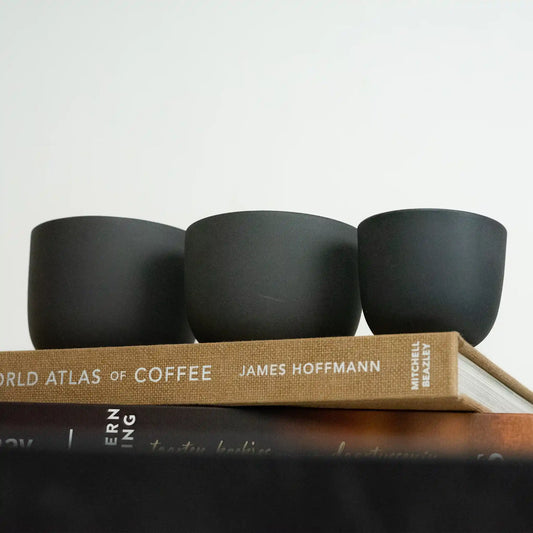
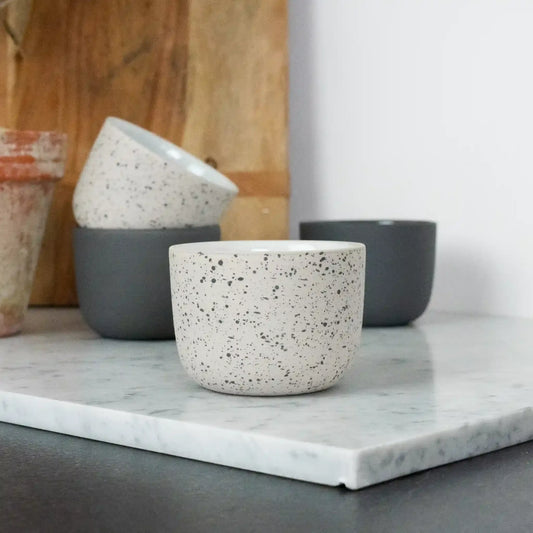
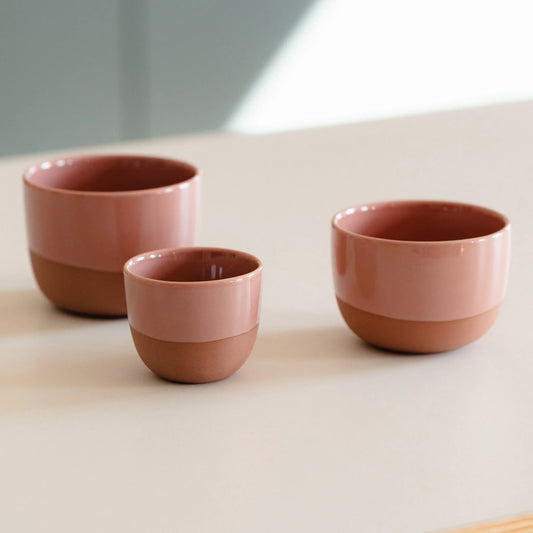
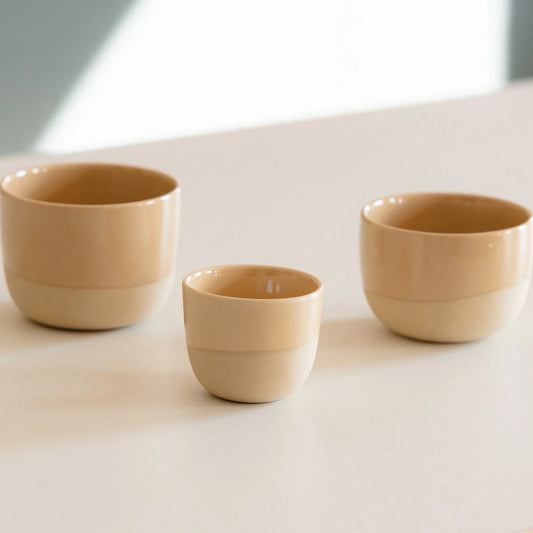
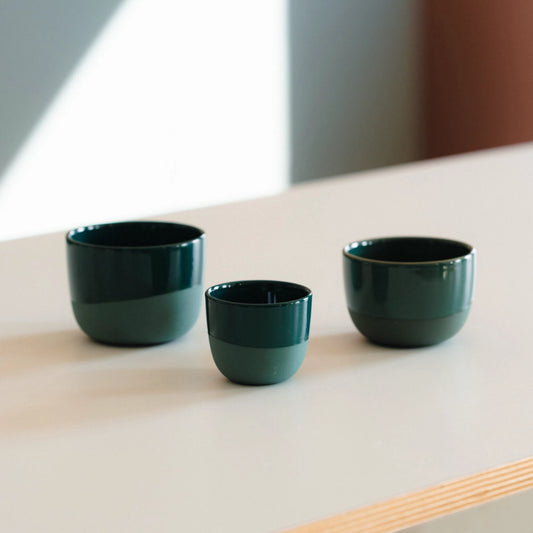
Latte cups should do more than just look pretty on your coffee station. For a latte, larger cappuccino, or flat white, you need a cup that provides room for espresso, milk, and foam, without making your drink unnecessarily large or watery.
In this collection, you'll find 250 ml latte cups in various colors. They are intended for home baristas who want to serve their milk drinks more neatly and practice latte art.
Do you use a Sage, De'Longhi, Philips, Gaggia, Krups, Solis, ECM, or a similar espresso machine? Always check the space under your spout, but for lattes and other milk drinks, 250 ml is often a logical size.
The products in this collection can be offered through Barista Essentials. My advice remains the same: don't just choose by color, but especially by size, usage occasion, and your coffee routine.
For latte, caffè latte, and larger milk drinks, a cup of about 250 ml is usually a logical choice. You have enough space for espresso, frothed milk, and latte art, without your drink immediately becoming too large. Doubting between cappuccino and latte? Choose 180 ml for a more compact cappuccino and 250 ml for a more spacious milk drink.
What will you find in this Latte cups collection?
In this collection, you'll find 250 ml latte cups for home baristas who enjoy making milk drinks. Think of latte, caffè latte, latte macchiato, larger cappuccinos, and flat whites with a bit more room.
The cups come in various colors, so you can choose what matches your espresso machine, coffee station, or dinnerware. The most important thing remains the size: 250 ml provides more room for espresso, milk, and foam than a compact cappuccino cup.
Still unsure between espresso, cappuccino, and latte sizes? Then also check out the overview collection of handmade coffee cups for espresso, cappuccino, and latte.
Why 250 ml latte cups help with milk drinks
A good latte isn't just about coffee and milk. The cup also determines how much space you have for pouring, how your drink looks, and how practical your workflow is next to your espresso machine.
A 250 ml latte cup is especially useful when you:
- like to drink latte or caffè latte;
- make a larger cappuccino;
- want to practice simple latte art;
- want enough room for espresso, milk, and foam;
- want to serve your coffee more neatly at the table;
- are looking for a cup that is both functional and stylish.
For crisp latte art, your milk texture remains more important than the cup itself. But a spacious, pleasantly shaped cup makes practicing easier than a too narrow mug or a much too large glass.
Who is this collection suitable for?
This collection is intended for home baristas and coffee lovers who regularly make milk drinks. You don't have to be an advanced barista. Especially if you practice frothing and pouring milk at home, it's nice to use a cup that suits your drink.
The collection is suitable for people with a portafilter machine, semi-automatic, or automatic machine with a milk function or steam wand. Think of machines from Sage, De'Longhi, Philips, Gaggia, Krups, Solis, ECM, La Marzocco, Rocket, and similar brands.
Please note: not every cup fits under every spout. Therefore, always check the height under your machine if you want to brew espresso directly into the cup. Do you prefer to work cleaner or does the cup not fit under the spout? Then you can first catch your espresso in an espresso shot glass and then pour it over.
What do you choose: latte, cappuccino, or espresso cup?
Choose your cup based on the drink you make most often.
For espresso, a compact cup of about 60 ml is logical. That keeps your espresso small, concentrated, and appropriate for the drink.
For cappuccino or flat white, 180 ml is often a comfortable size. You have room for espresso and milk, but the drink remains compact.
For latte, caffè latte, or a larger cappuccino, 250 ml is usually the better choice. You get more room for milk, foam, and pouring technique. That's why this collection clearly belongs to the search intent "latte cups 250 ml".
Why De Barista Shop finds these products logical
At De Barista Shop, I don't just look at how a product looks. A cup must fit into your daily coffee routine. It must be pleasant to work with next to your espresso machine, logical for the drink you are making, and help you serve coffee more consciously.
In workshops, I often see home baristas pay a lot of attention to the machine, grinder, and beans, but only later realize that cups, milk pitcher, shot glass, and cleaning also affect how pleasantly you work.
Therefore, this collection is not separate from the rest of your setup. A good latte cup is part of a routine where espresso, milk texture, pouring, and clean working come together.
Combine this collection with your coffee routine
Do you regularly make latte or cappuccino? Then a good cup is only one part of your routine. For frothing and pouring milk, a suitable milk pitcher is at least as important. Therefore, also check out the stainless steel milk pitchers for home baristas.
When working with milk, your steam wand must remain clean. Milk residues can affect odor, taste, and foam quality. Therefore, combine latte cups with good cleaning products for your espresso machine and steam wand.
Do you use a Sage espresso machine and want to know what size cup fits espresso, cappuccino, and latte? Then also read the practical explanation about coffee cups for Sage espresso machines.
Need personal help with milk frothing or latte art?
A latte cup helps, but doesn't solve everything. If your milk is too thick, too thin, too hot, or too foamy, latte art becomes difficult. Then the problem is usually not with the cup, but with milk texture, temperature, pouring technique, or timing.
Do you want to practice that specifically? Then a latte art workshop in Amsterdam logically fits this collection.
Advice from De Barista Shop
Don't choose a latte cup just because the color is pretty. First, look at what you drink. Do you mainly drink espresso? Then 250 ml is too large. Do you mainly drink cappuccino? Then 180 ml might be more practical. Do you often make latte, caffè latte, or larger milk drinks? Then 250 ml is actually logical.
My practical advice: choose one size per drink type. This will make your routine calmer, you'll know better how much milk you need, and you'll serve your coffee more consistently.
Frequently asked questions about latte cups
What size cup do you need for a latte?
For a latte, approximately 250 ml is a logical size. You have room for espresso, milk, foam, and possibly latte art, without the cup becoming extremely large.
What is the difference between cappuccino cups and latte cups?
Cappuccino cups are usually smaller, around 180 ml. Latte cups are more spacious, around 250 ml. This means more milk fits in and you have more room for larger milk drinks.
Are 250 ml latte cups suitable for latte art?
Yes, 250 ml is a suitable size for practicing latte art at home. The cup provides more space than a small espresso cup or a compact cappuccino cup. The quality of your milk foam, however, remains crucial.
Do these latte cups fit under every espresso machine?
Not always. Check the height under the spout of your machine. If the cup doesn't fit well under the spout, use a shot glass to first catch your espresso and then pour it over.
Can I also give these cups as a gift?
Yes, latte cups are a practical gift for coffee lovers who make milk drinks at home. Especially choose a color that matches the coffee station, machine, or dinnerware of the recipient.
250 ml latte cups are a logical choice for home baristas who want to make lattes, caffè lattes, flat whites, or larger cappuccinos. The right size helps you pour more consciously, serve more beautifully, and work more pleasantly next to your espresso machine. This collection focuses on practical latte cups for daily use, latte art, and milk drinks at home.