A puck screen can make your espresso routine tidier, smoother, and more consistent — provided you choose the correct size and your fundamentals are already reasonably in order. On this page, De Barista Shop helps you choose between 51 mm, 53.3 mm, 58 mm, and 58.5 mm puck screens with magnets. Not as a magic solution for bad espresso, but as a practical tool for better puck preparation, cleaner extraction, and fewer coffee grounds in your brew group.
What is a puck screen?
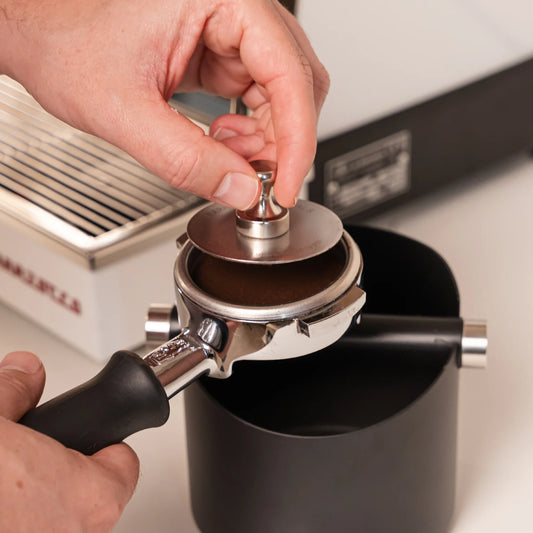
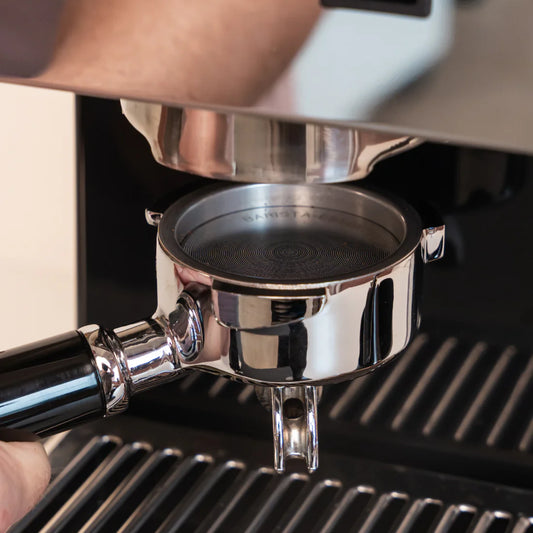
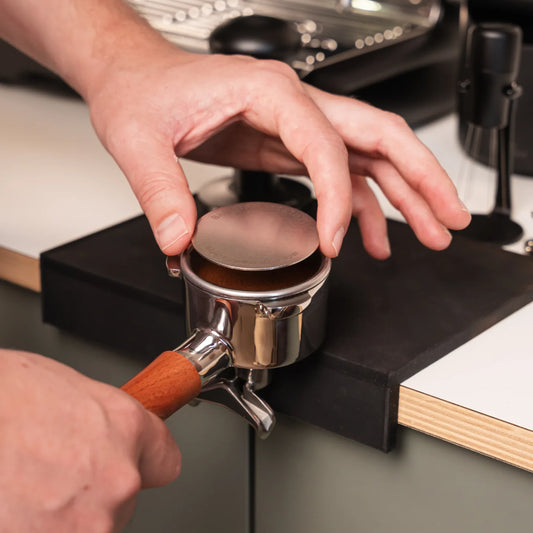
A puck screen is a thin stainless steel screen that you place on top of your tamped coffee puck before inserting the portafilter into the espresso machine. The screen helps to distribute the water evenly over the surface of the puck before it flows through the coffee.
This can lead to a smoother extraction and often leaves less coffee residue clinging to your shower screen or brew group. So, don't view it as a trick that automatically fixes bad espresso, but as an additional layer of control within a good espresso routine.
Specs: size, material, and usage
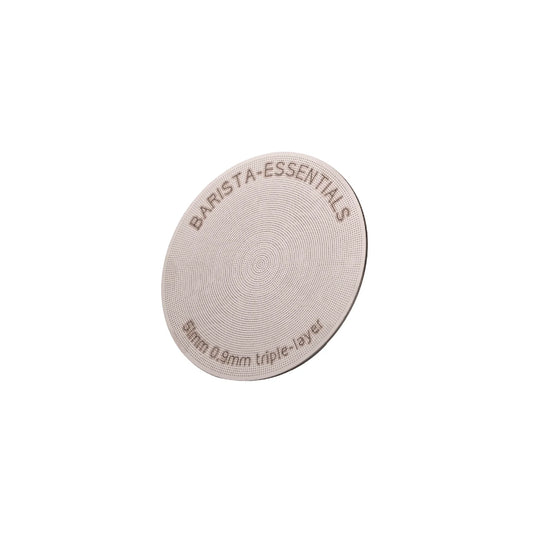
The Puck Screen V2 is available in multiple sizes, so you can choose what fits your machine and filter basket. Barista-Essentials lists four sizes: 51 mm, 53.3 mm, 58 mm, and 58.5 mm. The V2 version is made of 100% stainless steel, has a 3-layer filter, and according to the product information, is 0.8 mm thin. There are variants with and without a magnet, where the magnet is especially useful for removing the puck screen from your portafilter after brewing.
Only use it after you have ground, distributed, and tamped evenly. Then, gently place the puck screen on top of the coffee puck. Note: when using a puck screen, it may be necessary to dose about 1 gram less coffee, as the screen takes up space above your puck.
Why use a puck screen?
A puck screen primarily helps with three things: more even water distribution, cleaner operation, and more repeatability in your routine.
But you have to be honest about this: if your grind, dose, distribution, or tamping isn't right, your espresso will continue to taste inconsistent. A puck screen makes good puck prep tidier. It doesn't suddenly make messy puck prep good.
Do you want to understand why your espresso remains inconsistent? Then the module on extraction control is a logical next step in addition to this tool.
Who is a puck screen suitable for?
A puck screen is primarily suitable for home baristas who are already serious about espresso and want more consistency in their workflow. Think of people who weigh their shots, work with fresh beans, adjust their grind, and notice that extraction sometimes remains inconsistent.
It is less logical as a first purchase if you are not yet using a fixed dose, not weighing your espresso, or do not yet know how grind size, flow time, and output are related. Start with your basics first. Otherwise, you'll buy a neat tool, but the real problem will persist.
What do you choose: 51 mm, 53.3 mm, 58 mm or 58.5 mm?
The correct size depends on your machine and filter basket. Don't guess. Measure your filter basket or check the Barista-Essentials size chart before ordering.
For compact De'Longhi machines such as the Dedica and some Solis or Gastroback machines, the 51 mm category is usually relevant. Note: Barista-Essentials states that this does not work with the original De'Longhi La Specialista filter basket.
For many Sage, Solis, and Breville machines with a 54 mm portafilter, the 53.3 mm puck screen is the logical category. Think of models such as Sage Barista Express, Barista Pro, Barista Touch, Bambino, and Bambino Plus.
For Quick Mill, the 58 mm variant is mentioned. This is important because many people automatically assume that every 58 mm machine needs the same size. That is not always correct.
For many E61 machines and 58 mm filter baskets, the 58.5 mm variant is specifically mentioned. Think of Rocket, ECM, VBM, Bezzera, Gaggia, Profitec, Ascaso, and Lelit.
Why De Barista Shop?
De Barista Shop selects these puck screens not as a standalone gadget, but as part of a better espresso routine. Geert-Jan often observes in workshops that home baristas too quickly grab accessories while the basics are not yet stable. That's why you'll find not only products here, but especially explanations: when is a puck screen logical, what size do you need, and what can you or can't you expect from it?
De Barista Shop helps you make better coffee. First through insight, then through the right method, and only then through the right tool.
Combine logically: improve your puck prep before your puck screen
A puck screen only comes after grinding, distributing, and tamping. If you really want more control over your puck, a WDT tool is often a logical addition before you start tamping.
Do you want to gamble less and see better what your shot is doing? Then combine your puck screen with an espresso scale or shot glass, so you can control output and flow time instead of working by feel.
Don't forget: working clean remains important
A puck screen can help reduce coffee grounds sticking to your brew group, but it doesn't replace a good cleaning routine. Rinse the screen after use, keep the holes free of coffee residue, and clean your machine regularly.
If you want to keep your machine clean, also check out cleaning products and maintenance products for espresso machines.
Personalized help with your espresso machine
Does your espresso remain inconsistent, even though you use good beans, a puck screen, a scale, and a tidy routine? Then the problem probably lies deeper in your adjustment, technique, or workflow.
During a private barista workshop at home, Geert-Jan observes you with your own machine, grinder, and tools. This way, you not only discover what is going wrong, but especially why it is happening and how to solve it yourself.
Advice from De Barista Shop
Don't buy a puck screen because your espresso "isn't working out." Buy it when your foundation is already reasonably solid and you want to make your routine tidier, cleaner, and more consistent.
The correct order is:
- Use fresh coffee beans
- Weigh dose and output
- Adjust grind properly
- Distribute coffee evenly
- Tamp level
- Then add a puck screen as an extra layer of control
A puck screen can improve a good routine. It cannot fix a bad routine.
Frequently asked questions about puck screens
What size puck screen do I need?
That depends on your machine and filter basket. Many De'Longhi machines are around 51 mm, many Sage/Solis/Breville machines with a 54 mm portafilter use 53.3 mm, Quick Mill is paired with 58 mm, and many E61 machines with 58.5 mm. Always check your own filter basket before ordering.
Does a puck screen help against channeling?
A puck screen can help distribute water more calmly over the top of the puck. This can reduce channeling, but only if your grind, distribution, dose, and tamping are also correct. If your puck prep is messy, your espresso will remain inconsistent.
Is a puck screen suitable for beginners?
Not as a first purchase. A beginner often benefits more from fresh beans, a good grinder, a scale, and an understanding of extraction. A puck screen only becomes truly interesting when your foundation is solid and you want to further refine your routine.
Why does this puck screen have a magnet?
The magnet makes it easier to remove the puck screen from your portafilter after brewing. This results in cleaner and more practical operation, especially if the screen is hot or wet.
Do I need to use less coffee with a puck screen?
Often, yes, a little. Because the puck screen takes up space above your coffee puck, it may be necessary to dose about 1 gram less coffee. Test this calmly and do not simultaneously change your grind size, beans, and dose.
Can a puck screen keep my brew group cleaner?
Yes, a puck screen can help prevent coffee grounds from sticking directly to your shower screen or brew group. However, regular cleaning is still necessary. The puck screen makes working clean easier, but it does not replace maintenance.
Which puck screen fits my espresso machine?
That depends on the inner diameter of your filter basket. Always check your machine and filter basket before ordering. The 51 mm variant is intended for De'Longhi Dedica and certain compact machines, among others. The 53.3 mm variant is intended for many Sage, Solis, and Breville machines with a 54 mm portafilter. The 58 mm variant is associated with Quick Mill. The 58.5 mm variant is intended for many E61 machines and 58 mm filter baskets.
Is 58 mm the same as 58.5 mm?
No. With puck screens, a half-millimeter difference can be relevant. Many home baristas confuse 58 mm and 58.5 mm. Measure your filter basket or check the size chart before ordering.
What exactly does a puck screen do?
A puck screen rests on top of your tamped coffee and helps distribute the water more calmly over the puck. This can lead to a tidier extraction and often leaves less coffee residue on your brew group.
Does a puck screen solve bad espresso?
No. A puck screen does not fix incorrect grind, poor distribution, old coffee beans, or uneven tamping. It works best as an extra layer of control when your foundation is already reasonably stable.
How do you clean a puck screen?
Rinse the puck screen under the tap after use, brush coffee residue from the holes, and clean it regularly with warm water. Let it dry thoroughly before storing it.
Why should I choose a puck screen with a magnet?
A magnet makes it easier to remove the puck screen from your portafilter after brewing. This makes it cleaner and more practical, especially if the screen is warm or wet.
A puck screen is a small barista tool with a big impact on your workflow. By choosing the right size — 51 mm, 53.3 mm, 58 mm or 58.5 mm — you prevent mispurchases and work more neatly with your espresso machine. For home baristas with a De'Longhi, Sage, Solis, Breville, Quick Mill or E61 machine, a stainless steel puck screen with a magnet can help with calmer water distribution, a cleaner brew group and more control over extraction.
At De Barista Shop, you'll find practical advice on puck screens, puck prep, and making espresso at home. Not as a separate trick, but as part of a complete routine: good beans, correct grind, consistent dosage, proper distribution, level tamping, and only then extra control with a puck screen.