Espresso shot glass and pitcher: collect and weigh your shot

Doesn't your mug fit beneath the portafilter? My advice: collect the espresso in a shot glass or small stainless-steel pitcher first, then pour it over carefully. To compare espresso shots, weigh the yield in grams; measurement markings only give an approximate volume. Check that the container fits with your scale. Read the guide to choosing, clearance and use beneath the products.

Advice from Geert-Jan de Baristaman β€” Specialty Coffee Trainer & Barista Coach (over 10 years of experience).

Choose your care option and check the space

Choose what you want to see and what you want to gift

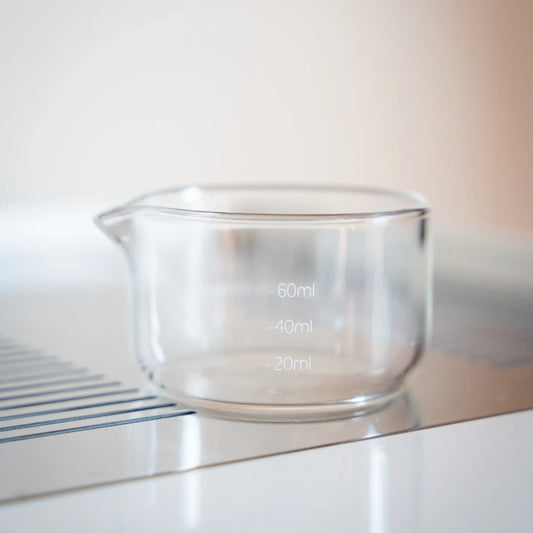
The espresso shot glass shows the coffee and crema and has measurement markings, a handle and a pouring spout. That helps when you want to catch your espresso separately first. Use the markings as a volume indicator. The amount of crema varies and milliliters are therefore not a fixed conversion to grams of espresso.

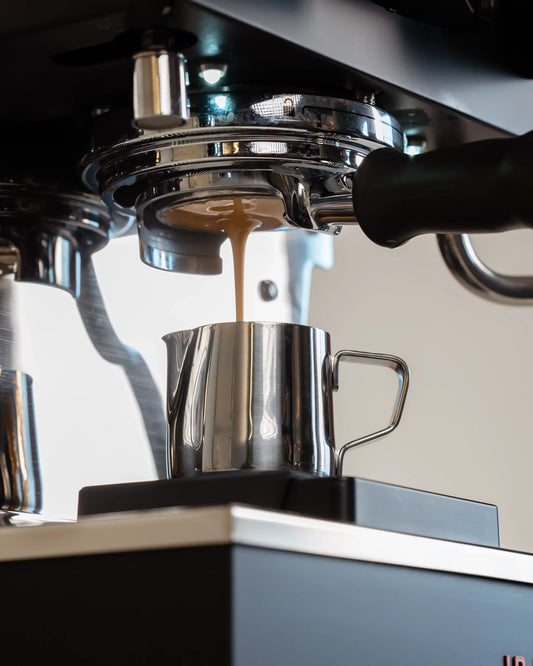
The 100 ml stainless steel espresso pitcher is an alternative if you mainly want to catch and pour over. It is made of stainless steel and has a pouring spout. You cannot see the coffee through it like glass. The 100 ml is the nominal capacity, not a prescribed espresso amount and not proof of the external dimensions.

Measure the space before you choose

The complete external height and width including handle or pouring spout are not confirmed for the shot glass and the stainless steel pitcher. We do not derive them from photos or capacity. Measure how much space you have under the filter holder and have the missing external dimensions confirmed when it is tight. Also leave space to remove the catch form without tilting it.

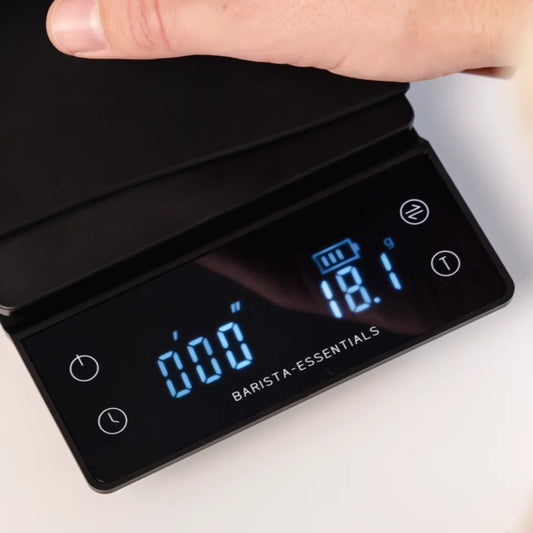
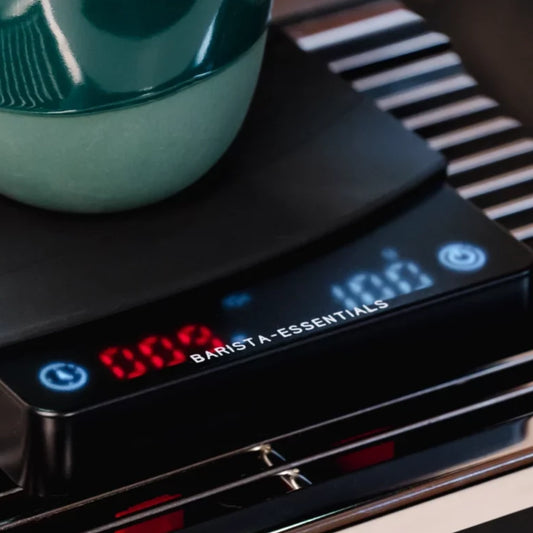
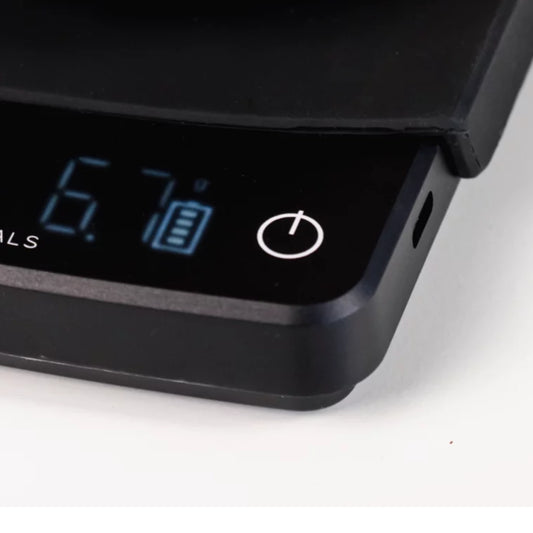
The three scales differ in size and timer operation. The basic scale measures 183 Γ— 129 Γ— 27 mm and has a manual timer. The mini with automatic timer measures 100 Γ— 95 Γ— 19 mm. The other automatic version measures 128 Γ— 118 Γ— 20 mm. These dimensions are length Γ— width Γ— height. They charge via USB-C; choose a model that fits your drip tray and that you can operate comfortably.

For the total height, add the actual height of the glass or pitcher to 27, 19 or 20 mm of the chosen scale. Because the complete catch heights are missing, we cannot give a confirmed combination height here. Also check the footprint, the weight on the weighing surface and free space at the spout. A small scale does not make a glass that is too tall fit.

This is how you use the catch form and scale

Place the dry catch form stably on the scale and set it to zero. Catch the espresso and read the yield in grams. Use the timer to monitor the brewing time and also note the amount of ground coffee when comparing. An automatic timer only takes over the operation; it does not choose a recipe and does not judge the taste. A fixed ratio or duration is no guarantee for every coffee.

Pour slowly through the spout into your cup or glass and take hot coffee and hot glass or metal into account. Avoid sudden temperature shocks. Wash the glass shot glass by hand according to the supplier's advice. The stainless steel pitcher may go in the dishwasher according to the supplier. Keep the electronics of the scale away from water and follow the own user manual; splash-resistant is not permission for immersion.

If you already have a suitable catch form or scale, feel free to continue using it. Glass and stainless steel are two alternatives here; you do not have to buy both. Choose your final serving glass at the coffee glasses. The main products are in front of the three additional scales. Everything is a separate choice, without a fictional package or package discount.

Frequently Asked Questions

Collapsible row

Choose the glass if you want to see the coffee and crema and get an impression of the volume. Choose the 100 ml stainless steel jug if you mainly want to catch and pour off the coffee. You don't need to have both; a suitable existing receptacle can be kept.

Collapsible row

Size markings give an indication of the volume. Crema takes up space and can vary from coffee to coffee. Weigh the yield in grams when you want to compare espressos, and also record your coffee dose and brew time. An ml marking on a scale is not a fixed conversion for espresso.

Collapsible row

This is not confirmed for every machine. The overall external height and width, including the ear and spout of both collection forms, are missing. Measure the available space and add the actual collection height to the height of the bowl. Confirm any missing dimensions first when space is tight.

Collapsible row

The base has a manual timer and measures 183 Γ— 129 Γ— 27 mm. The mini with automatic timer measures 100 Γ— 95 Γ— 19 mm; the other automatic version 128 Γ— 118 Γ— 20 mm. All three charge via USB-C. Choose based on drip tray space and controls; automatic start does not determine the espresso recipe.

Collapsible row

The supplier recommends hand washing the shot glass. According to the supplier, the stainless steel cup is dishwasher-safe. Allow hot parts to cool down safely, avoid thermal shock, and keep the scale away from water. Always follow the manufacturer's own maintenance instructions.

I have another question

Is your question not listed? Contact us. We are happy to help you choose the right product.

Collection: Espresso shot glass and pitcher: collect and weigh your shot

Doesn't your mug fit beneath the portafilter? My advice: collect the espresso in a shot glass or small stainless-steel pitcher first, then pour it over carefully. To compare espresso shots, weigh the yield in grams; measurement markings only give an approximate volume. Check that the container fits with your scale. Read the guide to choosing, clearance and use beneath the products.

Advice from Geert-Jan de Baristaman β€” Specialty Coffee Trainer & Barista Coach (over 10 years of experience).

Espresso shotglas onder een portafilter op een weegschaal om output en doorlooptijd te meten bij espresso thuis.