




Bought a Sage machine but still not making good coffee? A lesson from 's-Gravenzande
To share
Today I was in 's-Gravenzande for an at-home barista workshop with a couple who had just gotten a new Sage machine. The machine had been there for five weeks. A beautiful appliance, a beautiful kitchen, a newly built house, everything perfectly in order. Yet there was one recognizable problem: they had actually done very little with it.
Not because they didn't want good coffee. On the contrary. They really wanted to learn how to make the tastiest coffees. But as I often see during workshops: as soon as such an espresso machine is on the counter, doubt creeps in.
Which beans should I use?
Why doesn't my espresso taste like it does in a coffee bar?
How do I properly froth milk?
And how do I keep such a machine clean?
That's exactly where this workshop began.
A good machine doesn't automatically solve your coffee problem
Many home baristas think the machine makes all the difference. And of course, a good espresso machine helps. But a machine doesn't make choices for you. You choose the coffee beans. You determine the grind. You pull the espresso. You froth the milk. And you maintain the machine.
In this kitchen, there was a Sage machine perfectly capable of making delicious coffee. But the owners didn't quite know how to operate it yet. They had already bought a sample pack of coffee with different bags: several espresso blends and one single origin.
There was an important learning moment right there.
During the theoretical part of my workshops, I always briefly go through the journey of coffee: from growth, harvest, and processing to roasting and finally the cup. Not as a dry coffee lesson, but because then you suddenly understand why one coffee tastes completely different from another.
When we discussed the difference between an espresso blend and a single origin, it clicked.
Why single origin isn't always the easiest start
They had been working with an African single origin, presumably from Kenya, Ethiopia, or Uganda. Such coffees can be beautiful. Think of fruitiness, berries, brightness, and fresh acidity. But that doesn't automatically mean every home barista enjoys it.
In fact, she quickly said that she actually didn't prefer that fruity and berry-like taste at all.
That was the revelation of the morning.
Not: "the machine isn't working properly."
Not: "I can't make espresso."
But: "I might be buying coffee that doesn't suit what I like."
For them, the better route was probably not with African light roasts, but rather with coffees from Central and South America or Asia. More towards nutty, spicy, fuller, and more accessible. Especially on a Sage machine, this is often a more pleasant start for many novice home baristas.
That doesn't mean single origin is wrong. It does mean that single origin is often a bit more sensitive in terms of adjustment and taste experience. A good espresso blend is simply a more logical, more stable choice for many people at home.
Once the bean choice became clearer, making espresso became calmer
After the theoretical part, we started making espresso. We went through the three basic steps I often use in my workshops to make espresso manageable. Not too complicated, not with twenty variables at once, but step by step.
And what you see then is beautiful.
As soon as people understand what to look for, the tension disappears. The machine feels less intimidating. The actions become calmer. The espresso becomes more controllable.
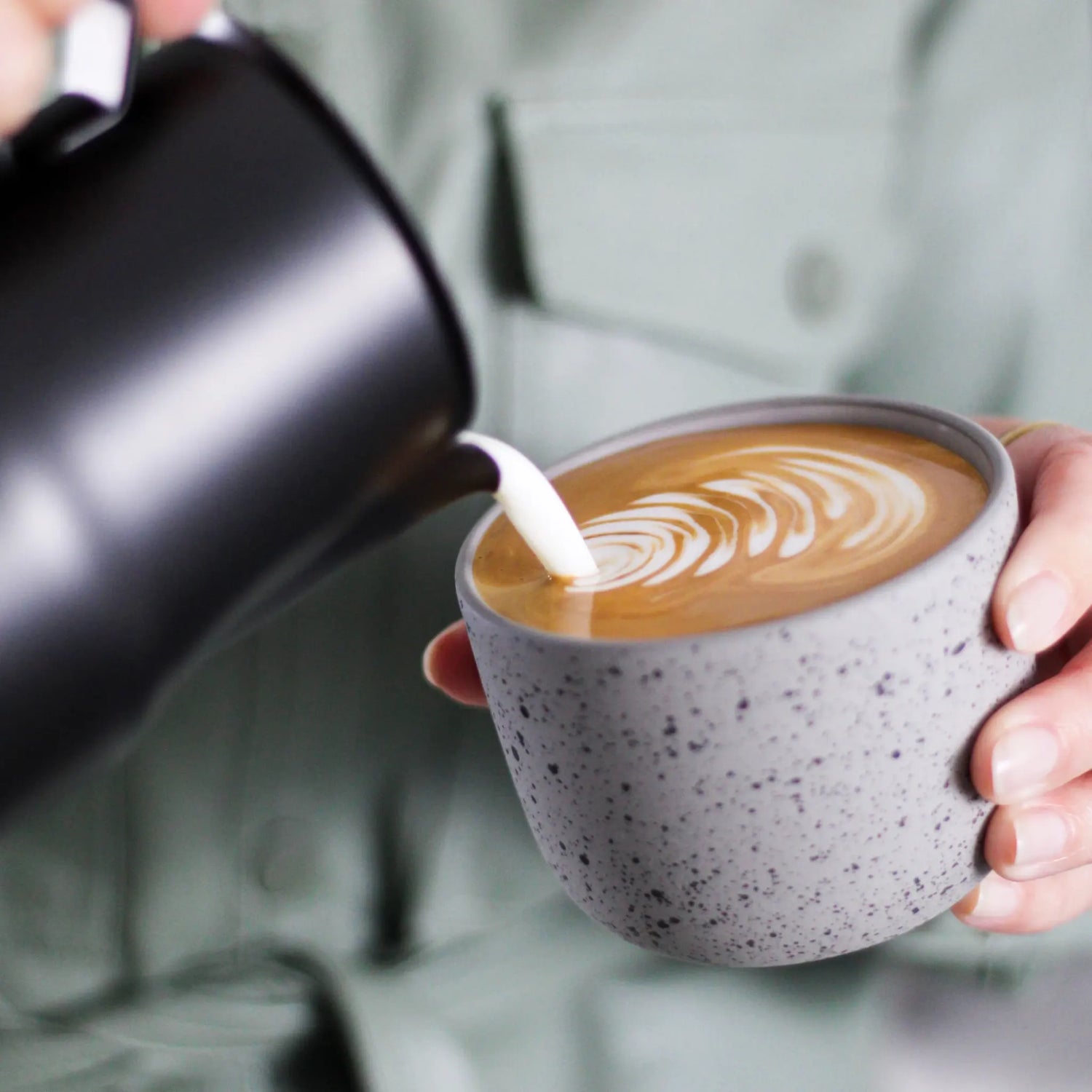
After that, we started frothing milk. They really wanted to learn this because they mainly wanted to make beautiful coffee drinks at home, like the ones they drink in a coffee bar. Cappuccino, flat white, that kind of work. That also went well. Not perfect at once, but noticeably better.
And that's exactly what The Barista Shop stands for: making better coffee accessible. Not by pretending you have to be a professional barista tomorrow, but by helping you understand what's happening.
Maintenance is also part of better coffee
What I found strong about this workshop was that they also wanted to pay serious attention to cleaning and maintenance. That is often forgotten. People primarily want better espresso and beautiful milk foam, but forget that old coffee residue, milk fats, and contamination ultimately also affect taste and function.
Together, we went through blind filtering and backflushing. Their Sage machine had this feature in the menu. Rubber blind filter in the portafilter, half a cleaning tablet in it, and then start the cleaning program via the menu. The machine then executes the program itself.
We also looked at descaling, keeping the grinder clean with cleaning pellets, and cleaning the steam wand with milk system cleaner. Especially with milk, this is important. Milk fats and proteins can build up on the inside of the steam wand. By regularly placing the steam wand in hot water with milk system cleaner, you loosen these residues.
Because they mainly make nice coffees on weekends, we came up with a maintenance routine that suits their usage. Not excessively strict, but clear enough to keep the machine fresh and reliable.
Conclusion: better coffee starts with understanding what you're doing
This workshop in 's-Gravenzande once again showed exactly what I often encounter in more than ten years of at-home barista workshops.
People are not lacking motivation. They often don't have a bad machine either. They primarily lack an overview.
Which coffee suits my taste?
When do I choose an espresso blend and when a single origin?
How do I logically build an espresso?
How do I froth milk without stress?
And how do I keep my machine clean?
If you answer these questions, making coffee at home suddenly becomes much calmer. And more fun.
Do you want to learn how to work better with your espresso machine yourself? Then you can start with the online modules of Espresso under Control, in which I explain step-by-step about bean choice, freshness, extraction, and maintenance. Would you prefer me to join you in your own kitchen, with your machine and your coffee beans? Then an at-home barista workshop is the most direct route.
The Barista Shop helps you make better coffee. Right at home, with your own equipment, your own questions, and coffee that suits your taste.
5. Internal link and upsell suggestions
1. Module 5 — Single origin vs espresso blend
Fits perfectly, because the biggest breakthrough in this workshop was understanding the difference between single origin and espresso blend.
2. Module 7 — Roast date & freshness
Logical follow-up, because beginner home baristas often not only choose the wrong flavor profile but also pay insufficient attention to freshness and roasting.
3. Module 8 — The 3 Golden Rules of Espresso
Fits the practical part of the workshop: making espresso calmer, more consistent, and more controllable.
4. Module 9 — Cleaning & Maintenance
Strong upsell, because backflushing, descaling, grinder cleaning, and steam wand cleaning are specifically mentioned in this case.
5. At-home barista workshop
The most natural CTA for readers who recognize themselves in this situation and want personal help with their own machine.
6. FAQ
Is a single origin suitable for espresso at home?
Yes, but it's not always the easiest start. Single origins can have more pronounced flavors and be more sensitive to adjustment. For many beginners, an espresso blend is more accessible.
Why does my coffee from a Sage machine taste sour or fruity?
That could be due to the beans. Especially light African coffees can taste fruity, fresh, or berry-like. If you prefer full-bodied, nutty coffee, a different origin or blend often fits better.
How often should I clean my Sage machine?
That depends on your usage. If you mainly make coffee on weekends, a monthly routine can often be sufficient. If you use the machine daily, more frequent cleaning is advisable.