Preserving fresh coffee beans for better espresso at home
This is how you prevent fresh beans from quickly tasting flat, stale, or inconsistent.
-
Written by Geert-Jan the Baristaman –
Specialty Coffee Trainer & Barista Coach (10+ years experience)
Why your beans taste different after opening
Many home baristas immediately think of the grinder, the machine, or their own technique when their espresso is inconsistent. This is logical, as these are the elements you're actively engaging with during brewing. However, part of the problem often begins even before your portafilter goes into the machine.
As soon as a bag of coffee beans is opened, the coffee slowly changes. Aromas dissipate, oils react with oxygen, and the bean becomes less vibrant. You don't always notice this immediately, but often you do in your cup: less aroma, less body, less crema, or an espresso that suddenly seems to extract faster.
This blog will help you understand how to store coffee beans fresh, what you should avoid, and when a vacuum storage container is truly beneficial.
First understand, then preserve
Fresh coffee is not a luxury detail. It is one of the primary conditions for espresso that is easy to control. If your beans lose their vibrancy, adjusting them at home becomes unnecessarily frustrating.
Why Freshly Stored Coffee Beans Are Important for Espresso
The Four Silent Taste Invaders
Coffee beans usually don't lose their quality due to one big mistake. It happens slowly, through daily habits that seem innocent.
What makes coffee beans age faster after opening?
The biggest culprits are oxygen, sunlight, moisture, and heat. As soon as you open a bag, air gets to the beans. This causes aromas to be lost faster and the taste to become less vibrant. Sunlight and heat accelerate this process. Moisture is particularly troublesome, as coffee can quickly absorb odors and moisture from its surroundings.
That's why the countertop is not always the best place, especially not next to a window, oven, dishwasher, or hot espresso machine. It may look cozy, but it's often not ideal for your beans.
The refrigerator is also usually not a convenient daily solution. You constantly take the beans out, temperature differences occur, and coffee easily absorbs odors. For daily use, you primarily want peace and quiet: cool, dark, dry, and as little contact with air as possible.
That sounds simple, but it's precisely this simple basis that is often forgotten at home.
Relatable in your caption
You don't have to be a coffee technician to notice a loss of taste. Often, you mainly feel that your espresso is less easy to get right.
How do you know when coffee beans are losing their freshness?
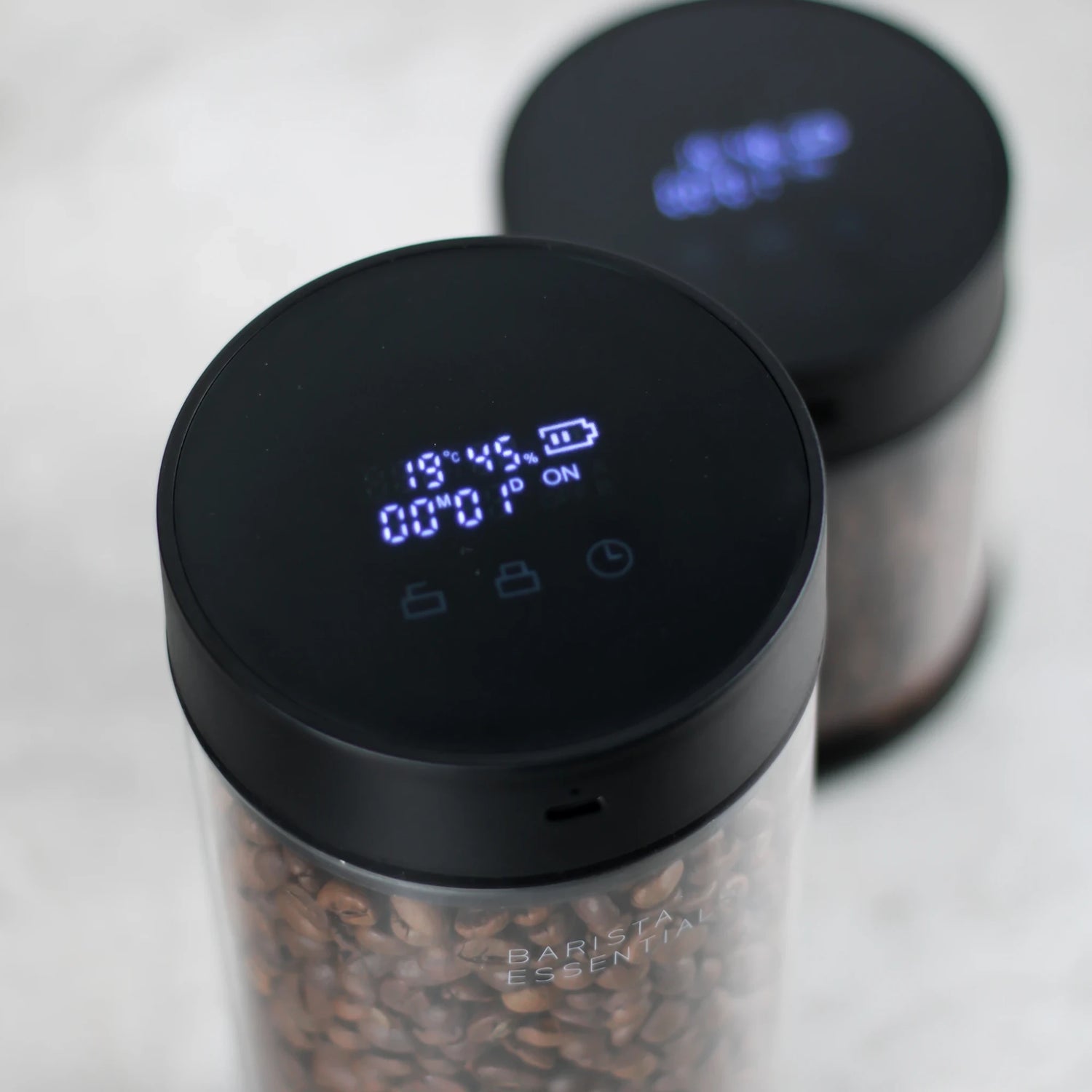
You can't always recognize less fresh beans from the outside. The bag might still smell fine, and the beans might look good. Yet, your espresso could already react differently.
You'll notice it, for example, because the crema disappears faster, the aroma is less pronounced, or the taste becomes flatter. Sometimes your espresso also seems to extract differently all of a sudden, even though you haven't consciously changed anything. Then you grind finer, grind coarser, dose more, or extract longer, but the result keeps varying.
That's exactly what many home baristas get tired of. You think your technique is unstable, while your coffee itself might have become less vibrant.
Therefore, it's wise not to only look at your recipe when experiencing taste problems, but also at the age and storage of your beans.
When vacuum storage makes sense
In addition to our unique expertise in the field of circular economy, we are also experienced in the field of recycling of various materials and components, for example within our own waste sorting installation. For example, we separate and recycle materials such as paper, cardboard, plastics, metals and textiles.
Is storing coffee beans vacuum-sealed better than leaving them in the bag?
Yes. Many coffee bags have a sealing strip, but in practice, they are often put back in a cupboard half-open. Sometimes there is still air inside, sometimes you fold the bag shut with a clip, sometimes you forget to seal it properly. This is relatable, but not ideal.
A good vacuum storage container helps mainly because it limits the amount of air around the beans. This slows down the loss of aroma and keeps the coffee pleasant to use for longer. This is useful if you take longer to finish one bag or if you notice your espresso becomes less stable after a few days.
The goal is not to make coffee last indefinitely. The goal is to make better use of the fresh period. You buy good beans, store them more calmly, and get a beautiful espresso out of them for longer.
For home baristas, that is often precisely the difference between continuing to guess and working more consistently.
Make it practical
Our goal is to make a positive social impact in the local communities where our products are manufactured, and to reduce their environmental impact.
How to best store coffee beans at home
Preferably buy beans with a clear roast date. That says more than just a best-before date. If you open a bag, make a note of when you opened it. This will help you better recognize when your coffee still tastes vibrant and when it starts to decline.
Store your beans in a cool, dry, and dark place. Not next to a window, not above a warm machine, and preferably not in a cupboard where there is a lot of heat or moisture. Grind your coffee just before use, because ground coffee loses aroma even faster than whole beans.
If you use a vacuum storage container, fill it with whole beans and close it tightly immediately after use. Take what you need, grind your coffee, and make your espresso. It doesn't have to be more complicated than that.
The best storage routine is primarily a routine that you can easily maintain every day.
If your espresso keeps alternating
Sometimes, storage is just one part of the story. If your beans are fresh and your storage is correct, but your espresso remains inconsistent, then there's likely more to it.
When is it not due to how you store your coffee beans?
If your coffee is fresh, well stored, and yet you get a different result every day, look beyond just the storage container. Grind, dosage, distribution, tamping, brew time, and recipe are likely also playing a role.
That's why it's important not to change everything at once. Many home baristas adjust three things and then no longer know what made the difference. Start with the basics: fresh beans, consistent dosage, good grinding, proper distribution, and measuring what comes out of your machine.
That's also why I pay a lot of attention to sequence in my modules and workshops. First, understand what affects your espresso. Only then adjust.
Because making better coffee becomes much easier when you know where to look.
Frequently asked questions about keeping coffee beans fresh
How do you best store coffee beans after opening the bag?
After opening, store coffee beans in a cool, dry, dark place, and as airtight as possible. A well-sealed bag or vacuum container helps to limit oxygen, light, and moisture.
Is it better to store coffee beans in the refrigerator?
How long do coffee beans stay fresh after opening?
Is storing coffee beans vacuum-sealed really better?
Storing it in a vacuum can help reduce contact with oxygen. As a result, aroma and flavor often last longer than when a bag is kept half-open in the cupboard.
Why does my espresso suddenly taste flat, even though I'm using the same beans?
I have another question.
Storing coffee beans fresh starts with less air, light, heat, and moisture
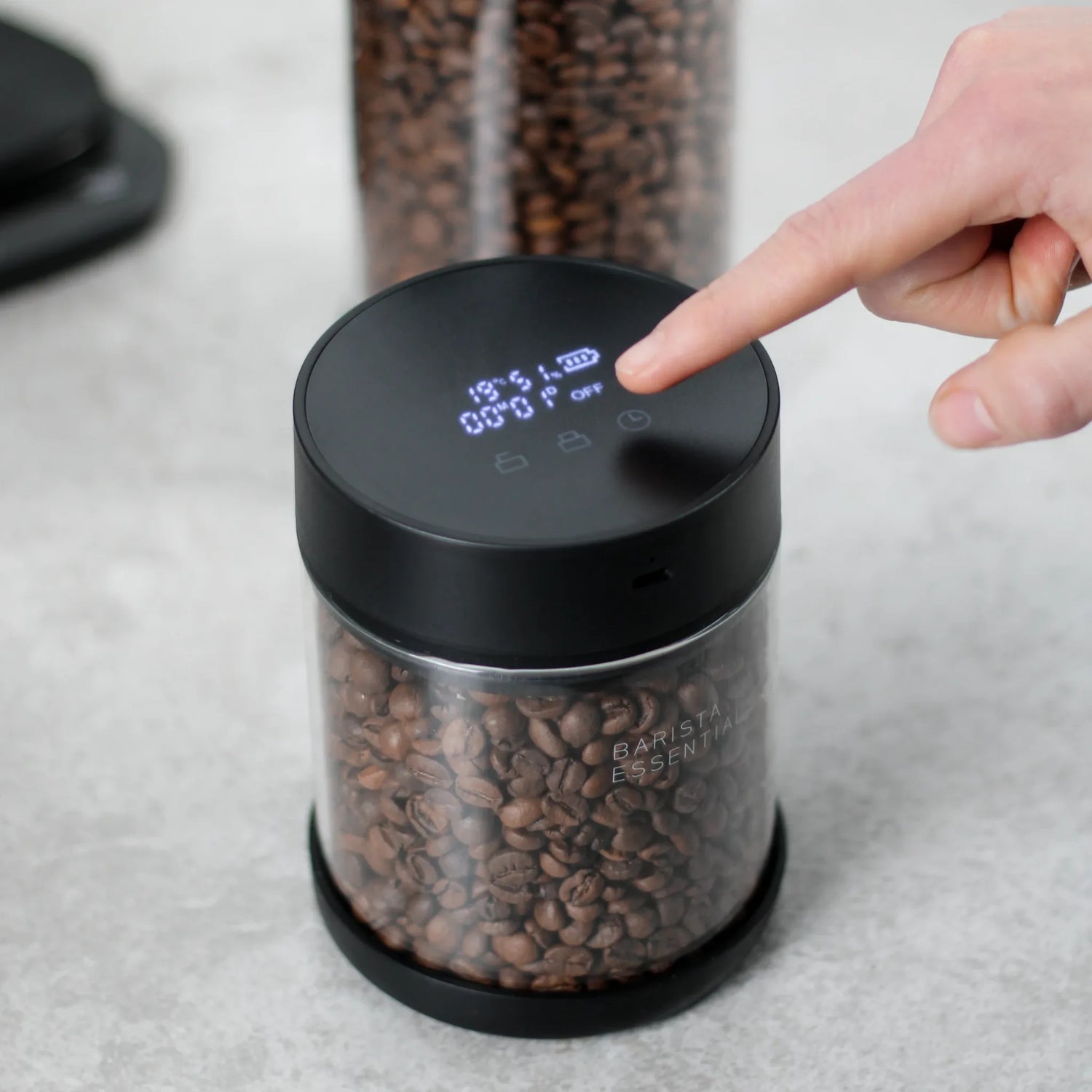
If your espresso at home suddenly tastes flatter, has less crema, or is harder to dial in, you don't immediately need to doubt your machine. First, look at your coffee beans. How fresh are they? When was the bag opened? And are they adequately protected at home from air, light, moisture, and heat?
With good beans, a cool storage place, and possibly a vacuum canister, you'll get more flavor from your coffee for longer. You won't prevent coffee from changing, but you will delay the point at which your beans noticeably lose their vibrancy.
That makes espresso at home not only tastier but also more predictable. And that's precisely where making better coffee begins.
Do you want more control over freshness, taste and espresso at home? Then start with the free introduction to Espresso Under Control or check out the vacuum storage jar as a practical step for your bean storage.
Enjoy fresh coffee
This rechargeable vacuum storage container helps you preserve the taste, aroma, and quality longer in your daily coffee routine.
- Extends the freshness of your coffee
- Preserves flavors and aromas longer
- Inhibits the oxidation of oils
- Automatically vacuums up to 120 times before the lid needs to be recharged
☕ Discover more related articles
View all-
☕ What is a cappuccino and what makes a good ca...
Why does a cappuccino sometimes taste creamy and balanced, and sometimes mostly like warm milk? Geert-Jan explains how coffee beans, espresso, and frothed milk together make all the difference.
☕ What is a cappuccino and what makes a good ca...
Why does a cappuccino sometimes taste creamy and balanced, and sometimes mostly like warm milk? Geert-Jan explains how coffee beans, espresso, and frothed milk together make all the difference.
-
☕ Espresso inconsistent at home? A lesson from ...
Many home baristas get confused by random coffee tips on YouTube and Instagram. This barista workshop in Lierop shows why espresso often improves when you first go back to bean...
☕ Espresso inconsistent at home? A lesson from ...
Many home baristas get confused by random coffee tips on YouTube and Instagram. This barista workshop in Lierop shows why espresso often improves when you first go back to bean...
-
☕ Making cappuccino, latte or flat white at hom...
Do you want to make cappuccino, latte or flat white at home? In this blog, I explain how to balance milk, espresso and flavor.
☕ Making cappuccino, latte or flat white at hom...
Do you want to make cappuccino, latte or flat white at home? In this blog, I explain how to balance milk, espresso and flavor.