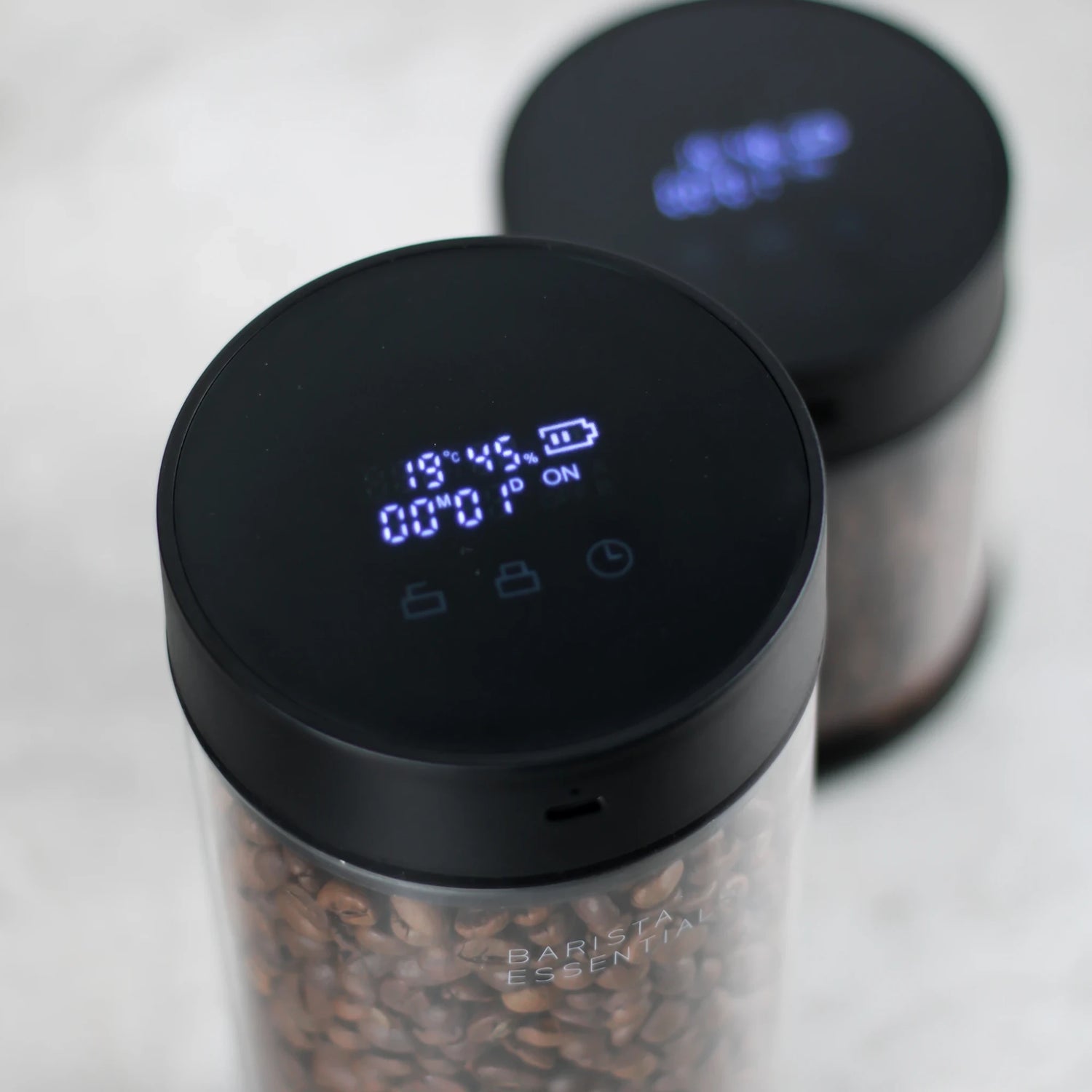
What's the best way to store opened coffee beans?

Store whole coffee beans as airtight, dry, cool, and out of direct light as possible, and grind them just before brewing. If you use up a well-sealed coffee bag relatively quickly, a separate storage container isn't necessarily better. If a bag lasts you longer, you frequently open your supply, or you use multiple coffees simultaneously, then it becomes more interesting to further limit the amount of air around the beans after each opening.

I regularly receive questions about the best storage container for coffee. But there's a preceding question: how long is your coffee open at home?

A 250-gram bag used daily has a very different life than a 500-gram bag that lasts you three weeks. And someone who tastes three different specialty coffees side-by-side opens each individual supply less often but makes it last longer.

That's why, when it comes to coffee storage, I first look at the routine. Coffee beans continue to change after roasting. Good storage can slow down that process and limit unnecessary exposure to air, moisture, heat, and light. However, storage cannot bring back what has already been lost. The roast date, quality of the coffee, and the way you then grind and brew espresso therefore remain part of the same story.

Geopende zak Aficionado koffiebonen op het aanrecht in warm zonlicht, waardoor zichtbaar wordt waarom lucht, licht en warmte slecht zijn voor het vers bewaren van koffiebonen.

First, understand what is changing

After roasting, coffee is not a static product. The beans release gas, and volatile aromas gradually disappear. At the same time, oxygen increasingly gets the chance to affect components in the coffee once the protected packaging is regularly opened.

What happens to coffee beans after roasting and opening?

During roasting, hundreds of aroma and flavour compounds are created that together determine how your coffee smells and tastes. Roasted coffee also contains carbon dioxide, usually referred to as CO₂. This gas is gradually released from the bean after roasting. This process is called degassing.

At the same time, many aroma compounds are volatile. In simple terms, this means they can disappear from the coffee. As soon as oxygen comes into contact with the coffee, oxidation reactions can also occur. Oxidation is a chemical reaction with oxygen that ultimately contributes to changes in aroma and taste.

This doesn't mean that coffee suddenly goes bad after a few days. It's better to think of freshness as a gradual change. The aroma from a freshly opened bag may become less pronounced over time, and certain fruity, floral, or other subtle flavour notes may become less distinct.

Therefore, good coffee storage starts with slowing down that change, not with the expectation that you can keep your coffee in the same state indefinitely.

La Pavoni espressomachine met koffiemolen, Aficionado koffiebonen en barista-accessoires in een moderne keuken.

Storage begins even before the inventory bus

A storage system can protect good coffee, but it doesn't make old coffee young again. So first look at what you buy, how much you buy, and how long you expect that amount to last.

Understand best before date and freshness

Why the roast date remains important, even with good coffee storage

Suppose you have two 500-gram bags of coffee in front of you. One bag has been recently roasted and well-packaged. The other has been in storage or on a store shelf for a longer period. If you put both into the same storage container today, you're not starting from the same point.

That's precisely why I always treat roast date and storage as two separate steps during workshops. First, you want to buy coffee whose freshness you can assess. Then, you try to maintain that quality as best as possible during use.

Therefore, when purchasing, pay attention to a clear roast date when available and buy an amount that matches your consumption. If you drink two espressos a day, a smaller bag might be more practical than a large value pack that lasts you a very long time.

If you want to better understand why coffee might also react differently during brewing throughout that period, then the module Roast Date and Freshness – Nothing works without fresh coffeedirectly addresses this.

Stappenplan voor koffiebonen bewaren met koffiezak voorraadpot en espresso voor thuisbarista’s.

You don't always need an extra bus

A good coffee bag can be an excellent storage system for daily use. Especially if you only use one type of coffee at a time and empty the packaging relatively quickly, it's more important to consistently seal the bag properly than to automatically transfer everything.

When is the original coffee bag sufficient?

Much fresh coffee is sold in packaging with a one-way valve. This valve allows the CO₂ that comes out of the coffee after roasting to escape, while the packaging is designed to protect the contents from the outside environment.

For example, if you use a 250-gram bag as your only coffee and it's used up quickly, such packaging can be very practical. Take out what you need, carefully press excess air out of the top part of the bag if the packaging allows it, close it carefully and store it in a dry and dark place without a strong heat source nearby.

Research into opened whole coffee beans also shows that the original packaging, when it can be properly sealed, does not automatically perform worse than transferring beans to a regular airtight container.

The most important lesson is therefore simple: transferring is not an end in itself. Above all, you want to prevent your coffee from being unnecessarily exposed to air every day or being stored poorly sealed.

USB-C oplaadbare vacuüm koffieopslag van 500 gram met slimme versheidsindicatoren.

When less air does become interesting

The longer an opened supply lasts, the more opportunities there are for new air to reach the coffee. That's when a vacuum-sealed storage container can become more practically interesting.

Compare 250g and 500g

When does a vacuum coffee bean storage container add value?

Suppose you buy 500 grams of coffee and it lasts you two or three weeks. Every morning you open the container, scoop or weigh out coffee beans, and then close it again. Or perhaps you have three coffees at once: a regular espresso blend, a single origin, and a decaf coffee. Each individual supply will then stay in your home longer.

In such situations, it becomes more logical to limit the amount of residual air around the coffee after opening. A vacuum canister does this by removing air from the sealed space. This does not stop the natural aging of coffee, but it does address one of the factors you want to limit: contact with oxygen.

The automatic vacuum storage canisters for coffee beansfrom De Barista Shop are available in 250 and 500 grams. Choose 250 grams if you want to store smaller quantities or different coffees separately. The larger size is more suitable if one bag of approximately 500 grams is your main daily supply.

koffiemaler reiniger voor grinder reinigingsmiddel voor schoonmaak natuurlijke reinigingstabletten van de barista shop 5

Also look at what remains on your mind

Many home baristas think extensively about their coffee bags and then fill the entire bean hopper of the coffee grinder. By doing so, you are only moving your supply to a place that often has more contact with the environment.

Can you just store coffee beans in your grinder's hopper?

The hopper is the bean reservoir on top of your coffee grinder. For coffee that you'll use the same day or in the short term, this is practical, of course. As a long-term storage solution, it's usually less suitable.

Many hoppers don't seal completely airtight. They are also often located near a warm espresso machine or in a bright kitchen. If you fill a large reservoir on Monday and part of that coffee is still there days later, then a carefully sealed bag or storage container for the other part of the supply is of little use.

Therefore, I often give home baristas a simple routine: store your main supply sealed and only fill your grinder with the amount appropriate for how you use the grinder. If you work with single dosing, you even weigh the whole coffee beans per espresso and grind them immediately.

The latter has another advantage: as soon as coffee is ground, much more surface area is created that can come into contact with air. Therefore, preferably grind just before you make your espresso.

Thuisbarista bewaart verse koffiebonen naast een espressomachine in een vacuüm voorraadpot voor betere espresso thuis.

Freshness ultimately shows in your espresso

Proper storage isn't an isolated goal. Ultimately, you want your coffee to taste good and to understand why an espresso might behave differently today than it did a few days ago.

Learn to dial in your espresso

Why the same coffee sometimes needs a different grind later on

This is where storage and espresso extraction meet. Extraction simply means that hot water carries soluble flavor compounds from the ground coffee into your espresso. How easily and quickly this happens is influenced by factors such as the grind, the amount of coffee, the amount of espresso, and the characteristics of the coffee itself.

Because roasted coffee changes throughout its life, a grind setting that worked well shortly after opening may not give exactly the same result weeks later. You might notice that the flow rate changes or that the flavor is less balanced. This doesn't automatically mean the coffee was stored incorrectly, nor does it mean your espresso machine is faulty.

Therefore, first check your basics: are you using the same dosage, the same amount of espresso, and a comparable method? Only then adjust the grind step by step.

If you want to understand this system better, then The 3 Golden Rules of Espressocontinues where this storage guide leaves off: with actually measuring and correcting your espresso.

Frequently asked questions about storing coffee beans

What's the best way to store coffee beans after opening?

Store whole coffee beans well-sealed, dry, cool, and away from direct light. Only open the supply when you need coffee and grind the beans just before brewing. A good resealable coffee bag can be sufficient if you use it up relatively quickly.

Is a vacuum storage container better than a coffee bag with a valve?

Here's how to download your digital products:

How long do coffee beans stay fresh in a vacuum storage container?

There is no reliable fixed number of days that applies to every coffee and every situation. Roast date, roast level, temperature, packaging before opening, amount of air, and how often you open the supply all play a role. Storing in vacuum can slow down the loss of freshness, but does not completely stop the aging process.

Can you store coffee beans in the hopper of the grinder?

While this can be practical for coffee you use quickly, a hopper is usually not an ideal place for long-term storage. Many bean hoppers are transparent and not completely airtight. Therefore, it's better to store your main supply in an airtight container and fill your grinder according to your daily use.

Why do I sometimes need to adjust my coffee grinder for the same coffee beans?

No, our products are free from allergens and therefore gluten-free. We only use natural ingredients and don't add any unnecessary additives.

I have another question.

Which coffee bean storage method suits you?

For me, storing coffee beans properly doesn't start with buying a storage container. Start with the roast date, buy an amount of coffee that matches how much you actually drink, and then consider how long that package will remain open at home.

If you quickly finish a well-sealed 250-gram bag, that packaging can be a perfectly fine solution. If you buy 500 grams, it lasts you several weeks, or you have several coffees open at the same time, then a vacuum storage container becomes more logical because you can reduce the amount of air around the beans after use.

Additionally, it's better not to keep your main supply in an open or transparent hopper for days, and only grind your coffee beans when you are about to brew.

And if your espresso changes despite good coffee and a proper storage routine? Then that's the time to look further into grind size, dosage, amount of espresso, and extraction time. This way, coffee storage becomes part of a larger system that helps you understand better and better what's happening in your cup at home.

Ultimately, that's what I want to help you with at De Barista Shop: not collecting as many items as possible, but understanding which step truly makes a difference for your coffee at this moment.

Do you make a bag last longer or do you use several coffees simultaneously? Then compare which size vacuum storage container suits your daily quantity.

Slimme vacuümdeksel met display voor temperatuur en vochtigheid – bewaak de versheid van je koffiebonen

Which vacuum storage container suits the amount of coffee you use?

Don't automatically choose the largest storage container. If you usually buy bags of about 250 grams or store several coffees at once, the smaller size is practical. If you usually buy 500 grams of one specific coffee and that supply remains open for a long time, then the larger container will better suit your routine.

Compare 250g and 500g
Banner met automatische vacuum koffievoorraadbus gevuld met bonen, open deksel en Brazil-Ethiopia specialty koffie – perfect voor het langer vers bewaren van koffiebonen.

☕ Storing coffee beans longer: when does a vacuum container help?

You open a new bag of coffee beans, adjust your grinder, and the first espressos taste great. A week or two later, you're still using the same coffee, but you notice that the aroma from the bag has changed, or that your espresso requires a slight adjustment to the grind again.

During my barista workshops, I often see home baristas first look at their espresso machine or grinder. That's understandable, but the coffee itself is also changing during this time. From the moment of roasting, coffee gradually loses volatile aromatic compounds, and after opening the package, the way you store the beans also has an increasing impact.

Therefore, the interesting question is not simply whether a vacuum storage container is better. More important is how quickly you use up a bag, how often you open it, how much coffee you store at once, and what you do with those beans afterward. In this blog, I will explain step by step which storage method suits which coffee routine.

Back to blog

Leave a comment

Please note, comments need to be approved before they are published.