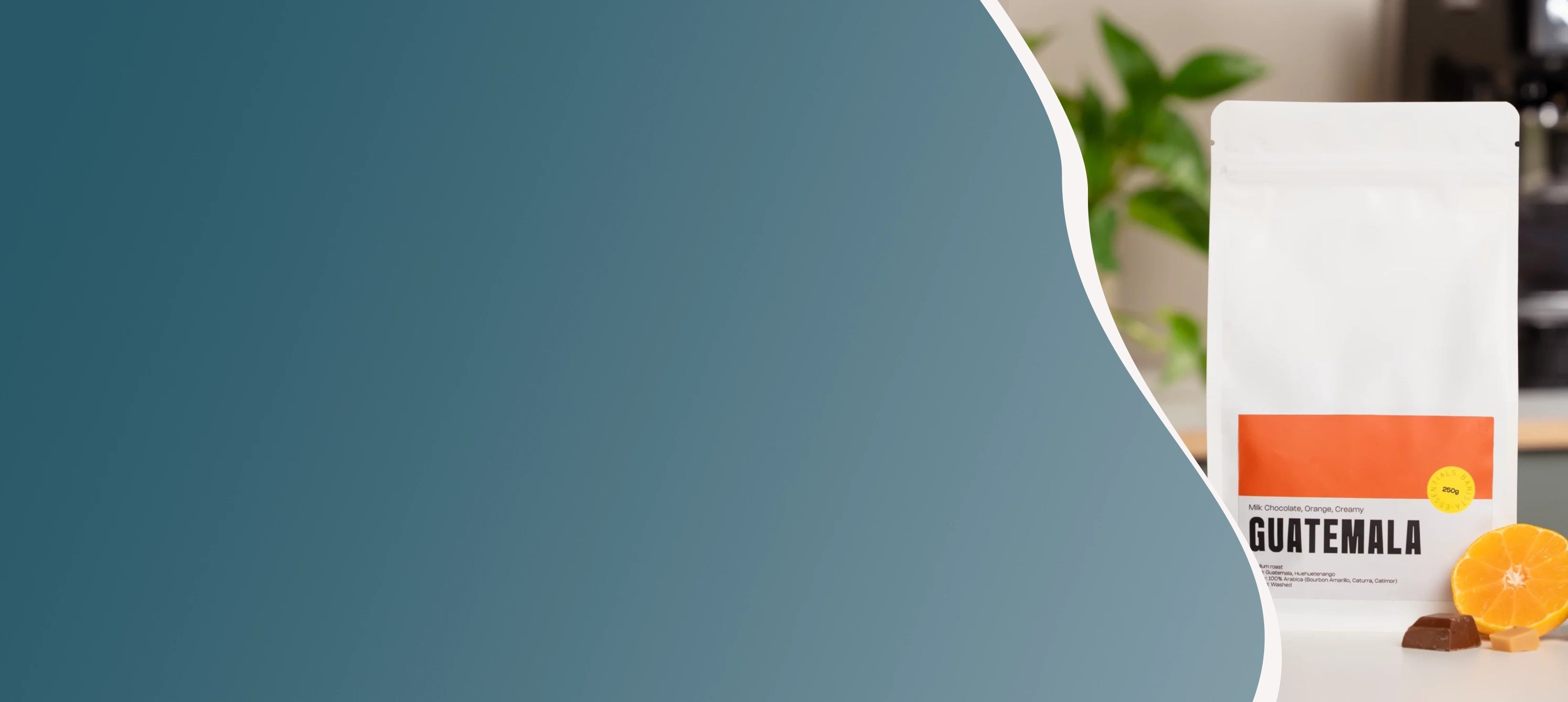
Are Guatemala coffee beans suitable for home use?

Yes, Guatemala coffee beans are suitable for home baristas who enjoy a full-bodied, mild coffee with recognizable flavors such as chocolate, nuts, and caramel. You can use these beans for espresso, cappuccino, French Press, V60, Chemex, and AeroPress. If you're making espresso with a semi-automatic or piston machine, a single origin like Guatemala will require more attention when adjusting your coffee grinder.

When I work with home baristas, I notice that many people choose coffee beans based on the flavor description. This is understandable, as words like chocolate, nuts, and caramel sound familiar. With Guatemala coffee beans, this expectation often matches what you taste in the cup: a full-bodied coffee without a sharp initial impression. In this blog, I'll explain how to use these beans at home and what to pay attention to when using them for espresso or milk drinks.

Guatemala Koffiebonen – een luxe cadeau voor koffieliefhebbers.

First, understand taste

Guatemalan coffee beans are often chosen by coffee drinkers who enjoy a full-bodied, accessible coffee. You'll often taste flavors that many people find pleasant: chocolate, nuts, and a soft, caramel-like note. This makes this coffee interesting for home baristas looking for one coffee suitable for multiple brewing methods.

Review Guatemala coffee beans

What do Guatemala coffee beans taste like?

Espresso die uit een filterdrager stroomt en naast een v60 filterkoffie staat.

Choose your brewing method consciously

Guatemala coffee beans are versatile for espresso and filter coffee. The brewing method determines how much body, clarity, and mellowness you experience in the cup. This section helps you, the home barista, choose between an espresso machine, French Press, V60, Chemex, and AeroPress.

View all coffee beans

Which brewing method goes well with Guatemala coffee beans?

For filter coffee, V60, Chemex, and AeroPress, Guatemalan coffee beans are pleasant because their flavour remains recognizable. Grind your coffee beans just before brewing and use a grind size appropriate for your brewing method. For V60 and Chemex, you typically use a medium to medium-fine grind, allowing the water to flow gently through the ground coffee. For French Press, the grind can be coarser because the coffee remains in contact with the water for longer. If you're using an AeroPress, you can experiment with grind size, contact time, and recipes. Guatemala is a great coffee to taste the differences: the same bean can taste fuller in a French Press, while a V60 provides more clarity.

Hand plaatst een zilverkleurige 53,3 mm doseerring op een portafilter met versgemalen koffie, met een Sage Barista Express espressoapparaat en houten tamperset op de achtergrond.

Espresso demands more control

Many home baristas notice that a single origin reacts differently than an espresso blend. For espresso, grind, dosage, and extraction time determine how much balance you get from the coffee. Discover why Guatemala coffee beans require more attention in an espresso machine.

Learn to understand single origin and blend

Why does Guatemala ask for coffee as espresso for a good adjustment?

If you use Guatemalan coffee beans in an espresso machine, you are working with a single origin. This means that the coffee comes from a single origin and is therefore often less "rounded" than a blend that has been deliberately composed for a bombastic espresso shot. In practice, you will notice this mainly when adjusting your coffee grinder. A small adjustment in the grind size can already make a difference in extraction time and taste. If your espresso extracts too quickly, it will taste thin or sour more quickly. If it extracts too slowly, it can become drier or more bitter. Therefore, start by weighing: weigh your ground coffee beans in the portafilter, measure the amount of espresso in your cup, and note the extraction time. This way, you will learn what your machine does with this coffee.

Handgemaakt Cappuccino Kopje Groen (180 ml) van Barista Essentials, perfect voor cappuccino’s, met een elegant design en duurzame keramieken afwerking. 2

For milk drinks, coffee should have enough body

In addition to our unique expertise in the field of circular economy, we are also experienced in the field of recycling of various materials and components, for example within our own waste sorting installation. For example, we separate and recycle materials such as paper, cardboard, plastics, metals and textiles.

Check out the Brazil / Ethiopia blend

Are Guatemala coffee beans suitable for cappuccino and latte?

Yes, Guatemala coffee beans can work well in cappuccino, latte, and flat white, especially if you like chocolate notes and a smooth finish. Milk rounds out the coffee and can enhance the bean's caramel-like qualities. However, it's good to honestly consider your goal. If you primarily want to easily make a full-bodied cappuccino that tastes roughly the same every morning, then an espresso blend might be more practical. The Brazil/Ethiopia blend is a logical option in that case, as a blend often reacts more consistently in an espresso machine and holds up well in milk. If you want to discover how a single origin behaves in espresso and milk, then Guatemala is a beautiful coffee to practice with.

Vacuum voorraadbus van 250 gram van Barista Essentials gevuld met verse koffiebonen, met digitaal display en maatlepel – ideale luchtdichte bewaardoos voor thuisbarista’s die hun koffiebonen vers willen houden.

Freshness remains important

Our goal is to make a positive social impact in the local communities where our products are manufactured, and to reduce their environmental impact.

Learn more about best by date and freshness

How do you store Guatemala coffee beans at home?

Store Guatemala coffee beans in a dry, dark, and well-sealed place. Preferably, don't place the bag next to your espresso machine, as heat and fluctuating temperatures can cause the coffee to deteriorate faster. When you open a new bag, pay attention to how the coffee behaves in the first few days. For espresso, fresh coffee can extract differently than coffee that has been open for longer. Sometimes you may need to adjust the grind slightly to achieve a good extraction time again. This is not a fault of the bean or your machine; coffee simply changes after roasting and after opening the packaging. If you use a coffee scaleand occasionally note down your recipe, you'll more quickly notice when your coffee starts to behave differently.

Frequently asked questions about Guatemala coffee beans

Are Guatemala coffee beans suitable for espresso?

Yes, Guatemala coffee beans are suitable for espresso. Since it's a single origin, the coffee does require more attention when adjusting your grinder, dosing, and extraction time.

How do Guatemala coffee beans taste?

Lidmaatschap van de club biedt exclusieve toegang tot een verscheidenheid aan voordelen, zoals: gratis toegang tot onze evenementen, kortingen bij onze partnerbedrijven, de mogelijkheid om deel te nemen aan onze bestuursvergaderingen en stemrecht.

Can I use Guatemala coffee beans for cappuccino?

{"type":"root","children":[{"type":"paragraph","children":[{"type":"text","value":"Yes, that works well. The chocolate notes and soft finish pair well with milk. If you primarily want a stable, full-bodied cappuccino, an espresso blend might sometimes work more easily."}]}]}

What grind size should I use for Guatemala coffee beans?

For espresso, use a fine grind and adjust according to taste and extraction time. For V60 or Chemex, you usually use a medium to medium-fine grind. For French Press, the grind can be coarser.

What is the biggest difference between a single origin and an espresso blend?

A 30-day money-back guarantee means that you can return a product within 30 days of purchase for a full refund. This gives you the opportunity to try out the product and return it if you are not satisfied, without any financial risk. Please refer to our returns policy for the exact conditions.

I have another question.

Which Guatemala coffee beans are right for you?

Guatemalan coffee beans are a good choice if you want to brew a full-bodied, mild coffee at home with recognizable notes of chocolate, nuts, and caramel. For pour-over, French Press, and AeroPress, they are accessible and versatile. For espresso, you can achieve beautiful results, as long as you are willing to properly adjust your coffee grinder and measure your extraction time. If you are primarily looking for convenience and a full-bodied milk drink, a blend such as Brazil / Ethiopiamight be more practical. The Barista Shop helps you make better coffee by connecting coffee beans, modules, and workshops with what you actually do at your kitchen counter at home.

Do you want to try Guatemala coffee beans or learn why single origin and blends work differently in your espresso machine? Start with the beans or delve deeper step-by-step with Espresso Under Control.

Voordeel verpakking van Cuba, Brazil, Sulawesi en Guatemala koffiebonen – perfect voor La Marzocco espressomachines.

Specialty Coffee coffee beans

Choose your preference:

  • Brazil - Ethiopia
  • Sulawesi - Indonesia
  • Guatemala
  • Cuba
Shop coffee beans
Guatemala koffiebonen van Barista Essentials naast een espressomachine, filterdrager en koffiemolen voor thuisbarista’s

☕ Guatemala Coffee Beans: Flavor, Brewing Methods, and Home Tips

Guatemalan coffee beans are popular among home baristas because they often deliver a full, recognizable flavor. Think of chocolate, nuts, caramel, and a smooth finish. These are flavors that many coffee drinkers can immediately relate to, especially when making espresso, cappuccino, or filter coffee at home.

Yet, during workshops, I notice that a beautiful single-origin coffee doesn't automatically work easily in every espresso machine. The beans can be good, your machine can be good, and yet your espresso might run through too quickly or taste sharper than you expect.

In this blog, I'll explain how to use Guatemalan coffee beans at home, which brewing methods make sense, and why you should pay more attention to your grind, dosage, and extraction time when making espresso.

Back to blog

Leave a comment

Please note, comments need to be approved before they are published.