Is this coffee blend suitable for espresso?

Yes. The Brazil and Ethiopia blend is suitable for espresso, cappuccino, flat white, and other coffee drinks with milk. Brazilian coffee forms the rounded base with chocolate and caramel, while Ethiopian coffee adds a floral, fresher finish. This keeps the espresso accessible and allows you to taste more than just a dark, bitter coffee flavor.

During workshops, I notice that home baristas often know what flavor they are looking for, but find it difficult to translate that taste into information on a coffee package. Words like Brazil, Ethiopia, blend, and medium roast only mean something when you understand what they can do in the cup.

The Brazil and Ethiopia blend from Barista Essentials is a clear example of this. The coffee has sufficient body for a classic espresso and cappuccino, with a lighter floral note in the finish. Below, I explain where this character comes from and how to adjust this coffee as a starting point.

Koffiecadeau: luxe koffiebonen blend voor de liefhebber – ideaal voor feestdagen of verjaardag.

Two coffee countries, two different contributions

The name of a coffee-producing country is not a guaranteed flavor. Origin does help to understand why different coffee beans together can form a particular character.

Learn to choose coffee beans

How do Brazilian and Ethiopian coffee beans taste together?

Thuisbarista bewaart verse koffiebonen naast een espressomachine in een vacuüm voorraadpot voor betere espresso thuis.

A blend creates a recognizable flavor profile

A blend consists of coffee beans from multiple origins that are deliberately combined. Each component contributes a part of the final taste and body.

Why does a coffee blend often work well in an espresso machine?

An espresso machine extracts a lot of flavour from a small amount of ground coffee in a short time. This quickly makes differences in acidity, bitterness, body, and freshness noticeable. A well-composed blend can combine different characteristics into an espresso that is versatile.

In this coffee, Brazil provides the round, chocolatey base. Ethiopia gives the espresso a lighter, floral finish. Barista Essentials roasts this blend as a medium roast. This means the coffee is more developed than a light roast, while still leaving room for the characteristics of both origins.

During workshops, I notice that such an accessible blend can be pleasant when someone is still learning to adjust their espresso machine. The flavour profile is recognisable and works both black and with milk. The blend doesn't do the adjusting for you, but it does provide a usable starting point.

Cappuccino, latte en flat white naast een RVS melkkan en espressomachine voor thuisbarista’s die goed melkschuim willen maken

The same coffee in different drinks

Milk changes how you experience the flavors of espresso. Therefore, it's important that the coffee has sufficient body and recognizable basic flavors.

Is this blend suitable for cappuccino and other milk-based drinks?

The Brazil and Ethiopia blend is suitable for cappuccino, flat white, latte, and other classic coffee drinks with milk. The caramel and chocolate notes complement the natural sweetness of well-steamed milk. The Ethiopian component prevents the flavor from being solely heavy and dark, and can provide a floral freshness in the aftertaste.

For a cappuccino, you need an espresso that remains recognizable when you add milk. A very light or distinctly fruity coffee can taste different in milk than you expect. This medium roasted blend has a fuller base, ensuring the coffee flavor remains present.

This is also useful for an Americano. The extra water lightens the espresso's texture, but the chocolatey base remains recognizable. Don't automatically use more ground coffee for a milk drink. Start with a well-calibrated espresso and then add milk or water in the desired ratio.

Oplaadbare weegschaal met auto timer voor koffie en espresso extractie van de Barista Shop 5

Start with a recipe that you can measure

In addition to our unique expertise in the field of circular economy, we are also experienced in the field of recycling of various materials and components, for example within our own waste sorting installation. For example, we separate and recycle materials such as paper, cardboard, plastics, metals and textiles.

How do you dial in these coffee beans for espresso?

Start with 18.5 grams of ground coffee beans in your portafilter (16 grams for Sage). Aim for approximately 36 to 54 grams of espresso in 22 to 26 seconds (32 to 48 grams for Sage). Weigh both the ground coffee and the espresso so you know what ratio you are actually using. Measure the extraction time from the moment you start the extraction.

Then taste the espresso. If it tastes thin, sharp, or noticeably sour and extracts quickly, grind the coffee beans a little finer. If it tastes dry or very bitter and the espresso extracts very slowly, set the grinder a little coarser. Always change one setting and then brew another espresso.

In simple terms, extraction here means that water dissolves flavour compounds from the ground coffee. The grind size determines how much resistance the water encounters. Therefore, a small adjustment to your coffee grinder will already have a noticeable effect on the extraction time and taste.

Specialty koffiebonen blend uit Brazilië en Ethiopië van Barista Essentials, geschikt voor thuisbarista’s.

The beans remain part of a daily routine

Our goal is to make a positive social impact in the local communities where our products are manufactured, and to reduce their environmental impact.

Which home barista is this coffee blend a good choice for?
This blend is suitable for a home barista who enjoys a full-bodied, accessible espresso and also wants to use the same coffee beans for cappuccino, flat white, or Americano. The chocolate and caramel notes provide familiarity, while the Ethiopian coffee adds a more floral accent.

The blend is also practical when multiple people at home drink different coffee beverages. You won't need to adjust the coffee grinder for different beans for each drink. A good espresso forms the base; then you decide what drink you'll make with milk or water.

Store the coffee beans well-sealed, in a dry and dark place. Only grind the amount of coffee beans you will use immediately. Optionally, note down your dosage, yield, and extraction time. This will help you replicate a successful espresso more easily and make targeted adjustments if the coffee starts to extract faster over time.

Grote vacuüm koffievoorraadpot van borosilicaatglas – Houdt koffiebonen langer vers en aromatisch.

Protect coffee beans after opening

Fresh specialty coffee beans continue to develop after roasting. As soon as you open the packaging, they repeatedly come into contact with oxygen, heat and moisture, causing aromas to gradually disappear. The way you store the beans therefore influences what you later taste in your espresso.

View the vacuum storage containers

Why store specialty coffee beans in a vacuum?

Oxygen accelerates oxidation: the natural process by which roasted coffee beans gradually lose aroma, fragrance, and vibrancy. For specialty coffee, careful storage is even more relevant because you want to continue to distinguish the individual flavor notes. When coffee beans deteriorate, the espresso may taste flatter, have less body, and release less aroma during grinding.

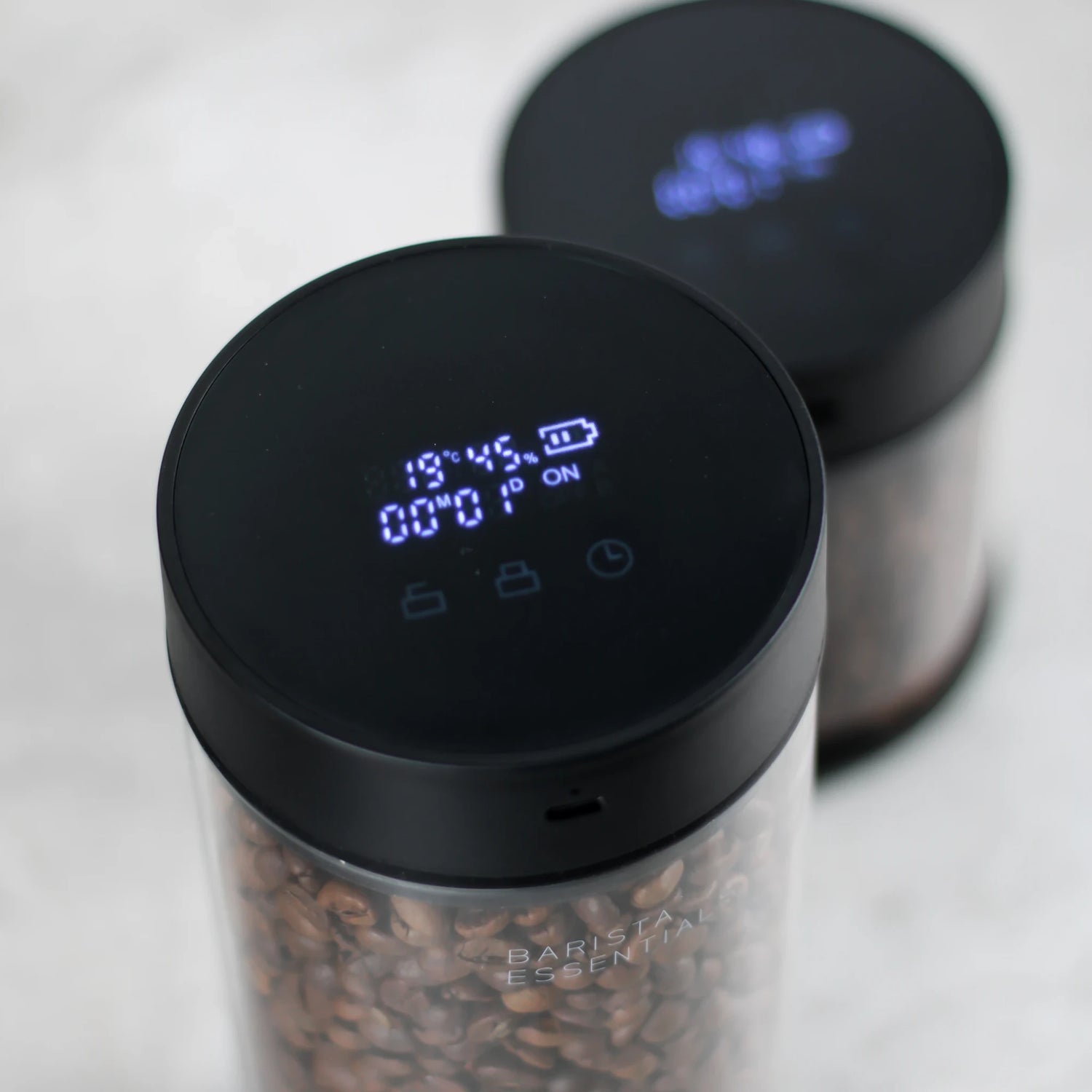
The automatic vacuum storage jar from Barista Essentials pumps air out of the jar at the push of a button. This exposes the coffee beans to less oxygen and moisture than in a storage jar that retains ordinary air. The digital display shows the temperature, humidity, and storage time. The jar is USB-C rechargeable and available for approximately 250 or 500 grams of whole coffee beans.

Store the transparent jar in a cool, dry place away from direct sunlight. Fill it with whole coffee beans and only grind what you need immediately. According to the product information, finely ground coffee can damage the vacuum mechanism.

Frequently asked questions about the Brazil and Ethiopia coffee blend

Is a Brazil-Ethiopia blend suitable for espresso?

Yes. The Brazilian coffee provides body and chocolatey flavours, while the Ethiopian coffee adds a more floral and fresh accent.

Can I use these coffee beans for cappuccino?

Lidmaatschap van de club biedt exclusieve toegang tot een verscheidenheid aan voordelen, zoals: gratis toegang tot onze evenementen, kortingen bij onze partnerbedrijven, de mogelijkheid om deel te nemen aan onze bestuursvergaderingen en stemrecht.

Is this coffee light, medium, or dark roasted?

{"type":"root","children":[{"type":"paragraph","children":[{"type":"text","value":"Barista Essentials lists this blend as medium roast. As a result, the coffee has a full body, while the characteristics of both origins can remain recognizable."}]}]}

What's a good brewing recommendation for these coffee beans?

Start with 18.5 grams of ground coffee (for 18-gram filter baskets) and aim for 36 to 54 grams of espresso in 22 to 26 seconds. After that, adjust the grind based on the extraction time and taste.

What is the difference between a blend and a single origin?

A 30-day money-back guarantee means that you can return a product within 30 days of purchase for a full refund. This gives you the opportunity to try out the product and return it if you are not satisfied, without any financial risk. Please refer to our returns policy for the exact conditions.

I have another question.

Is the Brazil & Ethiopia blend for you?

If you're looking for coffee beans with a full base for espresso and enough flavour for cappuccino, then this blend is a logical choice. Brazil brings chocolate, caramel and a round mouthfeel. Ethiopia adds a floral, fresher finish.

Start with the brewing advice and then adjust the grind based on the extraction time and what you taste. Do you want to better understand why coffee beans react differently or why your espresso changes daily? The Barista Shop helps you make better coffee with practical explanations, online modules, workshops and carefully selected products.

Consider this blend if this flavor profile suits you, or first delve deeper into choosing and adjusting coffee beans for espresso.

Beste koffiebonen voor thuisbarista’s, ideaal als cadeau – 500 gram verpakking.

Taste Brazil & Ethiopia in your own espresso machine

A medium-roasted coffee blend with a rounded chocolate and caramel base, complemented by a floral, fresh finish. Suitable for espresso, cappuccino, flat white, and Americano.

View the coffee blend
Brazilië en Ethiopië koffiebonen blend van Barista Essentials met op de achtergrond een Sage espressomachine

Is a Brazil - Ethiopia blend good for espresso?

When you're looking for coffee beans for espresso, you'll quickly come across names of countries and all sorts of flavour descriptions. Yet, the most important question often remains unanswered: what do you actually notice at home when you make an espresso or cappuccino?

I often use coffee from Brazil as an example of a rounded, accessible base. In this blend, that base is complemented by Ethiopian coffee, which adds a more floral and fresher character.

In this blog, I explain how that combination tastes, why it works well in an espresso machine, and how to practically adjust the first espresso made with these coffee beans.

Back to blog

Leave a comment

Please note, comments need to be approved before they are published.