Skip to product information
1 of 6

☕ Latte Cup | Terracotta Pink | Barista Essentials

☕ Latte Cup | Terracotta Pink | Barista Essentials

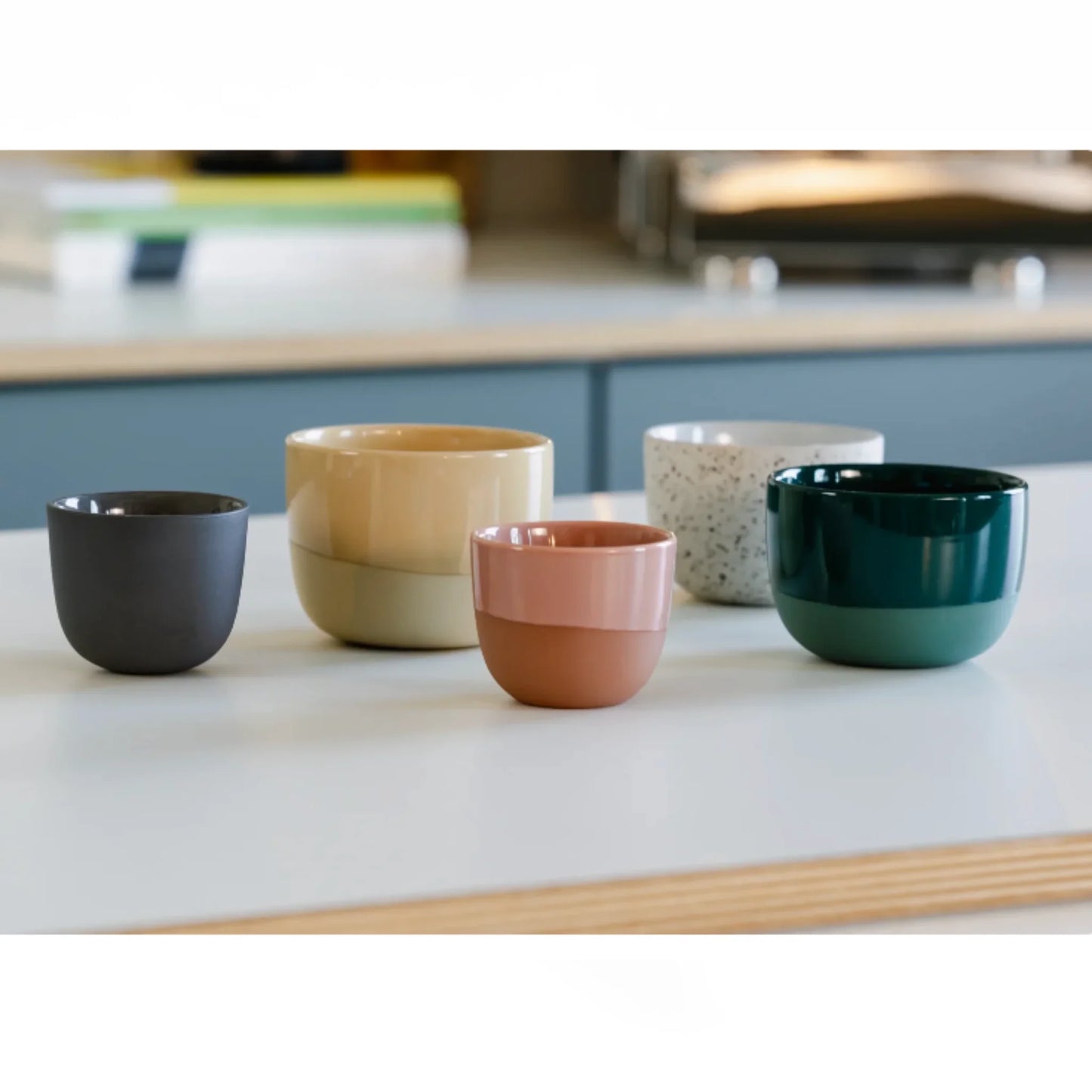
This handmade porcelain latte cup from Barista Essentials has a capacity of 250 ml and measures 88 × 88 × 65 mm. This makes it a logical choice for caffè latte, a larger cappuccino, and for practising latte art. Think of the cup primarily as a fixed serving size: your espresso, milk texture, and ratios ultimately determine the taste. You can order directly from Barista Essentials.

  • 250 ml fixed size for lattes and larger cappuccinos
  • 88mm wide design with space to pour latte art
  • Handmade porcelain with a half-glazed finish
Regular price €18,95
Regular price Sale price €18,95
Sale Sold out
Taxes included. Shipping calculated at checkout.

You will be redirected to Barista Essentials, where you can order, pay, and complete your order.

View full details
  • Brand

    Barista Essentials

  • Product type

    Half-glazed latte mug

  • Size / Content

    Half-glazed latte mug

  • Suitable for

    No specific machine connection needed. When using under the spout, ensure a minimum of 65mm clear height and add the height of any coffee scale.

  • Material / finish

    Porcelain

  • Cleaning / Maintenance

    Dishwasher safe according to Barista Essentials. Preferably rinse the cup shortly after use. Barista Essentials also advises not to soak the natural exterior of the handmade porcelain cups for extended periods.

  • Colour

    Terracotta Pink

  • Package contents

    1x Half-glazed latte mug

Why this helps make better coffee

A latte seems simple: espresso in a cup, milk added, and done. Yet, with milk-based drinks, a lot of variation arises because people at home often use random mugs and cups. One day you pour into a small cup, the next day into a large mug. This unknowingly changes how much milk you add, and the same espresso can suddenly taste much milder, milkier, or weaker.

Even with latte art, the chosen cup makes a difference in how comfortably you can pour. In a narrow or tall glass, you have less surface area to bring the milk close to the coffee surface. A wider cup provides more room for movement, but it doesn't solve the technique itself for you.

This latte cup gives you a fixed starting point of 250 ml. This allows you to better recognize how much space you actually use for espresso, warm milk, and milk foam. If you first want to understand how much espresso and milk belong in a caffè latte, cappuccino, or flat white, then Coffee drinks and ratios – Build cappuccino and latte as they are intendeddirectly connects to that.

The main function of this cup is not to suddenly make your coffee taste better. It provides you with a consistent, recognizable serving format.

With a capacity of 250 ml, it accommodates milk-based drinks where espresso and milk are poured together into one cup. Barista Essentials positions this size for lattes and larger cappuccinos. The cup is 65 mm high and 88 mm wide. This relatively wide shape offers a larger surface area than a tall, narrow glass when pouring, which can be particularly advantageous when you want to practice latte art.

It's important not to treat that 250 ml as a recipe. It's the maximum capacity of the cup, not the amount of drink you are obliged to make. First, determine which drink you want to make and what espresso-to-milk ratio is appropriate. Then, use the cup as suitable serveware.

If you then want to focus on the milk you're pouring with, a 350 ml stainless steel milk frothing pitcheris a logical addition for smaller amounts of milk. This allows you to tackle another step: frothing and controlled pouring of the milk.

A fixed 250 ml size that helps you serve milk drinks more consistently and gives you more room to practice latte art.

Set van drie kopjes met centraal een latte kopje van 250 ml in terracotta pink. Perfect voor dagelijks gebruik met een De’Longhi of Philips espressomachine. Sterk porselein, krasbestendig en minimalistisch design.

Who is this suitable for?

This latte cup is especially for you if you regularly make caffè latte or a larger cappuccino at home and don't want to use a different mug every time.

It's also a logical choice when you're starting with latte art. The wide size gives you more surface area to move the milk through the espresso and then pour closer to the surface. The cup primarily helps you with presentation and repeatability; you still need to create beautiful microfoam and a controlled pouring technique yourself.

Even if you deliberately want to use different cup sizes for different coffee drinks, 250 ml is a useful size. For example, you can use 60 ml for espresso, 180 ml for cappuccino, and 250 ml for latte side by side. Barista Essentials itself uses the same three-part division within its cup assortment.

Check out the Terracotta Pink latte cup at Barista Essentials

For whom is this not necessary?

This makes less sense if you actually want to make a small, more coffee-rich milk drink. If you mainly drink cappuccino or flat white and find that 250 ml quickly tempts you to use a lot of milk, then a Terracotta Pink 180 ml cappuccino cupmight be a better fit.

For a classic latte macchiato, where the visible layers in a tall glass are part of the presentation, a tall latte macchiato glass is more appropriate than this short cup.

And is your latte failing mainly because your espresso tastes sour, bitter, or watery? Don't buy a different cup first, expecting that to solve the taste issue. A cup can make your serving routine clearer, but it won't change an incorrect grind, the wrong amount of coffee, or poorly extracted espresso. In that case, The 3 Golden Rules of Espressois a much more logical first step.

  • Compatibility

    A coffee cup has no technical connection to your espresso machine. So you don't need to choose a portafilter size, brand, or brew group type.

    What you DO need to pay attention to at home is the physical space under your machine. This latte cup is 65 mm high. If you place it directly under the spout, there must be sufficient free height for it. If you also use a coffee scale under your cup while brewing, add the height of that scale to the 65 mm of the cup. This way, you prevent a combination that fits separately from not fitting under the spout together.

    Therefore, it's better to check the free height of your machine yourself rather than relying on general lists of machine brands. For serving after brewing, the machine height is, of course, irrelevant.

    The 250 ml capacity is especially suitable if you want space for a latte or a larger milk drink. If you are looking for a more compact size, a 180 ml cappuccino cup is a logical alternative.

  • Size

    250 ml · 88 × 88 × 65 mm · 166 g

  • Machines and painters

    Not machine-specific

  • Specifications

    Not machine-specific

Privé barista coaching aan huis door Geert-Jan van der Molen, waarbij espresso technieken worden uitgelegd en geproefd tijdens een persoonlijke koffie training.

Advice from Geert-Jan the Barista Man

With over 10 years of experience in providing barista workshops at home, at businesses, and in Amsterdam, Geert-Jan is happy to share his advice.

Who is Geert-Jan?

From practice:

For this specific cup, no personal use test by Geert-Jan the Baristaman has been confirmed. The advice is therefore based on the current dimensions, material, shape, and practical role of a fixed cup size in the preparation of milk-based drinks.

My advice:

Consider this cup primarily as a well-chosen tool for the final step: serving.

Its strong point, for me, isn't in all sorts of promises about what a pink cup would do to the taste. Far more important is that you use one fixed 250 ml size. Especially as a beginner, this makes your routine more manageable. You'll quicker see how much espresso and milk you're using and prevent the amount of milk from changing every day because you happen to grab a different mug.

For latte art, the wide shape is practical, but even there, I don't want to overstate the cup's role. A wide cup provides space for pouring. It doesn't make good microfoam for you and doesn't correct milk with large air bubbles.

If you don't yet know how much espresso and milk actually belong in your latte, I would therefore first check out Coffee Drinks and Ratios. If you then want to specifically froth and pour your milk, a 350 ml milk frothing pitcheris a much more logical second tool than yet another accessory that doesn't change your milk technique.

Los latte kopje van 250 ml in de kleur terracotta pink, gemaakt van hoogwaardig porselein. Compatibel met espressomachines met stoompijpje van Sage, Gaggia of Krups. Geschikt voor latte art en vaatwasmachinebestendig.

Here's how to use this in your coffee routine

A barista tool only really works well when you know where it fits into your routine.

Get into the routine:

Serve

Usage:

Serve

Geert-Jan's tip:

If you usually make one latte at a time, it is better to use a milk pitcher that matches that amount of milk rather than an unnecessarily large pitcher. A 350 ml stainless steel milk frothing pitchergives you room for the milk to expand during frothing and has a spout for controlled pouring.

Los latte kopje van 250 ml in de kleur terracotta pink, gemaakt van hoogwaardig porselein. Compatibel met espressomachines met stoompijpje van Sage, Gaggia of Krups. Geschikt voor latte art en vaatwasmachinebestendig.

Note:

Check out the Terracotta Pink latte cup at Barista Essentials

Set van drie kopjes met centraal een latte kopje van 250 ml in terracotta pink. Perfect voor dagelijks gebruik met een De’Longhi of Philips espressomachine. Sterk porselein, krasbestendig en minimalistisch design.

Common mistake

Check out the Terracotta Pink latte cup at Barista Essentials

Also learn what goes into your latte

A good cup helps you serve the drink consistently, but espresso and milk determine what you ultimately taste. Therefore, start with Coffee Drinks and Ratios if you want to understand why caffè latte, cappuccino, and flat white taste different despite having the same base. If the espresso under your milk drink itself keeps changing, then first go back to The 3 Golden Rules of Espresso.

Online barista module koffiedranken verhoudingen cappuccino latte espresso

Learn how much espresso and milk go into different coffee drinks, so you don't automatically fill the 250 ml cup to the brim.

Coffee Drinks and Proportions – Build Cappuccino and Latte the Way They Were Meant to Be

€0,00
Review this module
Online barista module drie gouden regels voor goede espresso zetten

Use this first when the espresso under your latte still tastes sour, bitter, watery, or unpredictable.

The 3 Golden Rules of Espresso – Why Your Shots Keep Changing (and How to Stop It)

€4,95
Review this module

Frequently Asked Questions

Los latte kopje van 250 ml in de kleur terracotta pink, gemaakt van hoogwaardig porselein. Compatibel met espressomachines met stoompijpje van Sage, Gaggia of Krups. Geschikt voor latte art en vaatwasmachinebestendig.

Should I buy this latte cup from The Barista Shop or Barista Essentials?

You order the cup from Barista Essentials. The order button will redirect you to Barista Essentials, where payment will take place. Barista Essentials will also handle stock, shipping, delivery, returns, and any warranty or service requests, all according to their current terms and conditions.

Will I pay more if I order through the partner link?

No. The price that Barista Essentials shows at the time of ordering is the price on which you base your purchase. When you order via the partner link, De Barista Shop may receive a commission.

Will this latte cup fit under my espresso machine?

The cup is 65 mm high. Measure the free space between your drip tray or scale and the spout of your machine. If you use a coffee scale under the cup, include its height in your measurement. You don't need to choose a specific machine brand: the cup has no technical connection to the machine.

Can the Terracotta Pink latte cup go in the dishwasher?

Yes. Barista Essentials states that the handmade porcelain barista cups are dishwasher safe. Preferably rinse off coffee residue shortly after use and do not leave the natural exterior to soak unnecessarily long when cleaning it by hand.

When is this latte cup not my first logical purchase?

If you mainly struggle with sour, bitter or watery espresso, coarse milk bubbles or unclear proportions between espresso and milk, the biggest gain is not in another cup.

Start with The 3 Golden Rules of Espressoif your espresso is not consistent. If you don't know how much milk a latte or cappuccino needs, check out Coffee Drinks and Ratios. If you then want to learn how to froth and pour your milk better, a suitable milk jug is a more logical addition.

Order, payment, shipping, returns and warranty of the cup are handled by Barista Essentials and according to their current terms and conditions.

I have another question

You can always contact Geert-Jan de Baristaman

Would you like your latte in a standard 250 ml size?

Would you like your latte in a standard 250 ml size?

You order and pay directly with Barista Essentials; they also handle delivery, returns, and further service.