How can the output vary if the machine has to deliver a fixed amount of water?

Many Sage (Breville) espresso machine users notice the same thing: you program the water volume for a single or double shot, but during brewing, you still get different espresso volumes. Sometimes one shot is 40 ml, the next 55 ml – even though you haven't adjusted any of the settings.

This raises a logical question: how can the output vary if the machine has to deliver a fixed amount of water?

The answer is simpler than you think, but it's rarely explained clearly. This article explains exactly why Sage machines react this way, what's happening technically, and how you can achieve consistent results.

Thuisbarista plaatst roze espressokopjes van 60 ml onder pistonmachine van Philips, Gaggia of Krups. Deze handgemaakte kopjes zijn stapelbaar, beschermen de cremalaag en passen perfect bij machines met stoompijpje.

How to Program Water Amount on Sage Espresso Machines

Most Sage models—such as the Barista Express, Barista Pro, Barista Touch, Bambino, and Duo-Temp—appear to operate volumetrically. You program "60 ml" for a double espresso, so you'd expect the machine to always dispense 60 ml.

But there is one crucial point that is often unclear:

Sage machines don't measure volume. They measure time.

These machines do n't have a real flow meter , like those found in professional espresso machines. Instead, the machine simply remembers:

“How long did the pump run while programming?”

So if you pump for 8.5 seconds for a double shot, the machine remembers that time – not the volume, which happened to be 60 ml at the time.

Portafilter met blindfilter wordt in Sage espressomachine geplaatst voor backflush-reiniging.

Why is this important?

Because time + water pump = an estimate.
Time + resistance of the coffee puck = variable output.

This brings us to the heart of the problem.

Why the amount of water still varies

Because Sage machines are time-controlled, the output changes as the resistance in the coffee puck changes. And that resistance changes continuously by:

  • 1. Grinding degree

    • Finer ground coffee → more resistance → less water flows through in the same time.
    • Coarser ground coffee → less resistance → more water passes.

    Even a small shift of one click on the grinder can have an impact.

  • 2. Tamper evident

    Hard tamping compacts the coffee → higher resistance → less water output.
    Soft tamping → lower resistance → more output.

    Even baristas who think they are tapping consistently are unknowingly varying the pressure by several pounds.

  • 3. Dosage quantity

    18 grams versus 17.3 grams of coffee already makes a difference.
    More coffee = higher resistance.
    Less coffee = lower resistance.

  • 4. Freshness of beans

    Fresh beans contain more CO₂ and create more back pressure. Older beans, on the other hand, allow water to pass through more quickly.

  • 5. Blockages or contamination

    Coffee residues, blocked shower screens or limescale can affect water flow and thus lead to variable output.

Why Does It Then Seem Like You're "Programming Volume" Anyway?

When setting it up, you press start, let the machine run until you're satisfied, and then press stop. At that point, the machine records how long it ran. And because with your grind and tamp, that time resulted in exactly 60 ml, it appears to be storing volume. But as soon as any of these variables change—even slightly—the time and volume are no longer accurate.

What does this mean in practice for Sage users?

1. Inconsistent output is normal behavior

It's not a defect. It's simply how the machine is designed.

2. You will always see slight variation

Especially when you change beans, adjust grind size or tamp differently.

3. Consistency doesn't come from the button, but from your workflow

This is why home baristas and professionals work with permanent:

  • Dosing quantity
  • Grinding degree
  • Tamping
  • Extraction ratio (e.g. 1:2 ratio on a scale)

How to Get Consistent Espresso with a Sage Machine

Want more stable output? Use this proven approach:

View headings

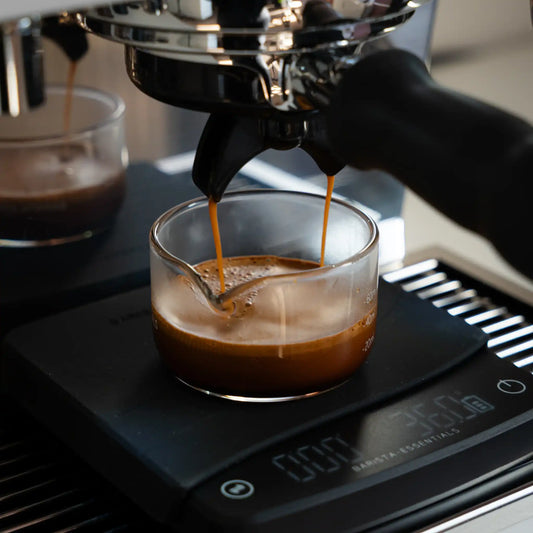
1. Work with a scale

Measure both your coffee in (e.g. 18g) and coffee out (e.g. 36g).
A machine that works on time is compensated with precision.

2. Only program when the puck is perfect

So:

  • same degree of grinding
  • same coffee
  • same tamp printing
  • grinder completely stable

Otherwise you program a time that is based on deviating circumstances.

3. Clean regularly

Shower screen
Portafilter
Group head
Descale if necessary

4. Understand that these machines are semi-automatic

Sage makes espresso accessible and fast, but they don't replace professional volumetric systems with flow meters.

Naked espresso pistonhouder en portafilter van hout 54mm voor sage en solis espressomachine 4.

So Is A Sage Machine Bad?

On the contrary. For their price point, Sage and Breville machines are excellently designed: quick to heat, intuitive, appealing to home users, and with a high flavor output.

Only you have to understand that the “water quantity programming” is not volumetric — and that explains the variation.

Once you know this, you can work much more precisely and achieve better results.

Conclusion: Why Output Differs Even with Same Settings

Sage machines do not control espresso output based on water volume, but on pump time .
Because coffee resistance fluctuates constantly due to grind, tamp, volume, freshness and contamination, the amount of water passing through will never be exactly the same.

So:

The problem you are experiencing is completely normal and explainable.

When you work with:

  • a good workflow
  • consistency in your coffee puck
  • a scale

…you can still make very consistent espressos.

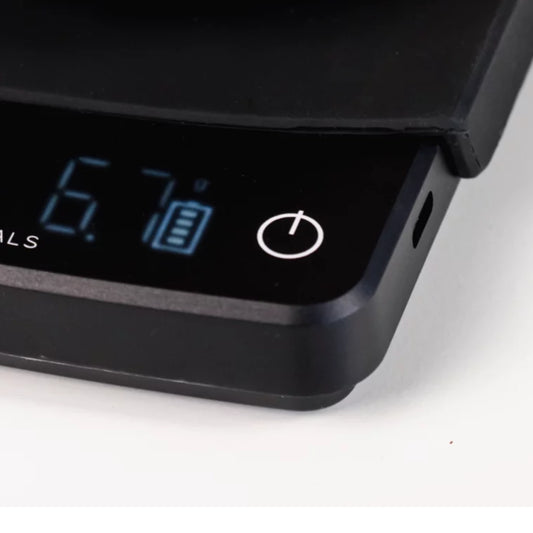
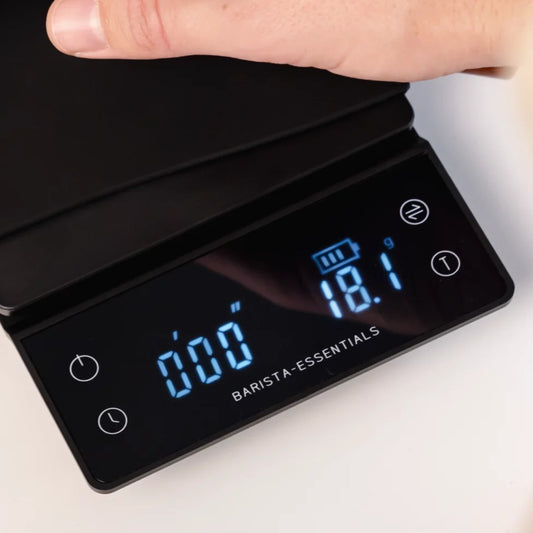
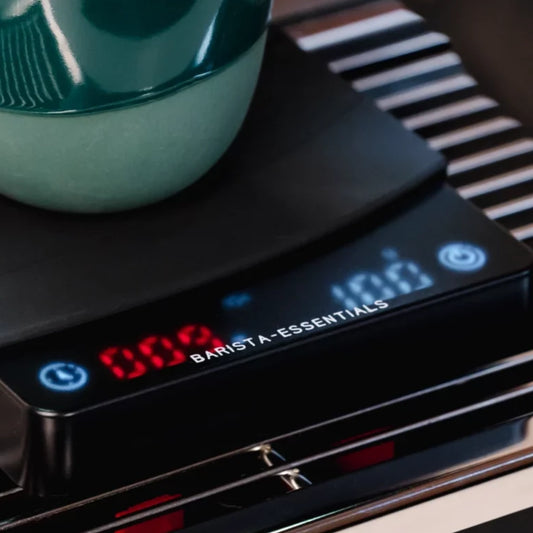
Digitale koffie weegschaal met timer en 0,1g precisie voor barista’s en koffieliefhebbers.

Scale with timer

This coffee scale with timer allows you to weigh your coffee beans and monitor your brewing time.

Rechargeable, tare function, anti-slip mat

Shop
Espresso stroomt uit een Sage espressomachine in twee kopjes bij variabele waterhoeveelheid

Why Sage Espresso Machines Water Inconsistently | Causes and Solutions Explained

Why Sage Espresso Machines Often Give Different Water Amounts – Even with the Same Settings

Introduction

Many Sage (Breville) espresso machine users notice the same thing: you program the water volume for a single or double shot, but during brewing, you still get different espresso volumes. Sometimes one shot is 40 ml, the next 55 ml – even though you haven't adjusted any of the settings.

This raises a logical question: how can the output vary if the machine has to deliver a fixed amount of water?
The answer is simpler than you think, but it's rarely explained clearly. This article explains exactly why Sage machines react this way, what's happening technically, and how you can achieve consistent results.


How to Program Water Amount on Sage Espresso Machines

Most Sage models—such as the Barista Express, Barista Pro, Barista Touch, Bambino, and Duo-Temp—appear to operate volumetrically. You program "60 ml" for a double espresso, so you'd expect the machine to always dispense 60 ml.

But there is one crucial point that is often unclear:

Sage machines don't measure volume. They measure time.

These machines do n't have a real flow meter , like those found in professional espresso machines. Instead, the machine simply remembers:

“How long did the pump run while programming?”

So if you pump for 8.5 seconds for a double shot, the machine remembers that time – not the volume, which happened to be 60 ml at the time.

Why is this important?

Because time + water pump = an estimate.
Time + resistance of the coffee puck = variable output.

This brings us to the heart of the problem.


Why the amount of water still varies

Because Sage machines are time-controlled, the output changes as the resistance in the coffee puck changes. And that resistance changes continuously by:

1. Grinding degree

  • Finer ground coffee → more resistance → less water flows through in the same time.
  • Coarser ground coffee → less resistance → more water passes.

Even a small shift of one click on the grinder can have an impact.


2. Tamper evident

Hard tamping compacts the coffee → higher resistance → less water output.
Soft tamping → lower resistance → more output.

Even baristas who think they are tapping consistently are unknowingly varying the pressure by several pounds.


3. Dosage quantity

18 grams versus 17.3 grams of coffee already makes a difference.
More coffee = higher resistance.
Less coffee = lower resistance.


4. Freshness of beans

Fresh beans contain more CO₂ and create more back pressure. Older beans, on the other hand, allow water to pass through more quickly.


5. Blockages or contamination

Coffee residues, blocked shower screens or limescale can affect water flow and thus lead to variable output.


Why Does It Then Seem Like You're "Programming Volume" Anyway?

When setting up, press start, let the machine run until you are satisfied, and then press stop.

At that point the machine records how long it was running.
And because with your grind and tamp at that time it resulted in exactly 60 ml, it seems like it stores volume.

But as soon as any of these variables changes – even minimally – the time and volume are no longer accurate.


What does this mean in practice for Sage users?

1. Inconsistent output is normal behavior

It's not a defect. It's simply how the machine is designed.

2. You will always see slight variation

Especially when you change beans, adjust grind size or tamp differently.

3. Consistency doesn't come from the button, but from your workflow

This is why home baristas and professionals work with permanent:

  • Dosing quantity
  • Grinding degree
  • Tamping
  • Extraction ratio (e.g. 1:2 ratio on a scale)


How to Get Consistent Espresso with a Sage Machine

Want more stable output? Use this proven approach:

1. Work with a scale

Measure both your coffee in (e.g. 18g) and coffee out (e.g. 36g).
A machine that works on time is compensated with precision.

2. Only program when the puck is perfect

So:

  • same degree of grinding
  • same coffee
  • same tamp printing
  • grinder completely stable

Otherwise you program a time that is based on deviating circumstances.

3. Clean regularly

Shower screen
Portafilter
Group head
Descale if necessary

4. Understand that these machines are semi-automatic

Sage makes espresso accessible and fast, but they don't replace professional volumetric systems with flow meters.


So Is A Sage Machine Bad?

On the contrary. For their price point, Sage and Breville machines are excellently designed: quick to heat, intuitive, appealing to home users, and with a high flavor output.

Only you have to understand that the “water quantity programming” is not volumetric — and that explains the variation.

Once you know this, you can work much more precisely and achieve better results.


Conclusion: Why Output Differs Even with Same Settings

Sage machines do not control espresso output based on water volume, but on pump time .
Because coffee resistance fluctuates constantly due to grind, tamp, volume, freshness and contamination, the amount of water passing through will never be exactly the same.

So:

The problem you are experiencing is completely normal and explainable.

When you work with:

  • a good workflow
  • consistency in your coffee puck
  • a scale

…you can still make very consistent espressos.

Back to blog

Leave a comment

Please note, comments need to be approved before they are published.