How many grams of coffee per cup?
With the right ratio, fresh beans, and a simple scale, you can brew much better filter coffee at home.
-
Written by Geert-Jan the Baristaman β
Specialty Coffee Trainer & Barista Coach (10+ years experience)
Stop gambling with scoops of coffee
Many people still brew filter coffee by feel. A scoop more, a scoop less, add water, and hope for the best. While that's certainly an option, if your coffee tastes weak one day and bitter the next, there's usually no mystery behind it. Most likely, you're simply not using the same ratio every time. In this blog, I'll show you how to make better filter coffee at home with a simple foundation: the right amount of coffee, fresh beans, and a way to keep your coffee fresh longer.
The basic ratio
When someone asks me how much coffee they need, I almost always start with the same basic principle. Not with a coffee spoon, but with grams and milliliters.
How many grams of coffee do you need per cup of filter coffee?
Weighing gives peace of mind
A coffee scale might sound excessive if you just want a nice cup of coffee. But in practice, it's actually one of the simplest ways to reduce guesswork.
Why a coffee scale makes your filter coffee more consistent
Once you know how much coffee and water you're using, you can control your taste much better. Does your coffee taste weak? Then you can use a little more coffee or a little less water. Does your coffee taste too strong or too bitter? Then you can make the ratio a little lighter.
Without a scale, you'll keep guessing. You might change the grind, the coffee, the amount of water, and the number of scoops all at once. Then, ultimately, you won't know which change made the difference.
I often see this with home baristas. They think they have a bigger problem, while the basics aren't even established yet. First, measure. Then, taste. Only then, adjust. That makes brewing coffee at home much more relaxed.
Why is a kitchen scale often not enough? Because general kitchen scales measure whole grams: 18.1 grams and 18.9 grams are both displayed as 18 grams. With 300 milliliters of coffee and 18 grams, you could already be off by 3 grams, and you'll taste that!
Beans determine much more than you think
The ratio may be correct, but if your beans are old or stale, your coffee will still be disappointing. Fresh coffee beans make a big difference, especially with filter coffee.
Why Fresh Coffee Beans Are Important for Filter Coffee
Filter coffee reveals a lot of a coffee bean's flavor. That's beautiful, but also honest. If a coffee is old, you'll taste it faster. The aroma becomes less vibrant, the taste becomes duller, and the beautiful notes mentioned on the packaging are hardly noticeable anymore.
Therefore, always check the roast date. For filter coffee, I prefer working with fresh beans that still have enough aroma. Coffee that is two months old can still be usable, but you often notice that the vibrancy is already diminishing.
Single origin coffees can be interesting for filter coffee, as you can taste the origin and flavor profile more clearly. Think creamy, fresh, floral, spicy, or full-bodied. If you're still exploring, a tasting package is a good way to discover which style suits you.
Buying fresh is step one
In addition to our unique expertise in the field of circular economy, we are also experienced in the field of recycling of various materials and components, for example within our own waste sorting installation. For example, we separate and recycle materials such as paper, cardboard, plastics, metals and textiles.
How do you store coffee beans for better flavor?
Ideally, store coffee beans in an airtight, dark, and dry place. Don't leave them open in the bag on the counter, and don't scoop them out daily with a wet or greasy spoon. This may sound simple, but these small details determine how long your coffee will taste good.
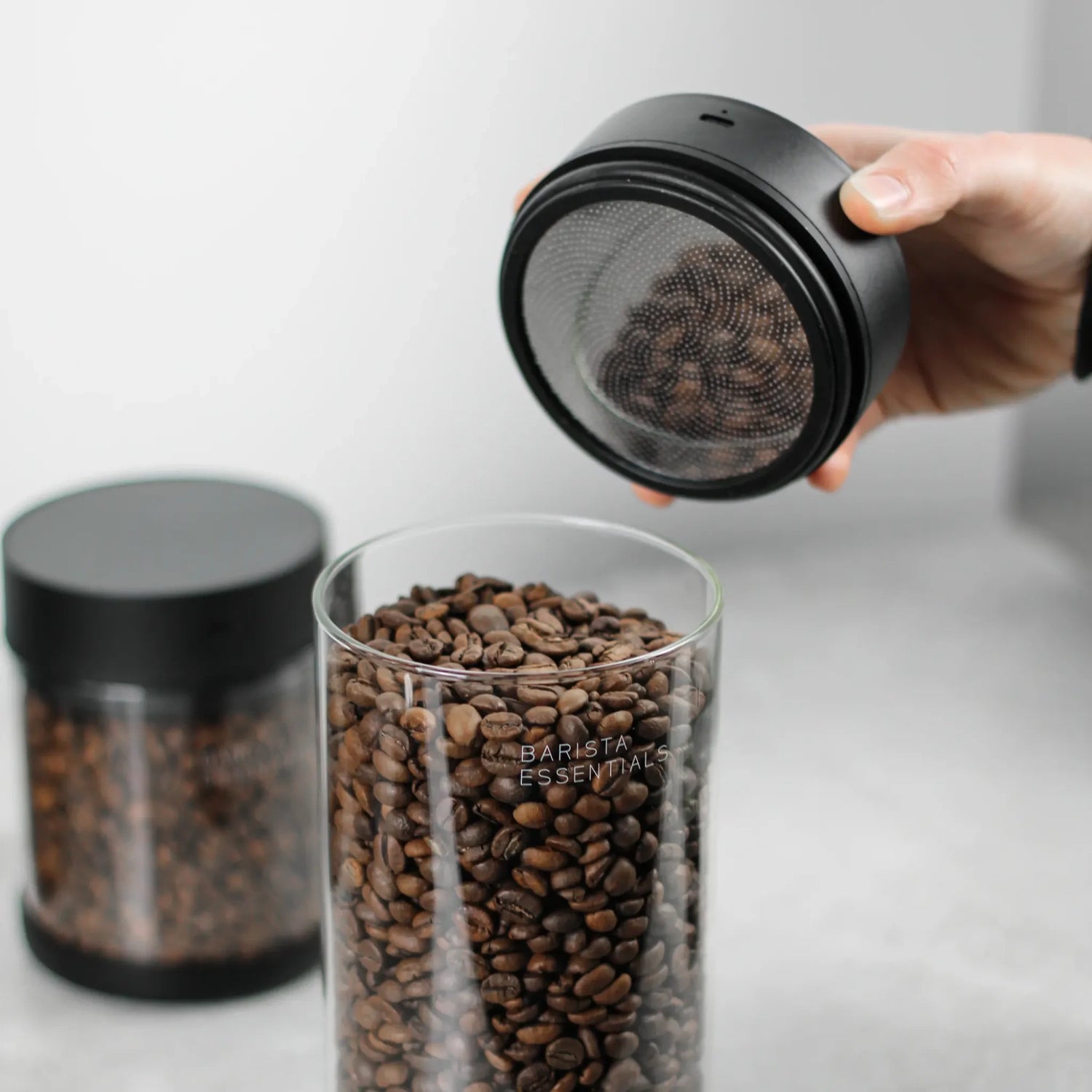
A vacuum storage container helps keep oxygen out, preserving aromas better and making it easier to enjoy a bag of beans for longer. Especially if you have multiple coffees open at once, proper storage is not a luxury.
My advice: buy more consciously, store your beans properly, and only grind them just before brewing. You'll gain much more from this at home than from all sorts of complicated tricks.
Don't overcomplicate it
Our goal is to make a positive social impact in the local communities where our products are manufactured, and to reduce their environmental impact.
How to make better filter coffee at home in three steps
Start with 6 grams of coffee per 100 ml of water. Weigh your coffee and water so you know what you're doing. Then, use fresh coffee beans that suit your taste. Store these beans well so they don't start tasting flat after just a few days.
After that, you can start finetuning. Do you want more body? Use a little more coffee. Do you want a lighter cup? Go a bit lower in dosage. Is the coffee bitter? Then don't just look at the ratio, but also at water temperature, grind, and freshness.
Better coffee often starts much simpler than people think. Not with expensive equipment, but with attention to what you do daily. That's exactly what I want to help with at De Barista Shop: making better coffee, right at home, with clear explanations and practical tools.
Frequently asked questions about how many grams of coffee per cup
How many grams of coffee do you use per cup of filter coffee?
A good baseline is 6 grams of ground coffee per 100 ml of water. So, for a large 300 ml mug, you would use approximately 18 grams of coffee.
How much coffee do you need for 1 liter of filter coffee?
Why does my filter coffee sometimes taste stronger than other times?
Do I really need a coffee scale for pour-over coffee?
You can do without it, but a coffee scale helps immensely. You stop guessing and can accurately replicate what tasted good.
How do I keep coffee beans fresh longer?
I have another question.
How many grams of coffee per cup? Start by measuring, then adjust to taste
For better filter coffee at home, you don't have to change everything at once. Start with a fixed ratio: 6 grams of coffee per 100 ml of water. Use a coffee scale for consistent results, choose fresh beans that suit your taste, and store them in an airtight container. Once that foundation is solid, it will be much easier to understand why your coffee tastes weak, bitter, bright, full-bodied, or flat.
If you want to better understand why coffee changes over time, then the online module on roast date and freshness is a logical next step.
Enjoy the taste longer
Your beans lose freshness and flavor:
- Oils oxidize over weeks
- Aromas dissipate
- Flavors become duller
Extend the life of your delicious coffee with vacuum storage
β Discover more related articles
View all-
β Espresso inconsistent at home? A lesson from ...
Many home baristas get confused by random coffee tips on YouTube and Instagram. This barista workshop in Lierop shows why espresso often improves when you first go back to bean...
β Espresso inconsistent at home? A lesson from ...
Many home baristas get confused by random coffee tips on YouTube and Instagram. This barista workshop in Lierop shows why espresso often improves when you first go back to bean...
-
β Making cappuccino, latte or flat white at hom...
Do you want to make cappuccino, latte or flat white at home? In this blog, I explain how to balance milk, espresso and flavor.
β Making cappuccino, latte or flat white at hom...
Do you want to make cappuccino, latte or flat white at home? In this blog, I explain how to balance milk, espresso and flavor.
-
β Learning to make professional coffee at home:...
Want to learn how to make professional coffee at home, but don't know where to start? I'll show you the steps that really make a difference for better espresso and...
β Learning to make professional coffee at home:...
Want to learn how to make professional coffee at home, but don't know where to start? I'll show you the steps that really make a difference for better espresso and...