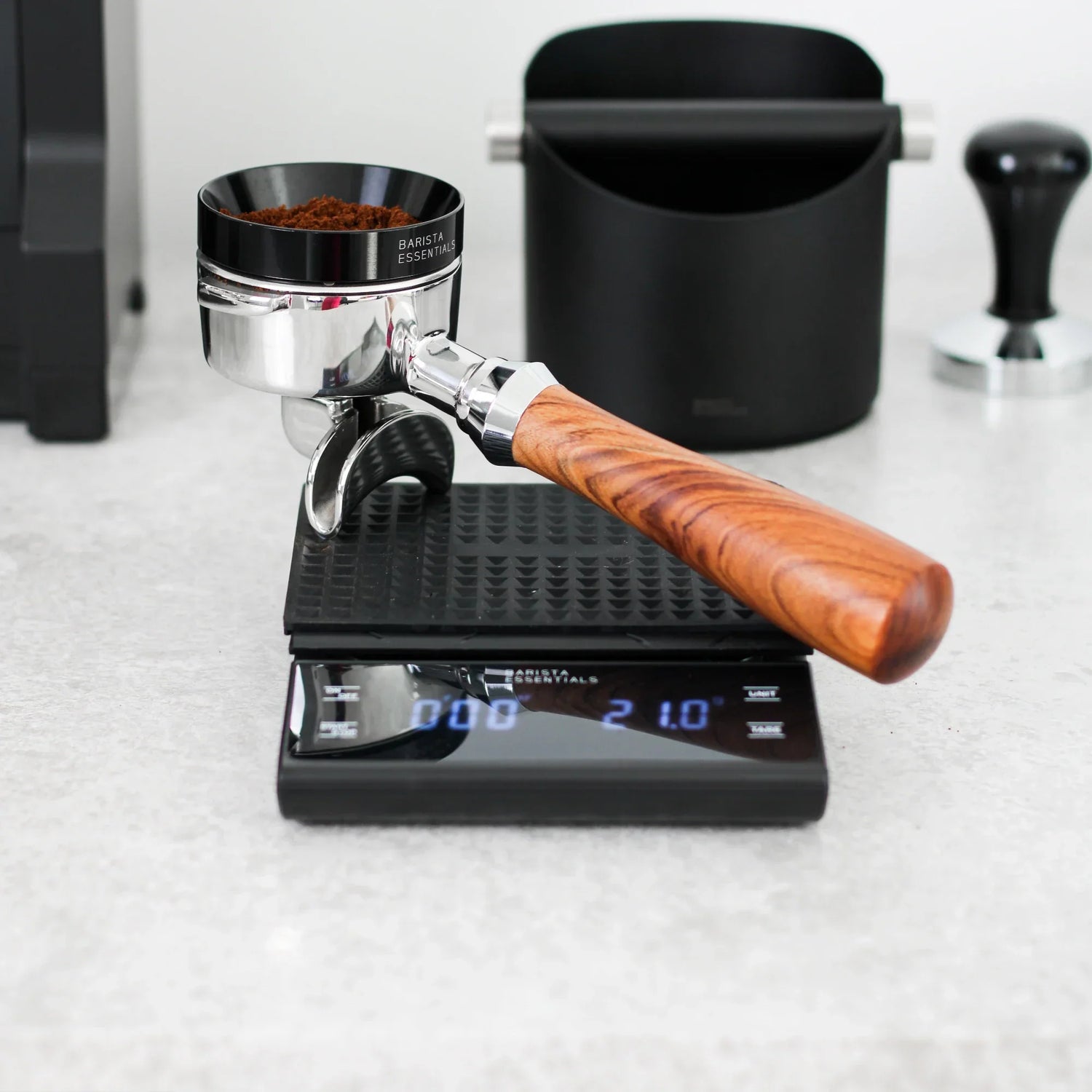
Blind filtering: how to keep your espresso machine in top condition
To share
Every coffee lover knows: a good espresso starts with fresh beans, the right grind, and a precise brewing method. But even the best baristas sometimes forget a crucial part of their routine: cleaning the group head with a blind filter.
It's a maintenance task that not only keeps your espresso machine clean, but also extends its lifespan and ensures your coffee tastes consistently delicious.
In this guide, you'll discover:
- What a blind filter is and why it's so important
- How blind filtering (backflushing) works
- What size blind filter you need
- How to use blind filter powder
- How to choose the right filter basket
- Subtle tips with the filter baskets and blind filters from Barista Essentials
☕ What is a blind filter?
A blind filter (also called a backflush filter or cleaning filter) is a special, closed filter basket that is placed in your portafilter. Unlike a regular filter basket, a blind filter has no holes. This prevents water from flowing out and builds up pressure in the group head during flushing.
When the pump stops, the machine's three-way valve releases the pressure, causing water and cleaning agent to drain into the drip tray. This process flushes away coffee residues, oils, and fats that have accumulated in the internal channels and valves.
The result:
- A cleaner group head
- Less chance of bitter, rancid coffee taste
- A machine that continues to operate smoothly
💡 Why blind filtering / backflushing is essential
1. Flavor preservation
Coffee contains oils and fats that accumulate in the group head, shower screen, and valves. Over time, these oils oxidize and impart a bitter, stale taste to your espresso. Regular blind filtering removes these flavor disruptors, keeping your coffee fresh and pure.
2. Hygiene
An espresso machine is warm and damp – the perfect environment for bacterial growth. Regular backflushing prevents these unwanted guests from settling in your machine.
3. Longer enjoyment of your machine
Dirt and deposits in the group head can damage moving parts, such as the three-way valve. This can lead to leaks or expensive repairs. With a blind filter, you keep the internal components clean and extend the lifespan of your machine.
🔍 How does blind filtering work in practice?
Blind filtering – or backflushing – is simple, but requires a consistent routine. Here is the step-by-step method:
Preparation
- Ensure your machine is at temperature.
- Place the blind filter in the portafilter.
Add powder
- Put half a teaspoon of blind filter powder (e.g., Cafetto) into the blind filter.
- Do not use too much: 2–3 grams is enough.
Activate
- Lock the portafilter into the group head.
- Start the pump, let it run for 5–10 seconds, then stop.
- You will hear a psssht sound when the three-way valve opens and drains the water into the drip tray.
Repeat
- Do this 5 times in a row: 5–10 sec on, release pressure, repeat.
Rinse
- Rinse the blind filter and repeat the cycle 5 times without powder to remove any residue.
Clean group
- Brush the shower screen and the edge of the group head clean.
- Optional: unscrew the shower screen and clean it separately.
📏 What size blind filter do you need?
Not every blind filter fits every machine. The diameter of your portafilter determines the size.
Here's how to determine which one you need:
- 58 mm → most commonly used in professional and prosumer machines like Rocket, ECM, La Marzocco, Bezzera.
- 54 mm → many home machines from Sage/Breville.
- 51 mm → often Ascaso, Delonghi, Solis.
- 57 mm → some Gaggia and older Breville models.
Tip: Measure the inside diameter of your filter basket or check your machine's manual.
At Barista Essentials, you'll find blind filters and filter baskets in various sizes, made from durable stainless steel and suitable for many brands.
🛠 Filter baskets and blind filters: the difference
Many home baristas confuse filter baskets with blind filters.
- Filter basket: has holes, allows water through, and is used for brewing coffee.
- Blind filter: has no holes and is used for cleaning/backflushing.
Barista Essentials offers both types, so you can both brew and maintain with quality materials. Choose a stainless steel variant for durability and heat resistance.
📅 How often should you blind filter?
- Daily: backflush with water only (no powder) if you make multiple espressos per day.
- Weekly: backflush with powder for intensive use.
- Monthly: for sporadic use, but clean with powder at least once a month.
✅ Summary & advice
Blind filtering is not a luxury, but an essential part of your coffee routine. It keeps your machine clean, your espresso delicious, and prevents expensive repairs.
Invest in a good blind filter and the right cleaning powder, and follow a consistent maintenance schedule.
For quality blind filters and filter baskets, you can visit Barista Essentials, where you'll find various sizes for both home and professional machines.
📌 Pro-tip: Hang a small maintenance schedule next to your machine. This way, you'll never forget to blind filter, and every espresso will remain as it should be: full, round, and clean in taste.