

Sometimes it remains a challenge to make that beautiful espresso.

In coffee shops and on YouTube, you see the most fantastic espressos: thick, syrupy, and dark with hazelnut notes. But your espresso often comes out differently: too fast or too slow , watery , and with little crema .

We've put together a few tricks to help you make better espresso.

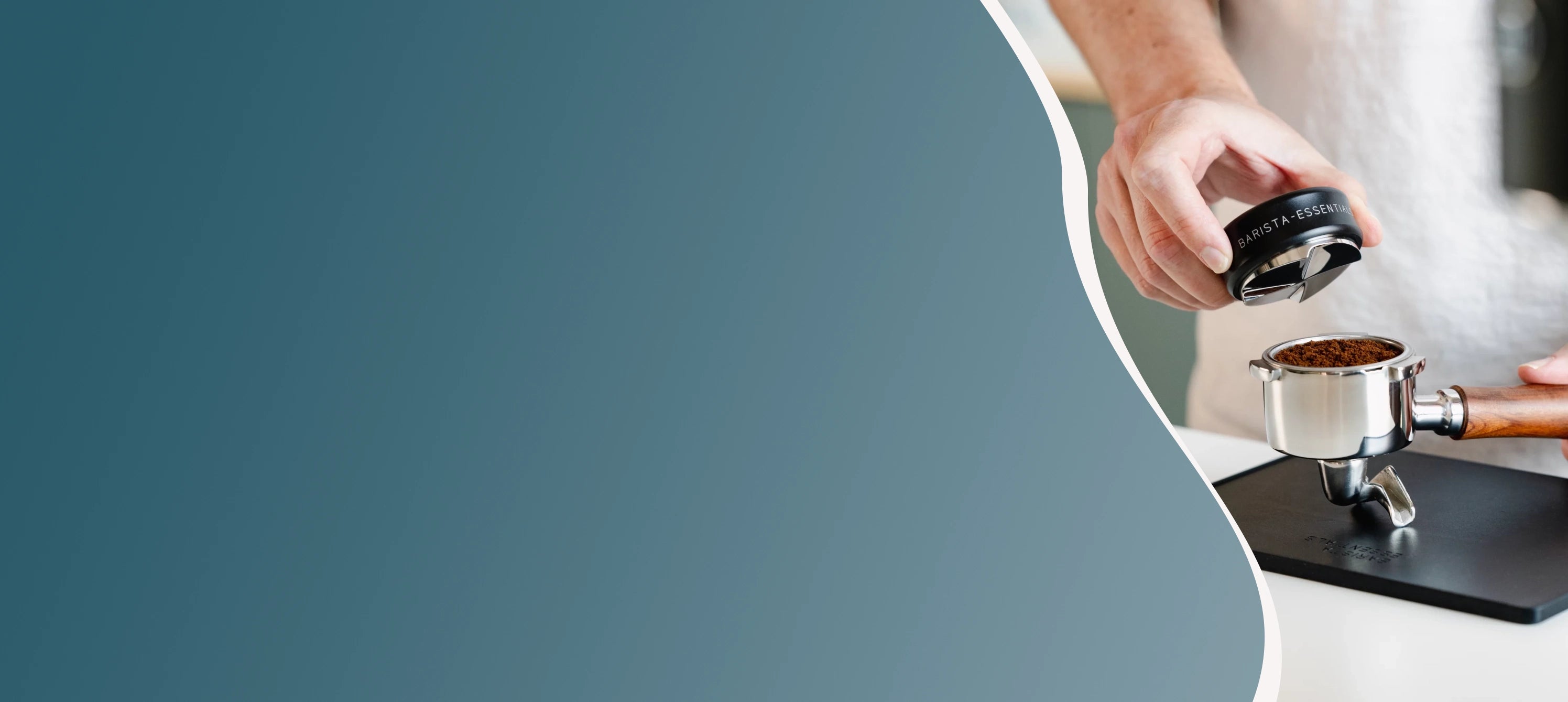
51mm tamper en verdeler in zilveren uitvoering, geschikt voor semi-professionele espressomachines.

How many grams should your filter holder hold?

Single filter basket: between 8 and 12 grams of ground coffee

Double filter basket: between 18 and 22 grams of ground coffee

Note: These are guidelines. The exact amount will depend on your filter holder and personal taste .

Tips for determining your gram can be found later in this blog post.

Koffieverdeler en tamper combinatie voor een efficiënte barista workflow.

How do you know how many grams of coffee are perfect for your filter holder?

Not every espresso machine has the same filter holder – some are deeper, wider, or more compact. Therefore, the ideal amount of coffee also varies from machine to machine.

👉 The size of the filter basket in your filter holder determines how many grams of coffee you use – and that directly affects the taste and intensity of your espresso.

Besides an espresso scale, there are also handy tricks to get the job done right. We'll discuss those later in this blog post!

Tips and Tricks for determining the correct amount of grams in your filter basket

  • the 'little mountain'
  • tightening your filter holder
  • use of shot glass
  • check your puck

All handy ways to determine the correct amount of grams, and thus consistently brew espresso with a balanced extraction!

We discuss them below!

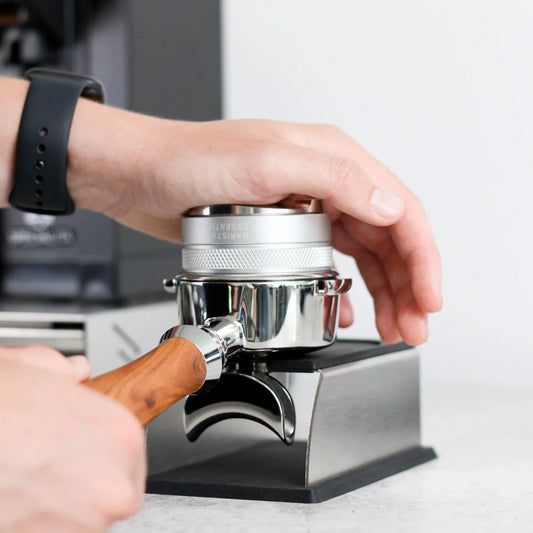
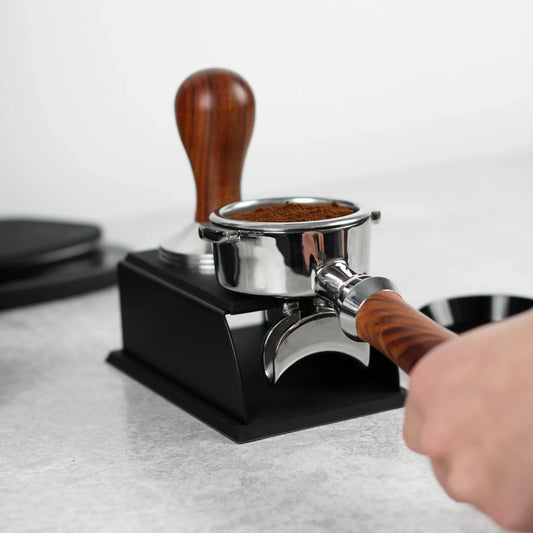
Het Tamping Station Zilver van Barista Essentials is niet weg te denken als barista tool voor de thuisbarista! Dit tamping station van RVS verhoogd de kwaliteit van je koffie. Het Tamping Station Zilver van Barista Essentials ondersteund de filterdrager tijdens het tampen en je espresso krijg daardoor een stevige tamp.

☕ Trick 1: The 'mountain' as a guideline

Fill your portafilter to just above the rim – with a small mound of coffee on top. Then press down with your tamper until the puck is about half a centimeter below the rim . That is usually just right for a single or double espresso. Now weigh the amount and you will know what the number of grams is for your machine.

💡 Pro tip: Use a tamping station for a stable surface. This way you can tamp straight and evenly – essential for a clean extraction.

Discover our tamping stations

Trouble shooting

Is your ground coffee too deep under the rim after pressing with your tamper?

  • Your grinder is set too fine. (Often, it takes a long time for the espresso to start brewing, or your puck is very watery after brewing.)

Does your espresso flow very quickly or very slowly with the amount of grams in your cup?

  • Too fast: Your grinder is set too coarsely, or you're using old (not fresh) coffee. Buy coffee beans with a roast date! (No roast date on the packaging? Then you're often dealing with dry, old, not fresh coffee that runs out quickly.)
  • Too slow: Your grinder is set too fine, and the water can barely penetrate the coffee grounds. Set your grinder to a coarser setting and refill your container with the same amount of coffee (stay consistent with the number of grams in your container!), and your espresso will extract better.
portafilter met dubbele uitloop zwart 51mm espresso filterdrager met handvat koffie accessoires 6.

☕ Trick 2: Check the rotation of your filter holder

A handy check: how far does your filter holder rotate in the brewing unit of your espresso machine?

  • Too far to the right? Then there is probably not enough coffee in it.
  • If you can't even get to the middle, the container is too full .
  • Ideal: The lever comes to rest approximately in the middle or slightly to the right.

This gives you quick insight into whether the dosage is correct – without a scale.

Trouble shooting

Is your filter holder nicely positioned in the middle, but the espresso runs through too quickly?

  • You have the right amount of grams in your container, but the grind is too coarse. Adjust the grind a notch and put the exact same amount of grams in your filter basket. Your espresso will flow a little slower. "Build up" to the 25-second "golden window" in small increments.
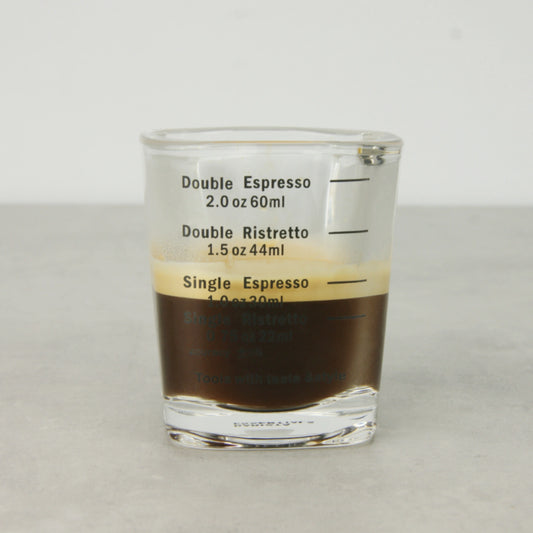
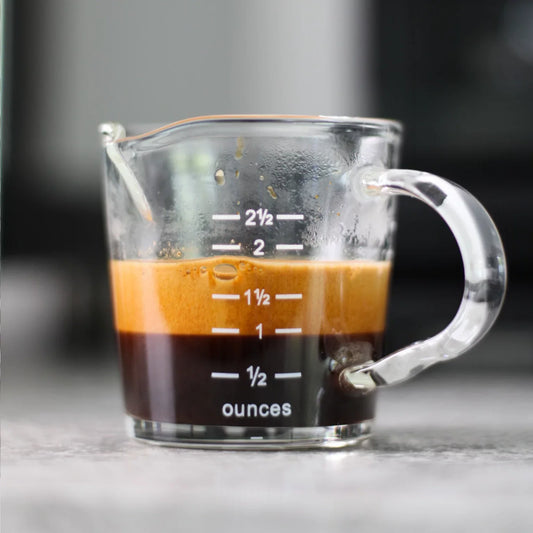
Espresso shotglas 70ml met dubbele schenktuit voor nauwkeurige maatverdeling van de Barista Shop 2

☕ Trick 3: Use a shot glass for the right output

With a shot glass you can see exactly how much espresso you are making:

  • Single shot: 30 ml
  • Double shot: 60 ml

Many people guess by eye – but that results in variable quality. Always stop at the right amount.

Timing check:

  • Slower than 25 seconds? Grind too fine or too much coffee.
  • Faster than 25 seconds? Grind too coarse or not enough coffee.

This way, a simple shot glass method gives you more control over your extraction and flavor.

Score your shot glass

The importance of output

There are three golden rules for making a balanced espresso:

  • Input
  • Output
  • Time

Input means: how many grams go into my filter basket. It's always the same. Let's use 18 grams for a double espresso as an example.

Output means how much water must pass through the input (in our example: 18 grams). For a single espresso, this is 30ml, and for a double, 60ml.

Time means how long it takes for the output (60ml) to pass through the input (18 grams). Ideally, this should be around 25 seconds.

If that doesn't happen, you're changing the only variable in this whole story: how coarsely or finely your bean grinder grinds your coffee beans!

If you have adjusted the coffee grinder to a slightly coarser or finer setting (the smaller the number, the smaller the grain size, the larger the number, the larger the grain size), you start again from the beginning:

  • the same amount of grams
  • the same amount of water
  • and a better flow time because your grind is coarser or finer. ☕
Uitkloplade zilver mini van rvs voor de espressomachine van de koffieliefhebber. Debaristashop en Geertjandebaristaman. sfeerfoto 2.

☕ Trick 4: Check your puck – wet or dry?

After brewing, a puck remains: that is the compressed coffee grounds in your filter holder. The state of that puck tells you a lot:

  • Too wet and watery? Then you have used too little coffee or your grind is too fine .
  • Does the puck fall apart right away? Then there was too much coffee in it or your grind was too coarse .

The perfect puck is firm, slightly moist and keeps its shape. That's how you know you're doing it right!

🤔 Frequently Asked Questions from Home Baristas

💬 What is the best way to store my coffee beans?

Coffee quickly loses its aromas when exposed to air, light and moisture. Use an airtight and light-tight container to keep your beans fresh.

👉 Check out our storage containers

💬 How do I clean my filter holder?

A clean filter holder is essential for a good taste. Old coffee residues give burnt, bitter notes in your coffee. Use a cleaning tablet or backflush powder regularly and rinse well.

👉Shop cleaning products

💬 How do I avoid spilling ground coffee?

A tamping station provides stability and prevents spillage when tamping coffee. This way you tamp neatly and evenly.

👉 Check out our tamping stations

💬 What do I do with used coffee after brewing?

Use a knock box to knock away your coffee puck quickly and easily. No mess, just convenience.

👉 Discover knock-out bins and drawers

How many grams of coffee do I need in my portafilter?

A.G.J. Van der Molen

Sometimes it remains a challenge to make that beautiful espresso.

In coffee houses and on YouTube you see the most fantastic espresso passing by: thick, syrupy and dark with hazelnut tones. But your espresso often comes out differently: too fast or too slow, watery and with little crema.

We've put together a few tricks to help you make better espresso.

Portafilter with double outlet black 58mm for E61 group with handle filter holder for espresso coffee sieve holder 5.

1. How many grams should your filter holder hold?

    Single (espresso) cup: A single espresso cup usually holds between 8 and 12 grams of ground coffee.

    Double (espresso) cup: A double espresso cup usually contains between 18 and 22 grams of ground espresso beans .

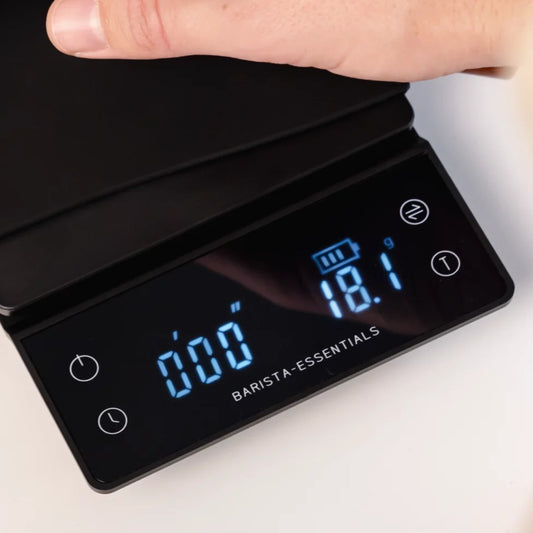
    Do you really want to get the most out of your espresso? Please buy a scale! It may seem easy to estimate the number of grams yourself, but even a deviation of 0.2 grams affects the taste and flow time. By weighing the same amount of coffee every time, you ensure a perfect balance in extraction and a consistent espresso full of flavor. Over time, you may sometimes let go of the scale, but keep it at hand in case your flow is not correct. That way you always stay in control of your espresso!

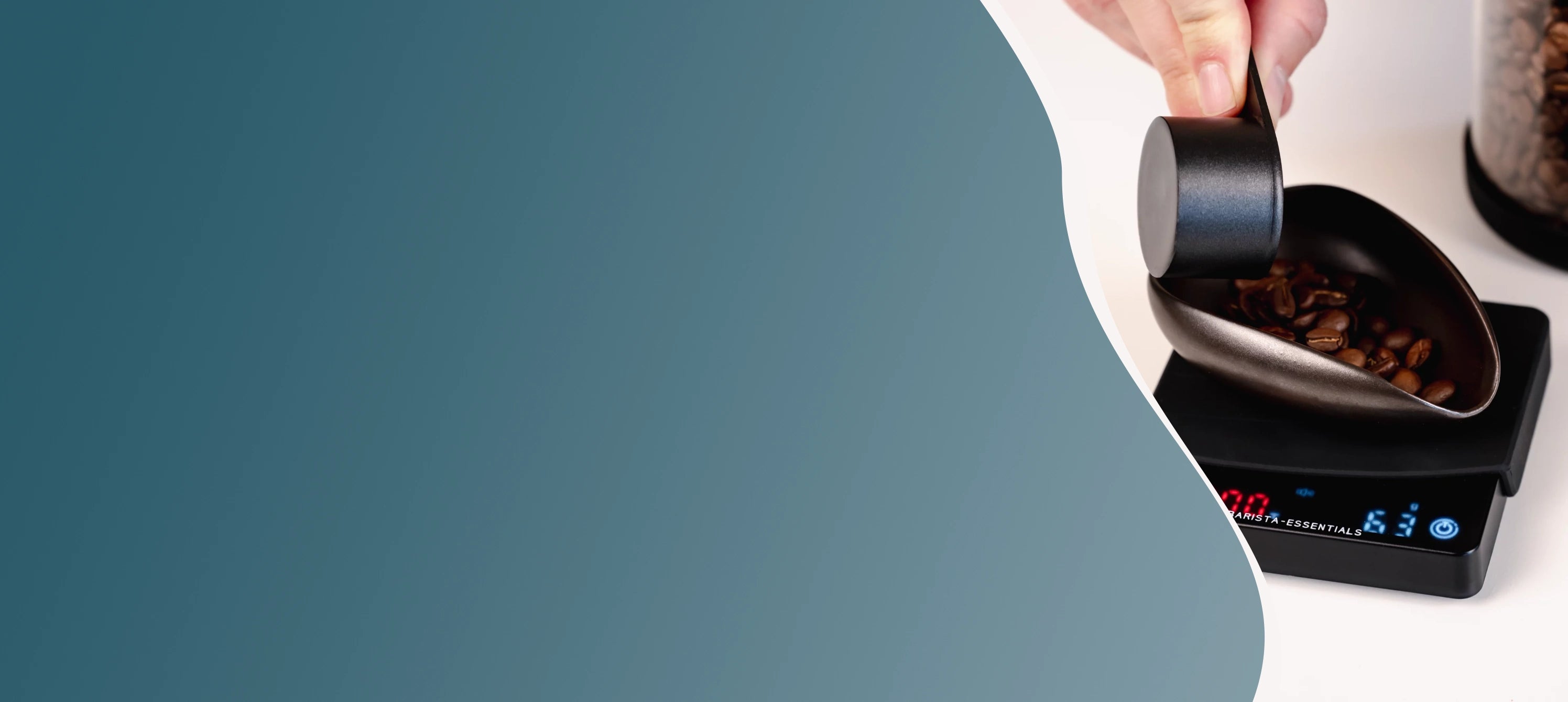
    Rechargeable scale with auto timer for coffee and espresso extraction from the Barista Shop4

    2. How do I know the exact number of grams for my filter holder? Tips and Tricks!

    Not all espresso machine brands use the same portafilters – some are larger, smaller, deeper or narrower. This can make it a challenge to find the right amount of coffee for your machine. The size of your portafilter will affect the amount of ground coffee you use, which will affect the flavor and intensity of your espresso. Experiment with small adjustments in grams to find the ideal recipe that suits your machine and taste preference. Start with a standard amount and adjust in half-gram increments for optimal extraction!

    Besides using an espresso scale , there are a few tricks.

    The Tamping Station Silver from Barista Essentials is an indispensable barista tool for the home barista! This stainless steel tamping station increases the quality of your coffee. The Tamping Station Silver from Barista Essentials supports the filter holder during tamping and your espresso gets a firm tamp.

    Trick 1: A mountain of coffee.

    Fill your filter holder to the brim with a small mound on top. Press the ground coffee with the tamper to about half a centimeter below the rim of the filter holder. Then you have enough coffee to make your single or double espresso. A tamping station helps enormously with pressing your coffee straight and well.

    bottomless coffee portafilter and naked portafilter wood 51mm for delonghi icona Vintage espresso machines 4.

    Trick 2: Screw in the filter holder.

    Another trick you can use when screwing the filter holder into your espresso machine. If you can screw the filter holder all the way through, there is not enough coffee in your container.


    By turning I mean that when you turn the filter holder in the group of your espresso machine, the lever of your filter holder does not get stuck on the left or in the middle, but turns to the right. So turned too far.
    If you can't even get the filter holder in the middle of the group, it's too full. So middle is best.

    Espresso shot glass 70ml with double pour spout for precise measuring from the Barista Shop 2

    Trick 3: Use a shot glass.

    By using a shot glass , you always know how much 'output' you have. A single espresso is standard 30ml. A double espresso is standard 60ml.

    A common mistake is that too much is 'estimated' when letting the espresso run through. Always stop your espresso at 30ml or 60ml (for a double).

    Is your espresso running slower than 25 seconds? Then your grind is too fine or there is too much coffee in your filter holder. If your shot glass is already filled after 15 seconds, then your grind is too coarse or you have too little coffee in your filter holder.

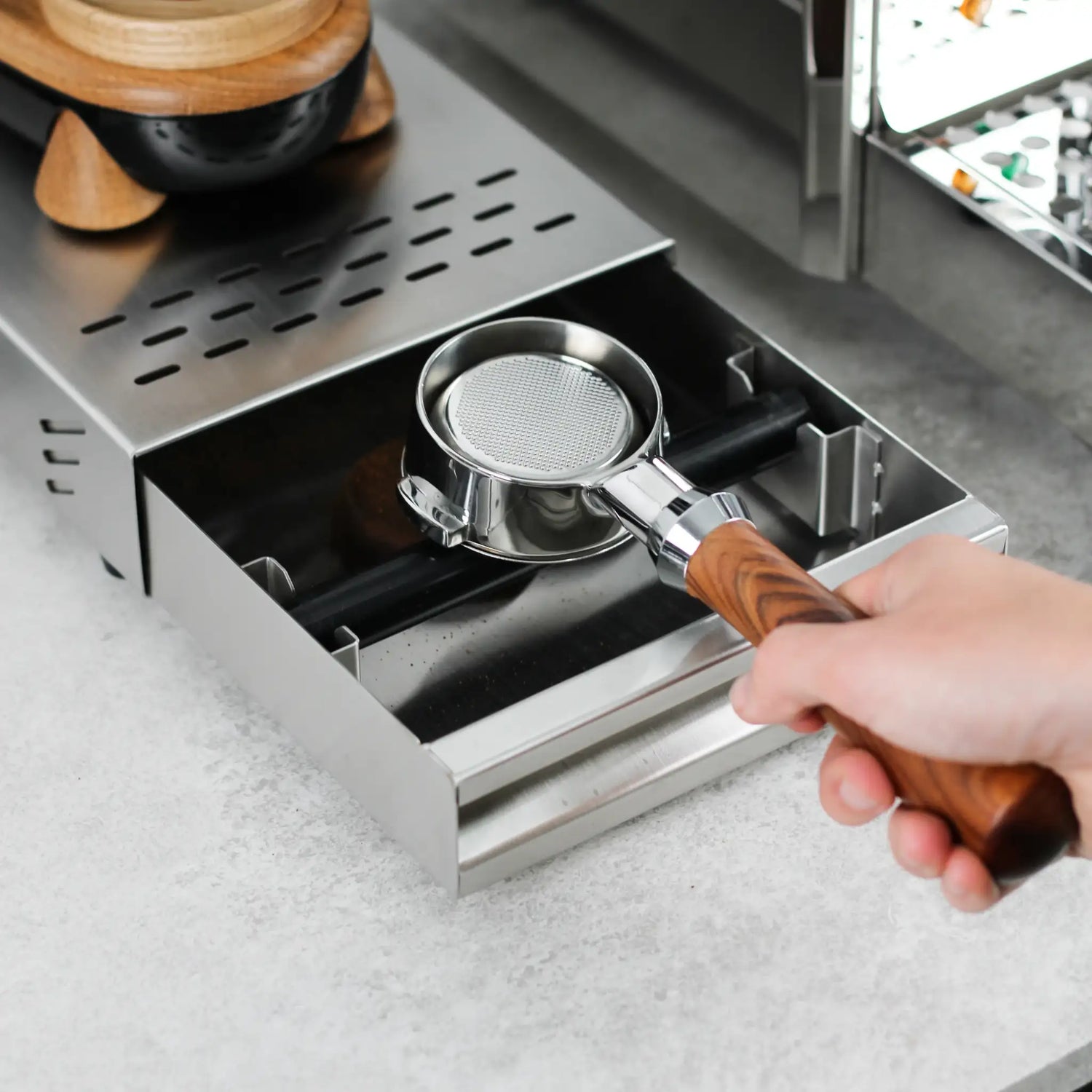
    Knockout drawer silver mini of stainless steel for the espresso machine of the coffee lover. Debaristashop and Geertjandebaristaman. atmosphere photo 2.

    Trick 4: Too watery or too dry.

    Another indicator of too much or too little coffee in your portafilter is a too wet or too dry 'puck'. A 'puck' is the term for the residue after extraction; the puck that you eventually knock out and throw away. A too wet puck, with a lot of water on top, is often a sign of too little coffee in your portafilter or a grind that is too fine. The reverse is also true: a puck that easily falls apart in your knockout drawer when knocked out is a sign of too much coffee or a grind that is too coarse.


    More questions? Feel free to ask or book a barista workshop !

    Back to blog