Dosing cups and dishes: which should you use?

Would you like to weigh whole beans or collect ground coffee? For whole beans, choose a tray or scoop with a scale; for grounds, use a cup that fits your filter basket and grinder holder. My advice: check your model first. The standard Sage cup and the Impress version have different designs. Separate cups come in 51 and 58.5 mm sizes. Read the guide to fit, sizes and use below.

Advice from Geert-Jan de Baristaman β€” Specialty Coffee Trainer & Barista Coach (over 10 years of experience).

How to choose a measuring cup, dish, or scoop

You want to use the right amount of coffee without having to keep getting beans or ground coffee from the counter. First, see where things are going wrong. Is too much spilling out of the storage container? Is the coffee falling next to your portafilter? Or do you want to be able to easily weigh a small portion of beans? Each situation calls for a different tool. So you don't need to buy them all at once.

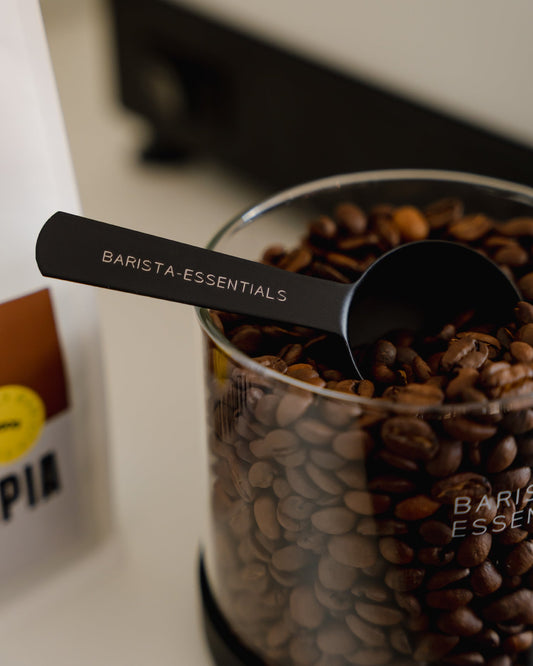
Getting beans out of the container: start with a scoop

With the coffee scoop you can get beans out of your storage container and place them in the tray on your scale. This way, you don't have to tip a full container over a narrow opening. This scoop holds about 10 grams of beans. That figure is just an indication: the weight also depends on the beans and how full you fill the scoop. Therefore, weigh the portion afterwards. Two scoops are not automatically exactly 20 grams.

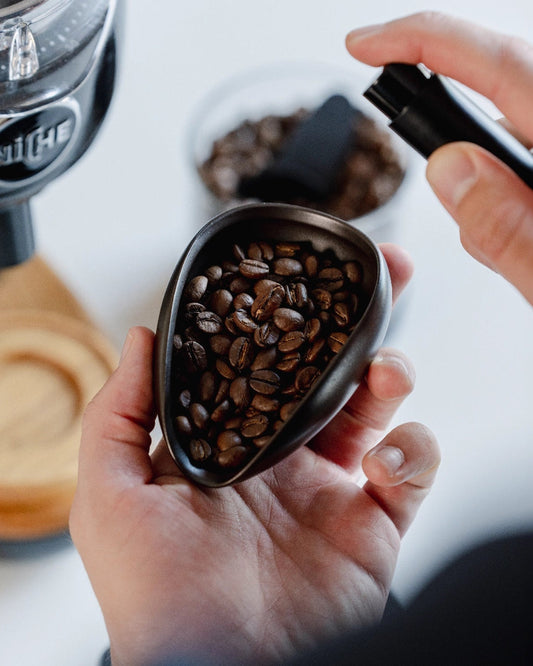
Weighing beans and pouring them over: the ceramic dish

The ceramic dosing dish has a wide opening and a pouring spout. Place the empty dish on your scale, set the scale to zero, and add the beans. Remove a few beans if necessary before pouring them through the spout into your grinder. The dish measures 10.5 by 7.5 cm and weighs 95 grams according to the supplier. Check whether it stands stably on the weighing surface and whether you can still read the display.

The dish is intended for weighing and pouring over. It does not measure weight itself. If you use a grinder with a bean hopper, check whether it is suitable for loose portions according to the manual. A dosing dish does not change the operation of your grinder.

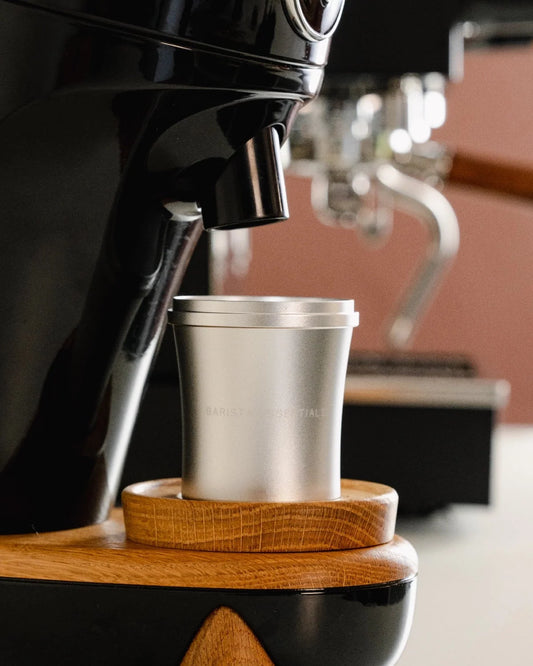
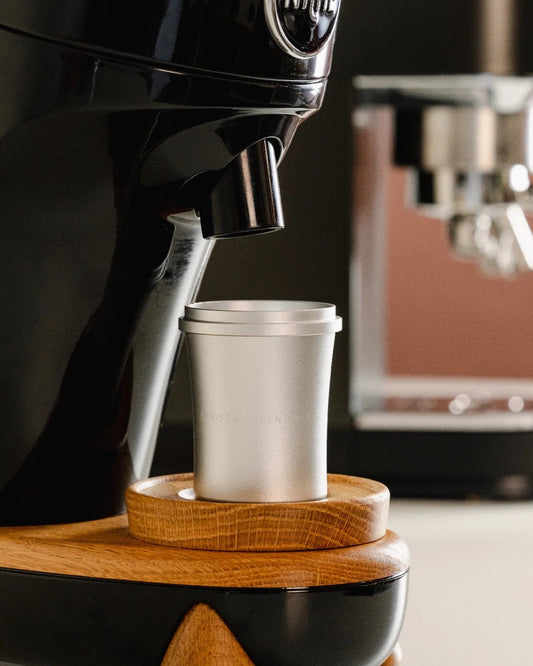
Catching ground coffee: the dosing cup

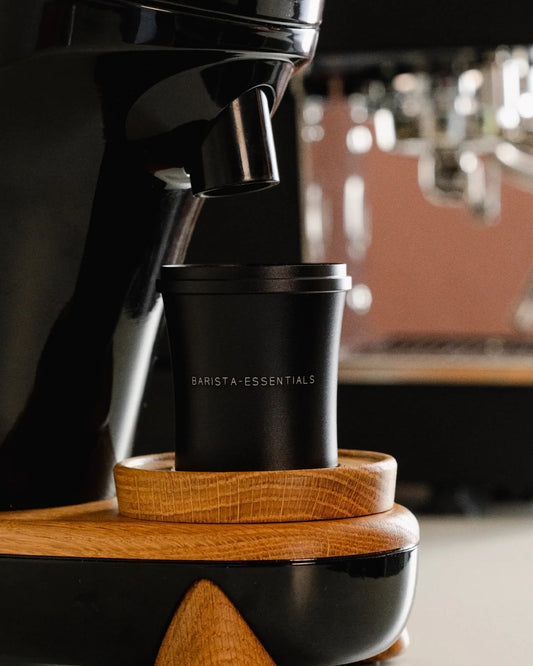
With the black 51 mm V2 dosing cup you can catch the coffee after grinding. Then you pour the ground coffee into your filter basket. The cup must fit properly. The standalone version is available here in 51 and 58.5 mm, each in black or silver. For standard Sage/Solis/Breville machines with a suitable built-in grinder, the cups with wings and activation tab are also available in the selection. The source states 53.3 mm for that variant and 54 mm in the description; therefore, check your model and filter basket, not just a size label. For the Impress, there is a separate design.

Before ordering, check two areas: the fit with your filter basket and the space under the coffee outlet of your grinder. Measure the free height with a ruler. Also check whether the grinder can support or hold the cup as you want to work. A cup that fits the basket does not necessarily fit under every grinder.

Do you already grind directly into the portafilter?

Then a separate cup is not always necessary. If coffee mainly falls over the edge, a suitable dosing ring may fit better with what you already do. You place it on the filter basket during grinding or distributing. With a cup, you catch the coffee separately first and then pour it over. Choose which operation works better for you.

Choose based on the operation you want to improve

Geert-Jan helps you understand what a tool does based on his workshop experience. Start with the amount of coffee you use and the place where you spill. Do you already have a suitable container for your beans? Then you don't need to replace it to weigh per portion. If you use a scoop, weigh the coffee afterwards. And if you are looking for a cup for ground coffee, check the fit first. This way you buy something for a clear purpose and your coffee corner remains tidy.

Standard Sage and Impress require a different cup

The standard Sage cup has wings and an activation tab for the suitable built-in grinder. The separate aluminum Impress cup is intended for the Sage Barista Impress, Touch Impress and Express Impress. With it, you weigh, distribute and tamp yourself; take into account a separate scale and a suitable hand tamper. Both designs are available here in black or silver. The same color or a similar diameter does not make them interchangeable.

Full external dimensions including wings, heights under the grinder and a combination height with the portafilter are not confirmed. Therefore, measure the free space and ask for missing dimensions in a tight setup. The standalone 58.5 mm stainless steel cups are now included as separate regular active affiliate products. Also check the exact filter basket and the space under your grinder.

Standalone cup: choose the diameter and color consciously

The 51 mm cup is available in black and silver. For a fixed, larger filter basket, there is the 58.5 mm black cup and 58.5 mm silver cup. These standalone cups are made of stainless steel. They have a different fit than the Sage cups with wings. Do not confuse a diameter choice with a guarantee that the cup stands or hangs under your grinder.

A scale supports the same dosing operation

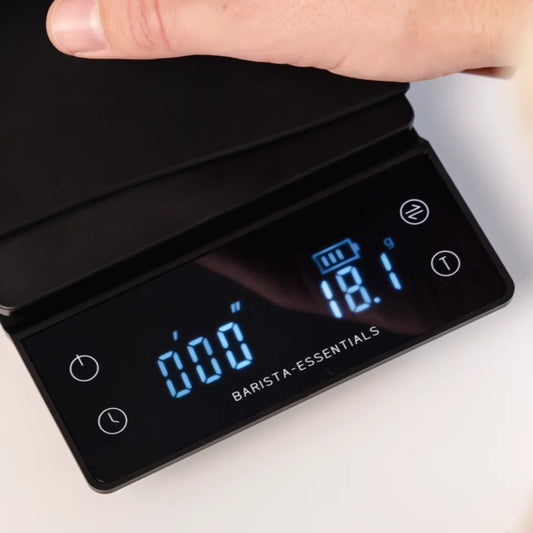
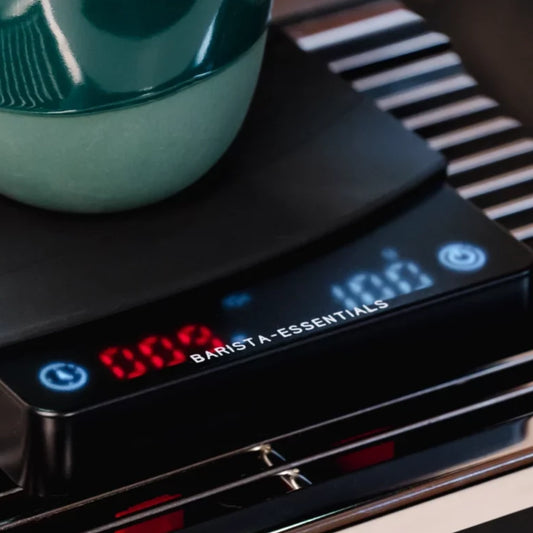
Set your empty dish or cup to zero before adding coffee. The basic scale is 183 Γ— 129 Γ— 27 mm. The auto-timer model is 128 Γ— 118 Γ— 20 mm; the mini scale is 100 Γ— 95 Γ— 19 mm. The last dimension is the height in each case; all three are USB-C rechargeable. Choose based on stable support of your basket and readability of the display. If you already have a usable scale, you don't need to buy a second one.

The coffee scoop measures 103 Γ— 41 Γ— 25 mm according to the supplier and weighs 32.5 g. The exact material is not confirmed here. For the ceramic dish, 10.5 Γ— 7.5 cm and 95 g are confirmed, but the height and the full size including the pouring spout are not specified separately. Full cup heights and external dimensions including wings are also missing. The total combination height with scale, cup or portafilter is not confirmed. Measure free space and ask for missing dimensions in a tight setup; do not infer them from a photo or nominal diameter.

Frequently Asked Questions

Is a dosing cup the same as a dosing tray?

A cup catches the ground coffee and must fit onto the used grinder holder and filter basket. Use the ceramic saucer for whole beans before grinding. Neither weighs anything; use a separate scale. The Sage and Impress cups are different designs from the separate 51 mm cup.

Does this dosing cup fit my Sage?

For a standard Sage/Solis/Breville with a built-in grinder, choose the cup with wings and activation tab. For the Sage Barista Impress, Touch Impress and Express Impress, there is a separate design. The standalone 51 mm cup is not automatically suitable for Sage. Check the exact model, grinder holder and filter basket; full external dimensions are not specified here.

Can I accurately measure coffee with the scoop?

Use the scoop to move the coffee and then weigh the portion. The supplier states that there are approximately 10 grams of coffee beans per scoop, but this is not a fixed weight. The amount may vary with different beans or a differently filled scoop. The same weight does not automatically apply to ground coffee.

Can the ceramic dosing bowl go in the dishwasher?

Yes. The supplier states that the ceramic Coffee Dosing Tray is dishwasher-safe. Allow the tray to dry after cleaning before weighing beans in it again. This care information applies to the ceramic tray and does not necessarily apply to every product in this collection.

Do I need a cup if I grind directly into my filter holder?

Not necessarily. If you can accurately measure out the coffee and there is little waste, grinding directly into the cup can work perfectly for you. A dosing ring helps keep the coffee within the rim. A cup is mainly just another way of catching and transferring it; that adds an extra step.

I have another question

Is your question not listed? Contact us. We are happy to help you choose the right product.

Collection: Dosing cups and dishes: which should you use?

Would you like to weigh whole beans or collect ground coffee? For whole beans, choose a tray or scoop with a scale; for grounds, use a cup that fits your filter basket and grinder holder. My advice: check your model first. The standard Sage cup and the Impress version have different designs. Separate cups come in 51 and 58.5 mm sizes. Read the guide to fit, sizes and use below.

Advice from Geert-Jan de Baristaman β€” Specialty Coffee Trainer & Barista Coach (over 10 years of experience).

Zwarte Barista Essentials doseerbeker voor gemalen koffie