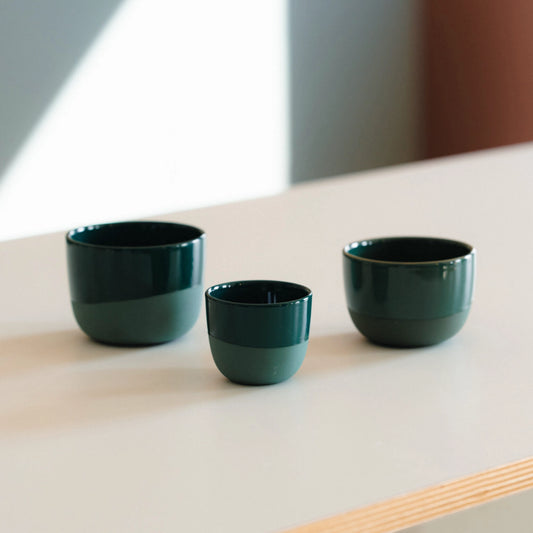
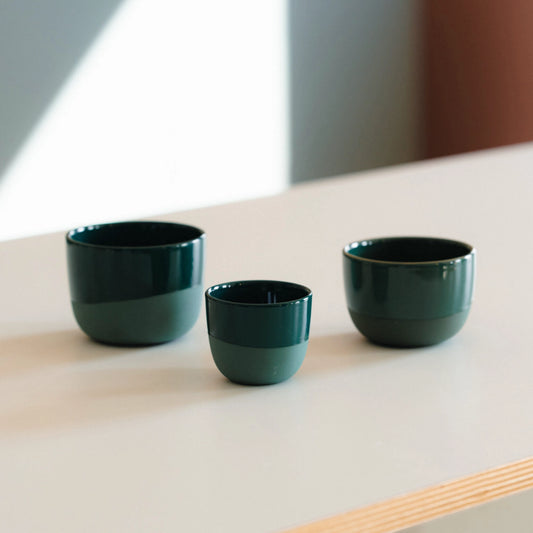
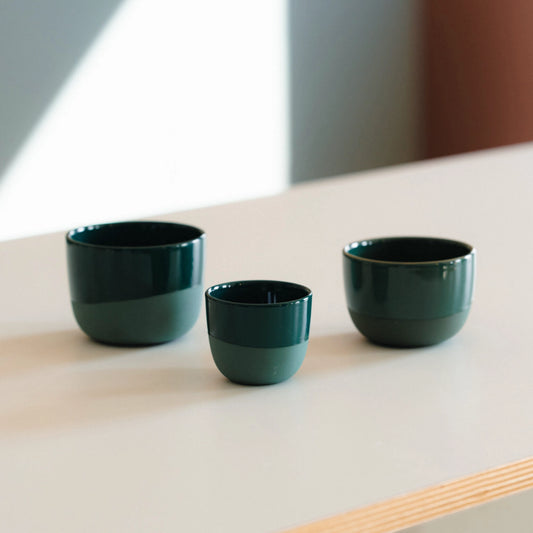
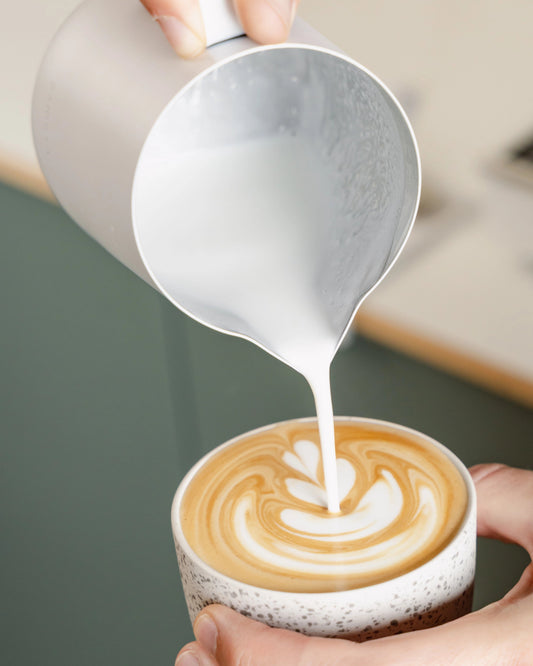
Pine green coffee cups: 60, 180 or 250 ml

Want to choose pine green cups to go together? My advice: start with the volume you use: 60 ml for serving small espressos, 180 ml for a smaller milk drink, or 250 ml for more volume. Don't choose a larger cup just because the desired size is temporarily sold out. Add a suitable scale or milk frother if you don't have one yet. Read the sizes and practical guide below the products.

Advice from Geert-Jan de Baristaman β€” Specialty Coffee Trainer & Barista Coach (10+ years of experience).

Choosing green cups based on content and use

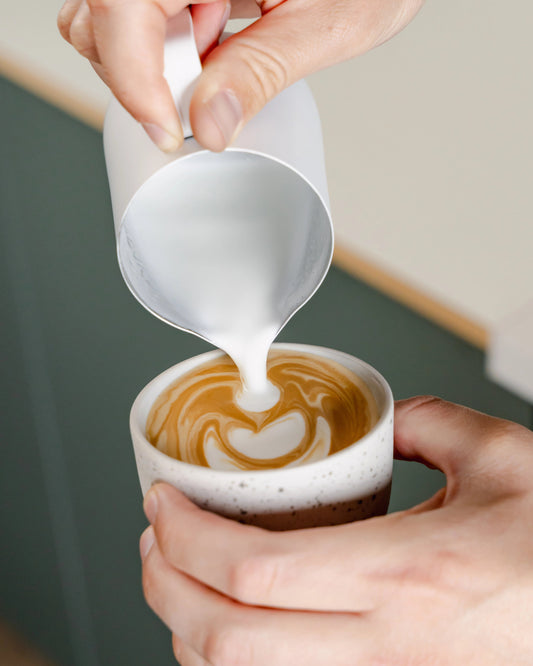
In this green series, the capacity determines which drink you can comfortably serve. Choose 60 ml for a small espresso, 180 ml for a smaller milk drink, or 250 ml if you want more pouring room. Choose your desired portion; a temporary sale is no reason to automatically take a larger cup.

If you want to add more milk to the same espresso, the ratio changes. You do not need to fill a 250ml cup to the brim. For a smaller milk drink, you are better off also looking at the other 180ml colors. The appropriate green sizes remain available here during the temporary sale; check the current stock with the supplier. No delivery date is promised.

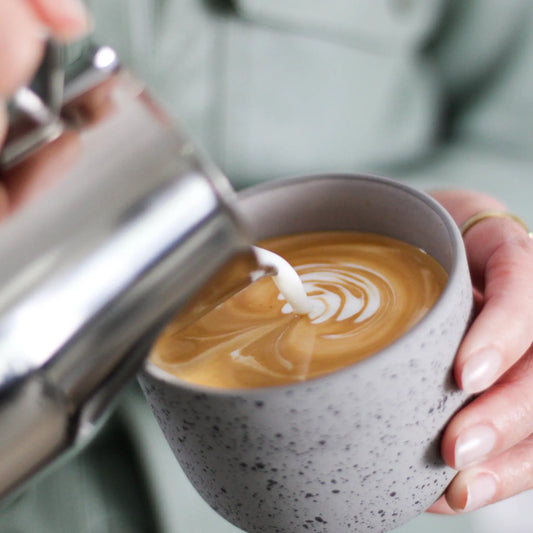
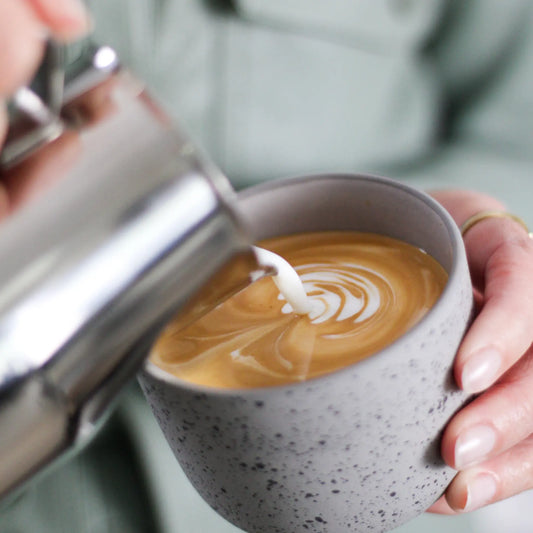
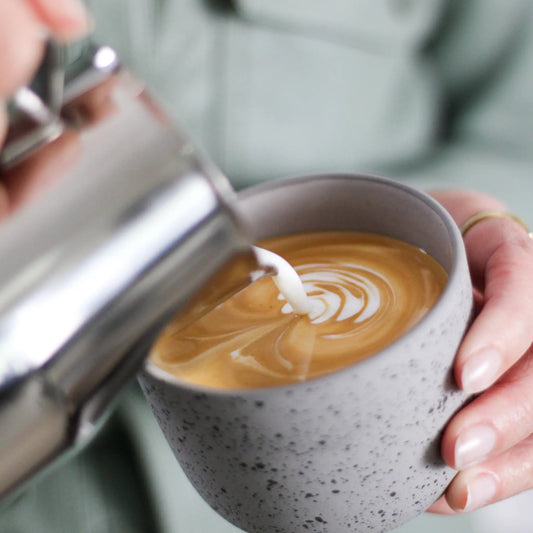
The top is glazed; the lower exterior part has the lighter, natural look of this half-glazed series. That is a finishing choice. Do not take the material or maintenance instructions of the matte gray cups without checking: the current half-glazed product description is less complete about that. Follow the instructions for the exact version and do not rely solely on a lifestyle photo.

Want to compare other colors in the same capacity? Use the 60ml espresso cups or the 250ml cups. This green route helps you choose based on color preference; the overview of coffee cups helps when you have not yet chosen a color or capacity. The cup alone does not determine your coffee recipe or taste.

Sizes and space on your own machine

The supplier provides the following width Γ— depth Γ— height for the half-glazed green series: 60 Γ— 60 Γ— 50 mm for 60 ml, 80 Γ— 80 Γ— 57 mm for 180 ml, and 88 Γ— 88 Γ— 65 mm for 250 ml. There is no handle. Check the free height under the spout and the surface of your drip tray or scale. These dimensions do not prove a fit for every machine.

Weighing or catching in a glass first

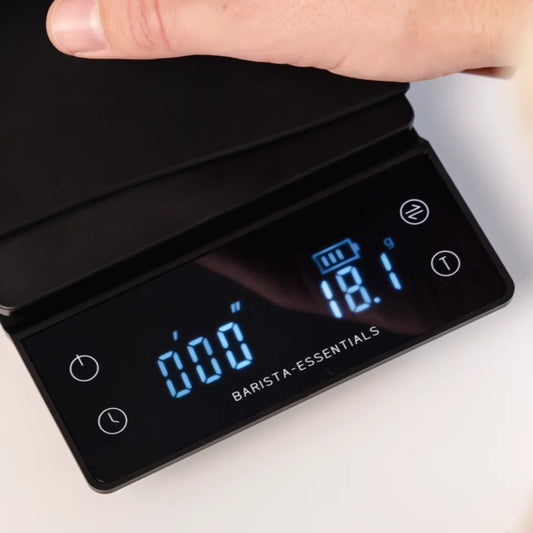
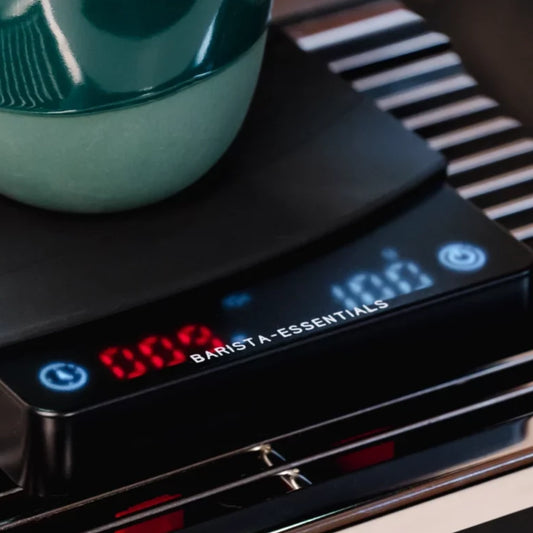
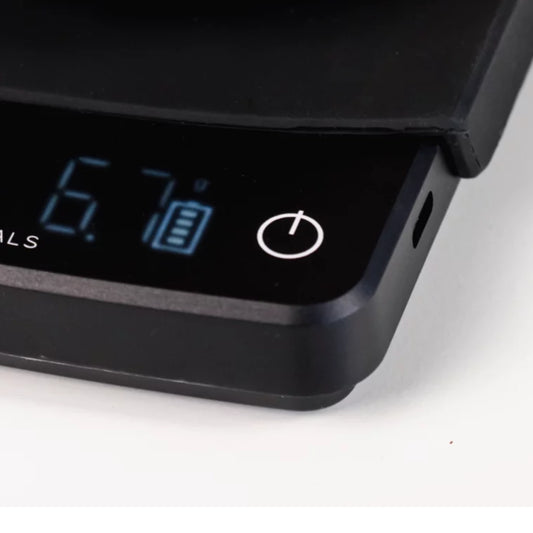
The three scales are USB-C rechargeable. The base with a manual timer measures 183 Γ— 129 Γ— 27 mm; the automatic version 128 Γ— 118 Γ— 20 mm; the mini with an automatic timer 100 Γ— 95 Γ— 19 mm. Measure the free surface of your drip tray. Add the height of your own cup including handle or spout to the scale and check the pouring space. That combination height is not confirmed for your machine. Keep the connection dry; a rechargeable battery is not automatically user-replaceable.

Add the height of the chosen cup to the scale. For 60 ml and a 50 mm cup height, that is 77, 70, or 69 mm with the base, automatic, or mini scale respectively. For the half-glazed 180ml cup of 57 mm, that is 84, 77, or 76 mm; for the 250ml cup of 65 mm, 92, 85, or 84 mm. These additions are not confirmed free working space; also measure the space to place and remove the cup.

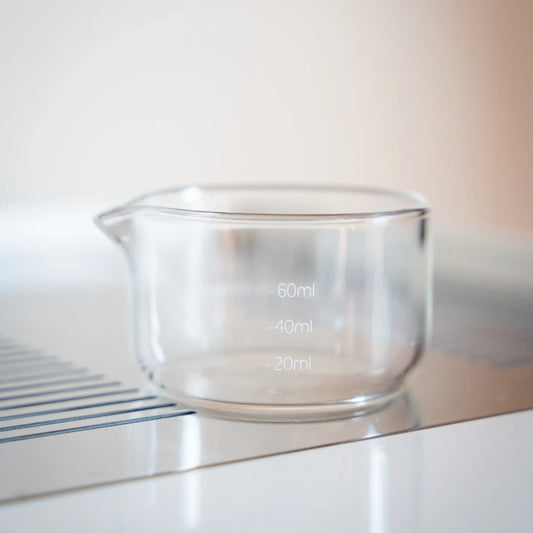
The shot glass is a separate glass collection choice with a handle, pouring spout, and measurement markings, to pour over to your cup calmly. The total exterior height and width including handle and spout are not confirmed. Measure the space yourself before choosing it as a solution for low height. Measurement markings measure volume; they do not replace a weight measurement. The supplier recommends hand washing.

Choosing a milk pitcher with your cup

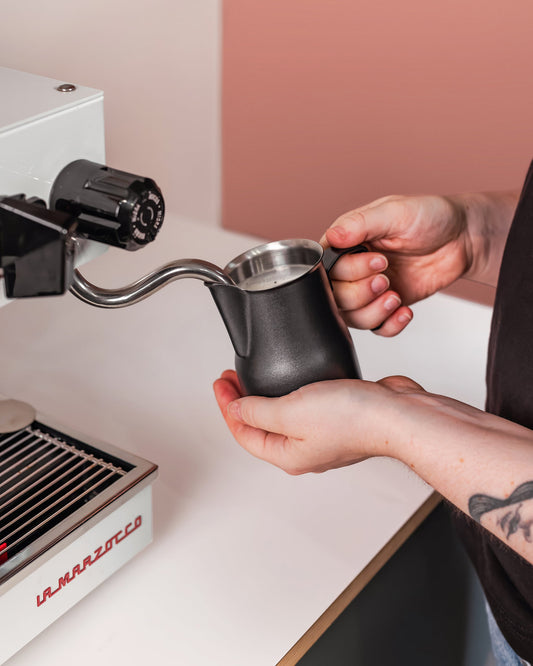
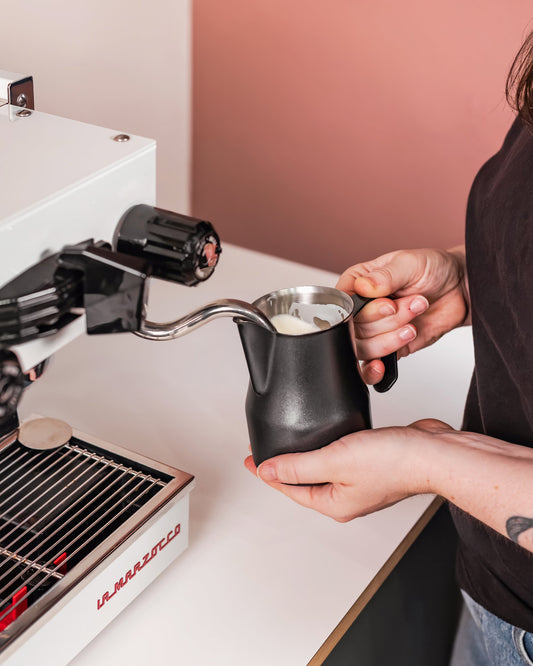
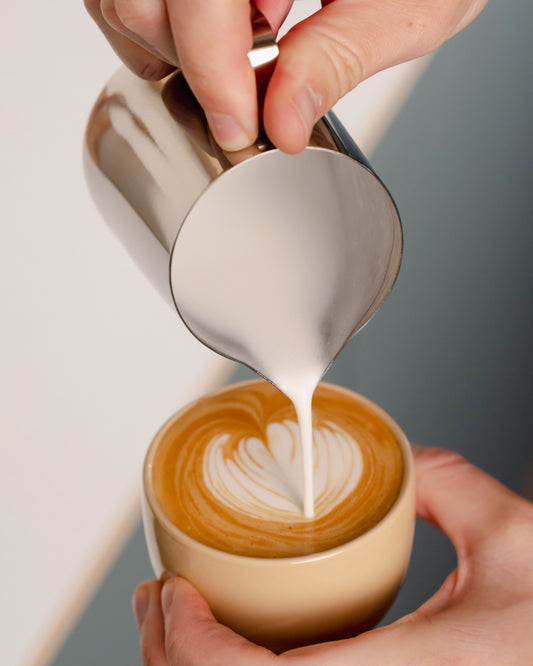
The eleven separate stainless steel pitchers and two existing pitcher sets follow the cups. The Italian pitchers have a sloping top and raised spout, with existing choices of 350, 500, or 750 ml. The Essentials pitchers have a narrower spout and choices of 350 or 550 ml in black, silver, and white. Not every size exists in every color. Choose 350 ml for a suitable small portion; compare 500 or 550 ml and possibly 750 ml when you make more milk or multiple drinks. Check the required fill level of your steam wand. Capacity is not a fixed fill amount: leave room for the moving milk.

In the general specifications, the Italian series states 70 Γ— 70 Γ— 95 mm and Essentials 68 Γ— 68 Γ— 93 mm. It is not confirmed that these are the total exterior dimensions including handle and spout for every size variant. Do not take that data as the complete width or height for 500, 550, or 750 ml. Have the exterior height and both sides including handle and spout of your version confirmed if the space around your steam wand is limited. The supplier states both series are dishwasher safe; follow the instructions for the chosen version.

The two existing Italian sets contain one 350 ml and one 500 ml pitcher, in silver or black. An extra pitcher can help with pouring over; two pitchers are not a requirement for every cappuccino and do not guarantee a design. You choose an existing set if you want to use both pitchers. The separate pitchers without a handle require a different grip and are in the separate milk pitcher route; they are not the standard addition for the chosen milk drink.

Cleaning the steam wand and milk residue

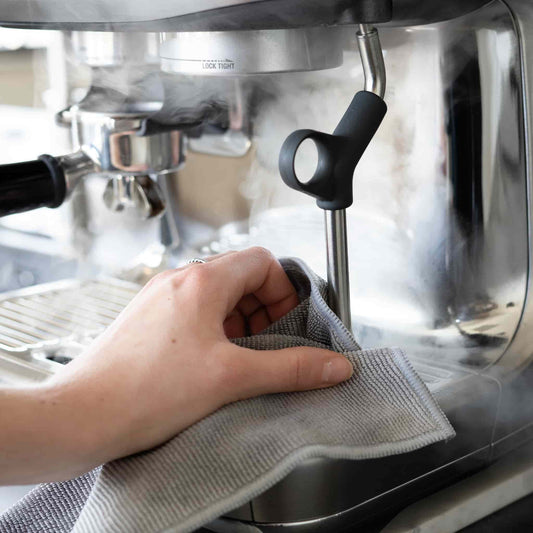
The light gray cloth choice contains two cloths of 30 Γ— 30 cm each, with 80% polyester and 20% polyamide. Keep them separate from your coffee oil cloth for the steam wand. Wash at a maximum of 40 Β°C and do not use a dryer. Follow the instruction of your machine for removing and rinsing; do not touch hot parts directly.

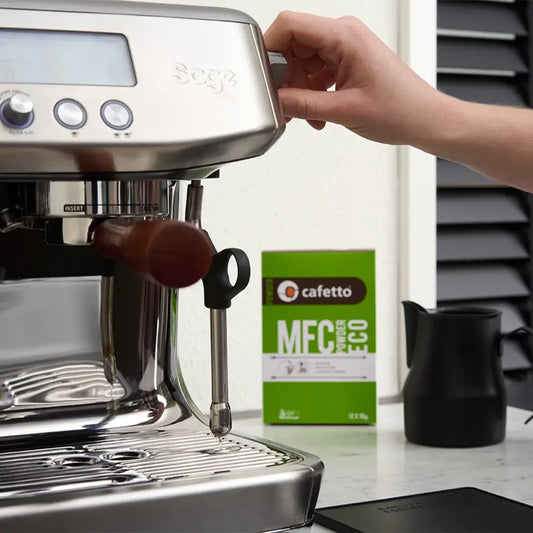
The separate Cafetto MFC milk cleaner contains twelve 10-gram sachets. Use the agent according to the label and machine instructions for the intended milk parts. A cloth cleans the outside and does not replace proper cleaning of milk residue in the system. There is no universal cleaning schedule or proven suitability for all machine parts. Backflush agents and descalers are other agents and are not added as a replacement.

Frequently Asked Questions

Is a temporarily sold-out green size still listed here?

Yes. The green cups in 60, 180 and 250 ml remain available here as separate options. A size may be temporarily out of stock at Barista Essentials. Check the current stock with the supplier; we do not guarantee a delivery date.

Can I use the green 250ml cup for a smaller milk drink?

You can do that if you want to use that cup, but you don't have to fill it to the brim. The larger capacity is not an identical replacement for 180 ml. Choose the amount of espresso and milk yourself.

How much space do the three green cups take up?

The specified dimensions are 60 Γ— 60 Γ— 50 mm for 60 ml, 80 Γ— 80 Γ— 57 mm for 180 ml and 88 Γ— 88 Γ— 65 mm for 250 ml, in width Γ— depth Γ— height. They do not have a lip. Add the height of your own scale if you place it on top.

Does a green cup make my coffee more complex?

That is not guaranteed here. Pine Green is a color choice for your coffee nook. Color is no substitute for a suitable recipe, good coffee, and careful preparation.

Should I buy one cup or a set?

You choose one individual cup per product. The 60, 180 and 250 ml options are separate choices. For the half-glazed version, current care information is limited; follow the instructions provided with your exact cup.

I have another question

Is your question not listed? Contact us. We are happy to help you choose the right product.

Collection: Pine green coffee cups: 60, 180 or 250 ml

Want to choose pine green cups to go together? My advice: start with the volume you use: 60 ml for serving small espressos, 180 ml for a smaller milk drink, or 250 ml for more volume. Don't choose a larger cup just because the desired size is temporarily sold out. Add a suitable scale or milk frother if you don't have one yet. Read the sizes and practical guide below the products.

Advice from Geert-Jan de Baristaman β€” Specialty Coffee Trainer & Barista Coach (10+ years of experience).

Dennengroen half-geglazuurd espressokopje van 60 ml op lichte achtergrond