Espresso dosing with limited space: what fits under your portafilter?

Not enough room to weigh espresso? My advice: first measure your drip tray and the clearance height with the portafilter locked in the machine. Only then choose the mini scale and a shallow cup; keep your own cup if it already fits. The mini scale with one of these five espresso cups is 69 mm in total according to the specified heights, with extra space needed to move the cup. For the stainless steel pitcher, confirmed external dimensions are missing. View the full dimensions and measurement steps below the products.

Advice from Geert-Jan de Baristaman — Specialty Coffee Trainer & Barista Coach (10+ years of experience).

Dimensions and fit: from drip tray to spout

Dimensions of all products in this collection

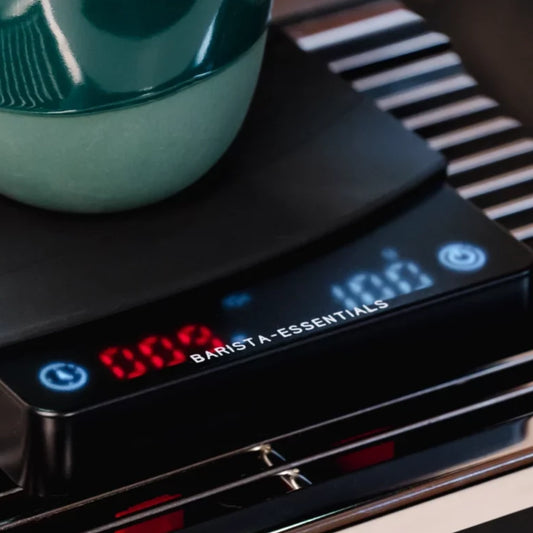
Mini coffee scale: 100 × 95 × 19 mm according to Barista Essentials; 19 mm high. Because the scale is rectangular, you are looking at two sides of 100 and 95 mm, not a diameter.

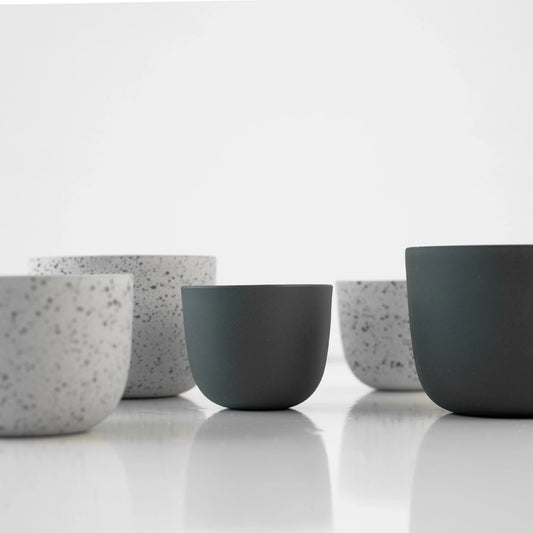
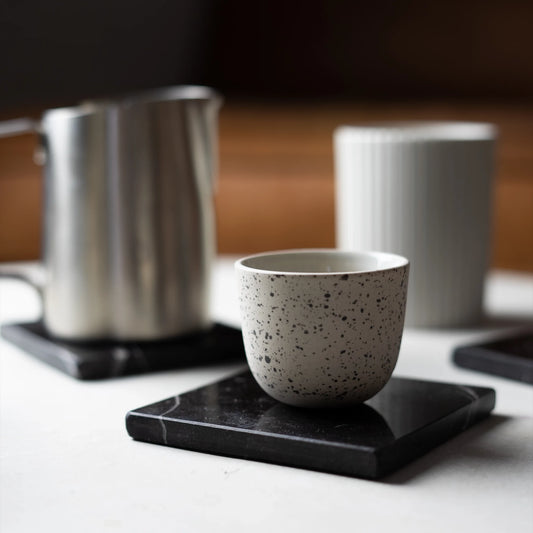
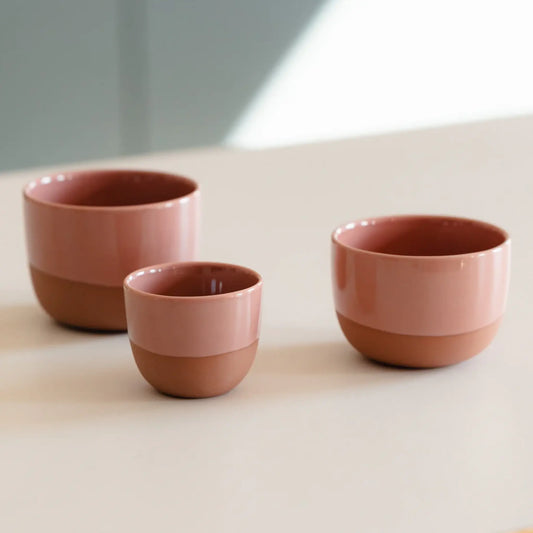
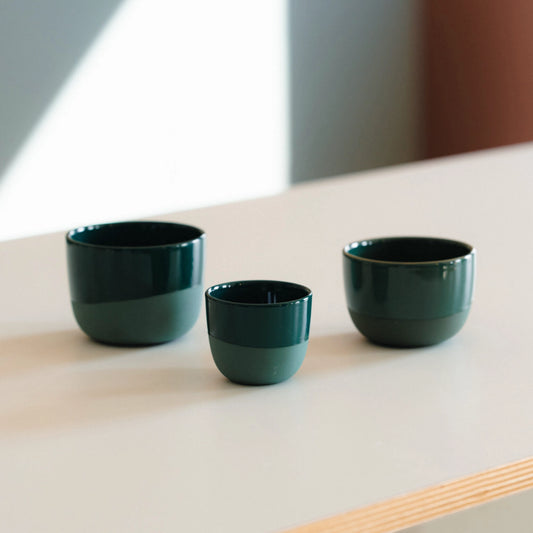
The grey and speckled 60 ml espresso cups are each 50 mm high and 60 mm in diameter according to the supplier. The half-glazed cups in sand yellow, terracotta pink and pine green each have the stated external dimensions of 60 × 60 × 50 mm. So choose based on finish and color; according to the source, these five versions offer the same height, no extra space gain.

The stated cup diameters and 60 × 60 × 50 mm do not individually confirm the maximum width including a possible handle. Check that total dimension for your space; do not infer it from the photo. The regular grey and speckled cups are porcelain. The material of the mini housing and of the half-glazed cup is not separately confirmed in all source fields. The mini offers an automatic timer/tare and USB-C charging. Use the display in grams for espresso.

For the 100 ml stainless steel espresso pitcher, the confirmed height, diameter and total width including handle and spout are missing. Therefore, the combination height with the mini scale is also unknown. Ask for the full external dimensions first. Volume in milliliters and a photo do not prove fit.

Measure with the filter holder in the machine

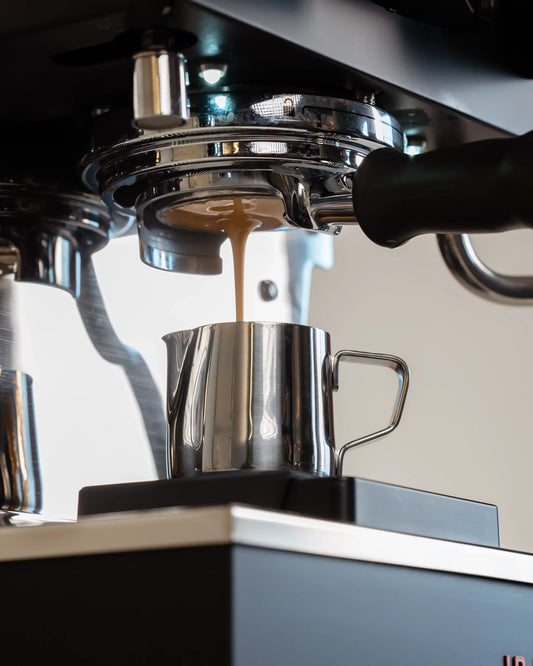
Lock the filter holder as you do for brewing coffee. Measure with a ruler or measuring tape from the drip tray to the lowest point of the spout. Then measure the usable width and depth of the drip tray. Raised edges, a drain or a round shape can make it so a scale does not stand flat, even if the external dimensions fit on paper.

The mini scale and each of the five mentioned espresso cups are 69 mm high together according to the stated heights. That is not the minimum clearance height of your machine: you need extra space to put the cup down and take it away. Also check the position of the spouts above the opening.

Do you want to drink directly from the cup?

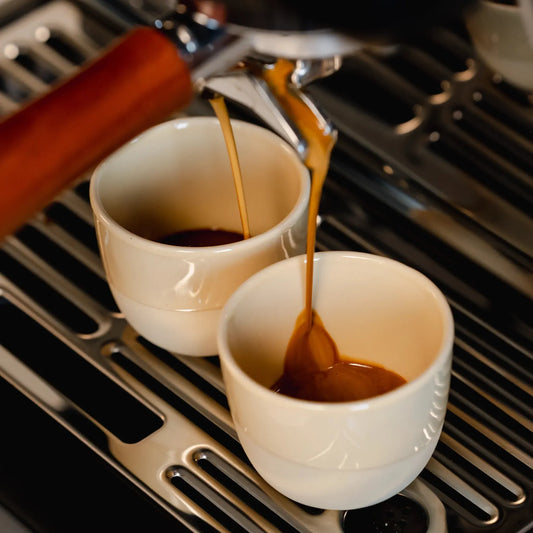
A 60 ml espresso cup is intended to serve a small coffee. Place it empty on the scale and check if it stands stably. The cup must rest completely on the scale and must not lean against the machine. Otherwise, the measurement can be affected. With a double spout, also see if both streams come out above the opening.

Choose the volume according to the coffee you want to drink. A volume of 60 ml tells you how much fits in, but not how high or wide another random cup is. So use the actual external dimensions. A handle can also take up space or make placing it under the spout more difficult.

Does your tall glass not fit? Catch the espresso separately

You can first catch the espresso in the 100 ml stainless steel espresso pitcher and then pour it into your taller glass. That is a different way of working than drinking directly from the catch cup. The pitcher is for catching and pouring; it is not a milk pitcher to froth milk with a steam wand. Only choose this route for your setup once the external dimensions are confirmed.

Also check if you can weigh comfortably

Place your empty cup or pitcher on the scale and set the weight to zero. During brewing, you read how many grams of espresso are running into it; the timer shows the brewing time. A volume in milliliters is something different than a weight in grams: the crema layer also takes up space. The scale gives you numbers to compare with a next brewing session, not an automatic taste guarantee.

Look before you choose if the display remains visible and you can reach the controls. You must be able to take the cup away without shifting the scale. If you have more space, then in the collection of coffee scales you can also view the larger versions. Only buy another size when you know which dimension makes the difference in your setup.

Do you want to keep your existing cup?

If the whole combination already fits well, you do not need to buy another cup. If you mainly want to weigh the amount of ground coffee beforehand, that can also be done on the countertop. View the choice guide for dosing coffee for that separate action. You then do not automatically weigh how much espresso is running into the cup during brewing.

Frequently Asked Questions

Does the mini scale fit on every small espresso machine?

That depends on your own drip tray. The specified external dimensions are 100 × 95 × 19 mm. Measure the width, depth, and clearance height with the portafilter locked in the machine. Then check whether your cup fits on the scale under the spout and whether the scale is supported evenly.

Can I keep using my existing cup?

Yes, as long as the cup fits with the scale, stands freely from the machine, and you can easily place it down and remove it. Measure your own cup, including any handle or spout. You can also weigh the beans on the worktop beforehand; that only measures your dose, not the espresso that flows into the cup during brewing.

Should I measure an espresso in grams or milliliters?

Use grams if you want to weigh the amount of espresso brewed. Crema counts towards the volume, so a milliliter measurement will differ slightly from the weight. First, place the empty cup on the scale and tare it.

Is the stainless steel pitcher short enough for my leak tray?

That cannot be determined yet. For the exact 100 ml stainless steel version, the height, diameter, and total width including the handle and spout are not confirmed. Ask Barista Essentials about this and add the 19 mm of the mini scale to the jug height. Also allow space to place and remove it.

Can I remove the drip tray to make more space?

Before doing so, check your machine's manual. This collection assumes that measurements are taken with the drip tray in place. Without the drip tray, water and coffee may end up in an unintended place. Do not assume a different setup based on a photo or general advice.

I have another question

Is your question not listed? Contact us. We are happy to help you choose the right product.

Collection: Espresso dosing with limited space: what fits under your portafilter?

Not enough room to weigh espresso? My advice: first measure your drip tray and the clearance height with the portafilter locked in the machine. Only then choose the mini scale and a shallow cup; keep your own cup if it already fits. The mini scale with one of these five espresso cups is 69 mm in total according to the specified heights, with extra space needed to move the cup. For the stainless steel pitcher, confirmed external dimensions are missing. View the full dimensions and measurement steps below the products.

Advice from Geert-Jan de Baristaman — Specialty Coffee Trainer & Barista Coach (10+ years of experience).

Grijs espressokopje op miniweegschaal onder de filterdrager