Barista Essentials tools: choose for your coffee routine

Which tool will help you with your next coffee? My advice: start by weighing your coffee if you still measure by feel. For distributing coffee, choose a WDT tool with a holder and a suitable dosing ring, unless you already have one. For frothing milk, choose a suitable pitcher, along with cloths and a suitable milk cleaner. Only add what helps you with your technique; you don't need to buy everything. Read the buying guide and practical details below the products.

Advice from Geert-Jan de Baristaman — Specialty Coffee Trainer & Barista Coach (10+ years of experience).

From weighing coffee to cleaning: choose what you need

First choose the step you want to improve

A new tool is only useful if you know what you are using it for. Do you need to weigh better, is coffee falling next to the filter basket, or do you want to froth milk? Start with that question. This overview deliberately includes different types of aids. You do not need to buy a complete set of equipment to get started.

Geert-Jan de Baristaman uses the Barista Essentials range almost daily during barista workshops. His starting point for this selection: first understand what you already have and what challenges you face. Then choose a suitable tool. An accessory does not take away your choice of beans, grind, and amount of coffee.

Weighing: know how much coffee and espresso you use

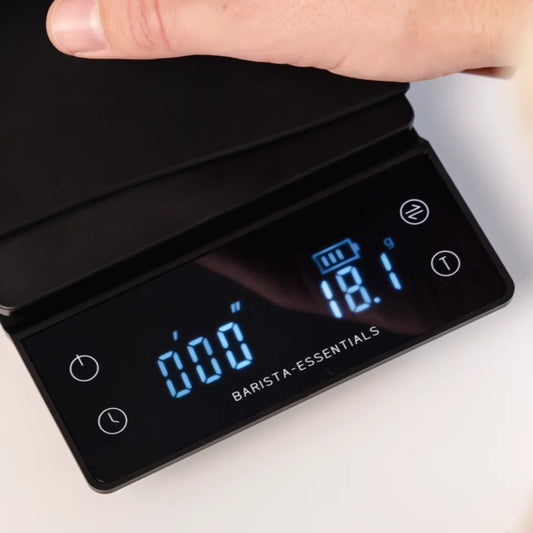
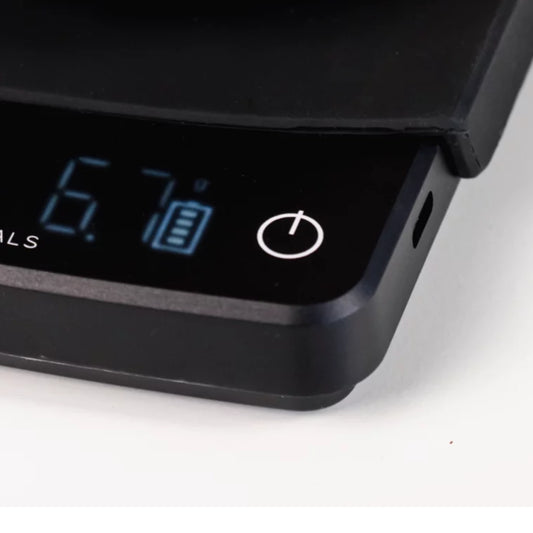
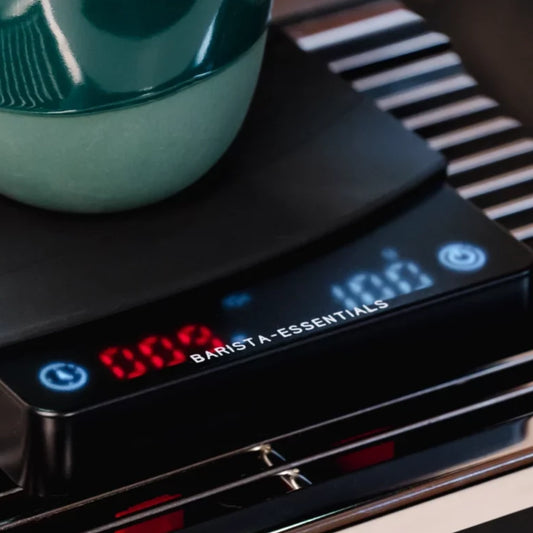
A coffee scale shows the weight; the timer shows the brewing time. The basic scale is 183 × 129 × 27 mm. The version with an auto-timer measures 128 × 118 × 20 mm and the mini 100 × 95 × 19 mm. These are length, width, and height. Measure how much space you have under the filter holder and add the height of your cup. A small weighing platform does not automatically mean that every combination fits.

Choose the basic version if you want to operate the timer yourself. The other two offer automatic functions. If you want to view the dimensions and operation side by side, go to the espresso coffee scales. There you can make a more focused choice before going to the supplier.

Grinding and preparing: three tools with a different task

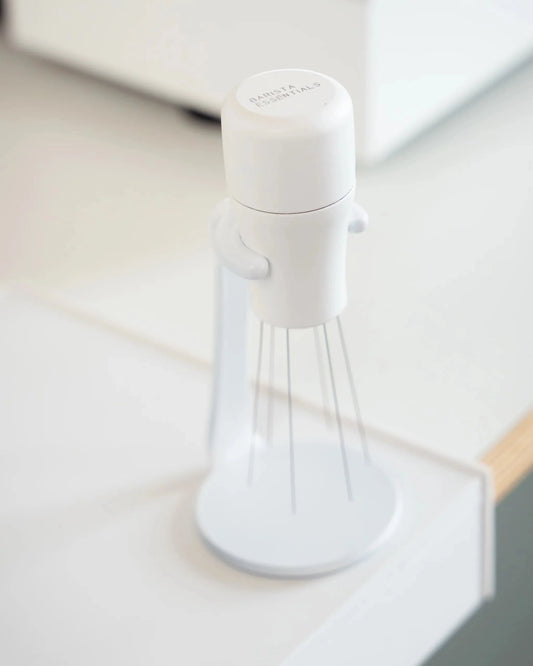
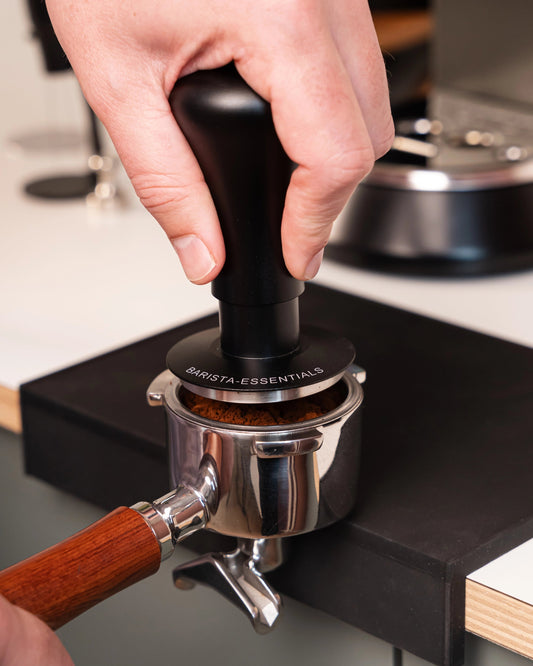
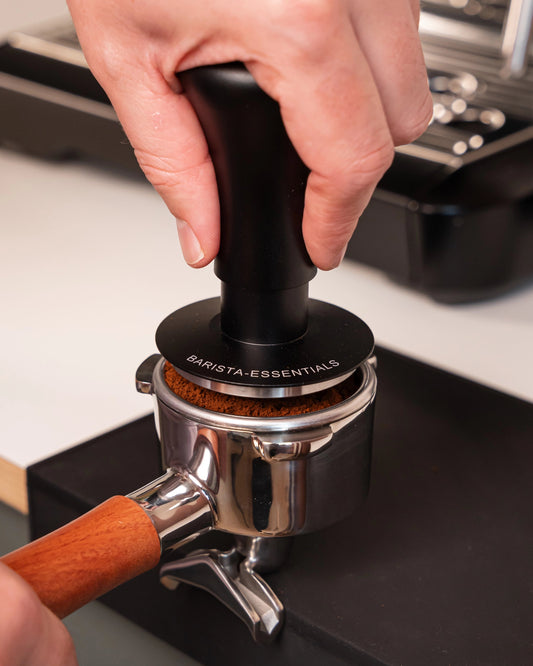
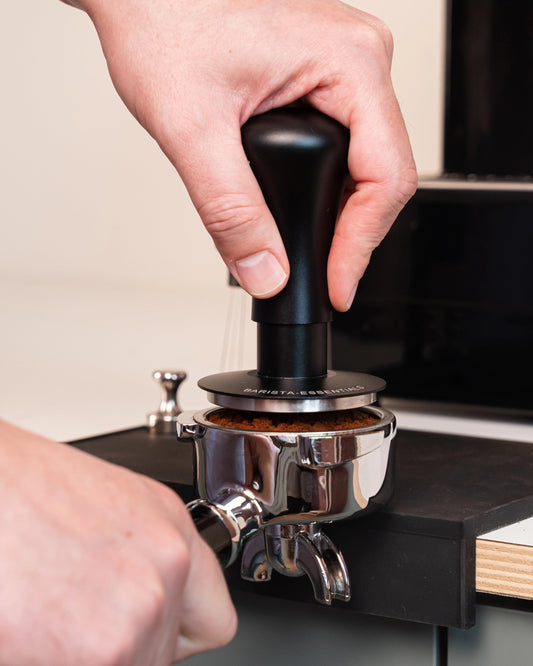
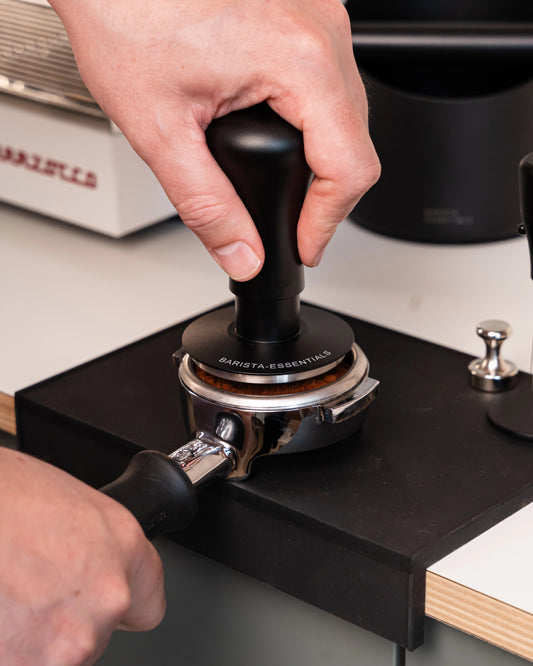
A dosing ring gives the loose coffee extra space above the filter basket. A WDT tool loosens clumps with thin needles. A tamper presses the distributed coffee down. So they each do something different. Do not automatically buy all three: see which action is inconvenient for you.

For the dosing rings and tampers the size must be correct. This selection includes 51, 53.3, 58 and 58.5 mm. Check the exact machine model and the filter basket. Within one brand, multiple connections can occur. The size of a tamper or ring is also not always the same number as the nominal filter holder size.

For suitable Sage machines with a built-in grinder, there is also a separate dosing ring with wings and activation tab in between. It differs from the general magnetic 53.3 mm ring. Check Express, Pro, Touch and Impress separately; do not choose based on the word Sage alone. Use the product page and the current supplier information to confirm the version.

The WDT choices include tools with and without a holder and a separate holder for an existing suitable tool. View the WDT tool selection guide. If you want a regular hand tamper or a combination with a distributor, you will find it via the relevant collection. The click tampers here are a deliberate partial selection, not a statement that other tampers are less effective.

Protecting your work surface and catching coffee pucks

You place a flat mat on the work surface; a corner mat also uses the edge. The flat version has a working surface of 20 × 15 cm. The small corner mat is stated as 140 × 125 mm. The source information about the thickness is not the same everywhere, therefore we do not use it here as a decisive measure. Also check the shape of your counter edge with a corner mat. More sizes and versions are available at the tamper mats.

A round knock box with a diameter of 11 cm is a different choice than the larger 14 cm. The square box measures 16 × 16 × 12 cm. The small knock drawer measures 28 × 18 × 6 cm. A drawer can stand under a suitable separate grinder, but check the base size and the permitted setup. With a machine with a built-in grinder, a separate box may make more sense. View the knock boxes and knock drawers for that comparison.

Milk and cups: choose based on the portion you make

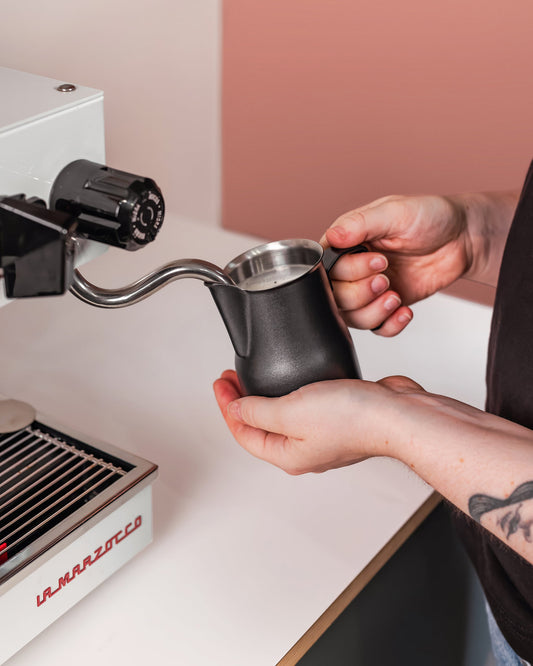
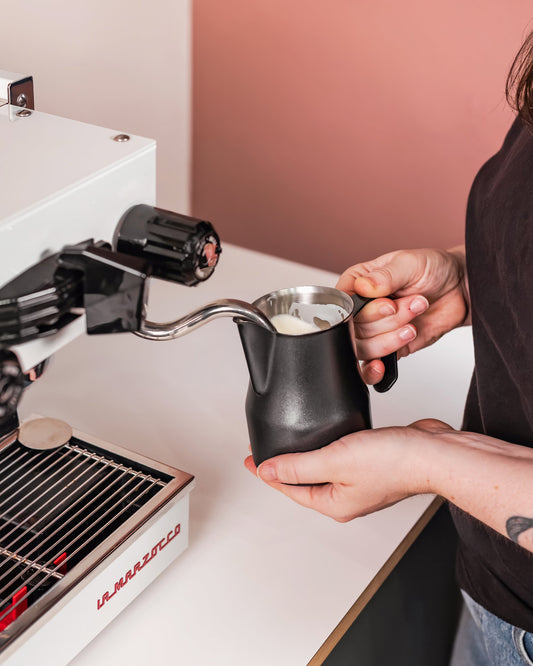
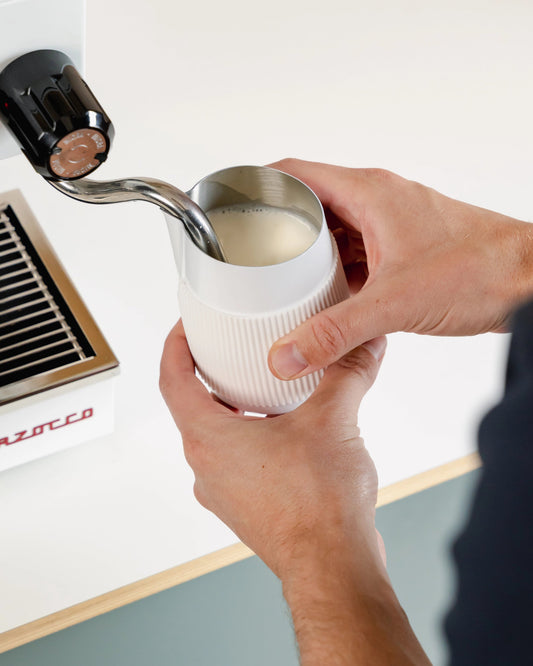
The stainless steel milk jugs in this selection have a capacity of 350, 500 or 750 ml. That is the capacity of the jug, not the amount of milk you can easily froth. The milk needs to be able to move and takes up more space during frothing. A larger jug also requires suitable steam power. Choose a small jug for a small portion and a larger one when you really want to froth more milk at the same time.

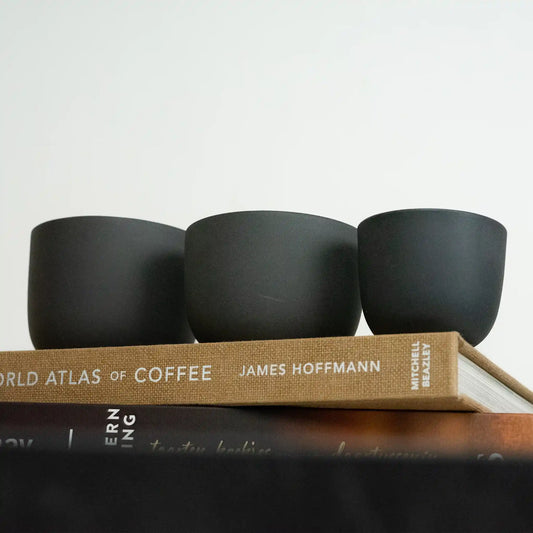
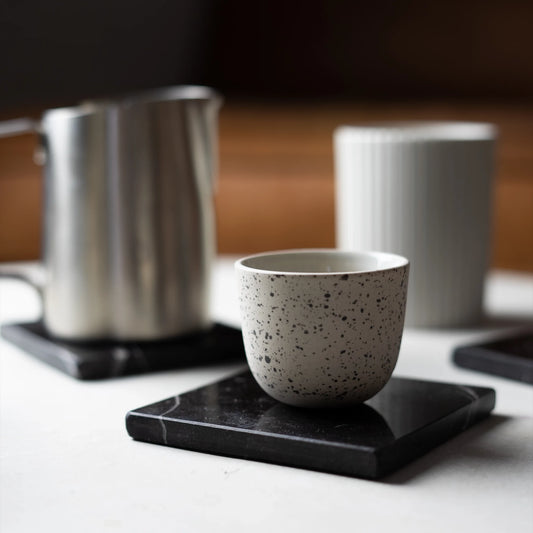
The milk jug collection helps you choose the right jug size. The grey cups below have a capacity of 60, 180 and 250 ml: for espresso, cappuccino or a larger milk drink. Other colors and finishes can be found via the coffee cups. The capacity in milliliters does not say how high or wide a cup with a handle is. Measure that separately if the space under your spout is limited.

Keeping clean: choose the right tool for the right place

A brush for loose grounds is used differently than a group head brush. The wide wooden coffee brush is 13 cm wide and intended for accessible surfaces. Turn the grinder on before working on it and follow the manual. The cloths are available as two separate grey cloths or as a color-separated set of six. Keep a cloth with milk residues separate from the cloth for your filter holder and work surface.

Cleaning agents are also not interchangeable. The selection contains group head cleaner, milk system cleaner, descaler and coffee grinder cleaner. Choose based on the dirt and the component. Backflush only if the machine manufacturer allows it, and use cleaning granules only in a grinder suitable for that. A general maintenance schedule does not replace the manual of your device. Via the cleaning agents you can read further per task.

Storing beans and learning more

For whole beans you will find the Pro tins for 250 and 500 grams and the Lite for 250 grams. Both lids can automatically create a vacuum; Pro adds a date indicator and information about temperature and humidity. You store these glass versions in a dark place. Do not put ground coffee in it: it can end up in the pump system. View the vacuum storage tins if storage is your main question.

Does your espresso continue to taste inconsistent while your tools already fit? Then an explanation about adjustment can help more than another accessory. In the online module about the three golden rules of espresso Geert-Jan further explains the basics. You buy the tools in this collection separately from Barista Essentials; this is not a pre-assembled package.

You will find here the existing color and capacity choices within weighing, preparing, frothing milk, serving, knocking, cleaning and storing beans. A color is not another fit. The milk jugs include Italian 350/500/750 ml, the models with a handle of 350/550 ml and the handleless 400ml choices. The latter requires a different grip. Capacity is not filling advice and not an outside dimension. Full outside dimensions including handle and spout are not confirmed for every version; check those with the supplier if space or grip is decisive.

For beginners Geert-Jan advises the WDT version with a holder, with a suitable ring unless you already have it. Loosen clumps with small, gentle movements through the ground coffee. The holder gives the tool a fixed storage place; the ring helps keep coffee inside the basket. This can help the distribution and reduce the chance of channeling, without a guarantee of results. A separate holder is an addition to an existing suitable tool.

With a milk jug you can choose cloths and suitable milk cleaner for the same milk operation. Give every cloth a fixed task and follow the instructions of your machine for the agent. Spare heads are for the corresponding group head brush: five replacement heads, not five complete brushes. A new color or larger packaging is not a reason to replace still usable tools.

With the storage tins there are different Lite and Pro versions, glass or stainless steel walls and 250/500g choices. Those are supplier designations for bean storage; the actual amount also depends on the beans. The full outside dimensions per added color/version are not separately confirmed here. Measure your shelf or cabinet before choosing a larger tin.

Frequently Asked Questions

Which barista tool should I buy first?

Start with what you are currently missing. If you cannot yet weigh the amount of coffee and espresso, look for a scale first. If you make a mess while grinding, research a suitable dosing ring. If your existing equipment is complete, do not buy just to expand the collection.

How do I know which tamper or dosing ring fits?

Check your exact machine model, filter holder and filter basket. The selected sizes are 51, 53.3, 58 and 58.5 mm. Some built-in grinders require a special winged ring. A brand name or diameter alone is insufficient. For size selection, go to the dosing rings or tampers.

Are the products in this collection together one starter set?

No. They are separate products with different functions, sizes, and designs. Choose what is missing from your coffee corner. For example, you don't need to buy three scales or multiple tamper sizes.

Which milk pitcher and which cup go with my drink?

Choose the jug based on the amount of milk you want to froth and the steam power of your machine. The jugs here have a capacity of 350, 500 or 750 ml. The selected cups have a capacity of 60, 180 or 250 ml. These are not external dimensions. Check the height and width, including the handle, separately if you want to know whether a cup fits under the spout.

Can I use all cleaning products in any machine?

No. Descalers, group head cleaners, milk system cleaners and grinder cleaners have different functions. Always check the manual for your machine or grinder. Backflushing and the use of cleaning tablets are not permitted for all devices. Choose the right product from the cleaning products section.

I have another question

Is your question not listed? Contact us. We are happy to help you choose the right product.

Collection: Barista Essentials tools: choose for your coffee routine

Which tool will help you with your next coffee? My advice: start by weighing your coffee if you still measure by feel. For distributing coffee, choose a WDT tool with a holder and a suitable dosing ring, unless you already have one. For frothing milk, choose a suitable pitcher, along with cloths and a suitable milk cleaner. Only add what helps you with your technique; you don't need to buy everything. Read the buying guide and practical details below the products.

Advice from Geert-Jan de Baristaman — Specialty Coffee Trainer & Barista Coach (10+ years of experience).

Filterdrager met gemalen koffie op een Barista Essentials-weegschaal, met uitklopbak en tamper op de achtergrond