Espresso filter baskets: choose size, basic or precision

Which filter basket do you need for your espresso? Start with the size of your own portafilter, and then choose between a standard single-wall basket, a precision basket, or a convex version. Keep your current basket if it works well. Geert-Jan helps you choose below and explains why a different shape requires re-dialing in.

Advice from Geert-Jan de Baristaman. You order from Barista Essentials; the supplier handles payment, delivery, and returns. Through the partner link, Geert-Jan may receive a commission without you paying any more.

Choose your box based on your level and the step you want to learn

Start with what you already have

Another basket is not a mandatory first purchase. If you enjoy the espresso you get with the included single-wall basket, keep practicing with that. When switching from a press filter basket, you need to adjust the grind yourself more precisely. This requires freshly ground coffee and a grinder that can grind fine enough and in small increments. A new basket won't fix old beans or an incorrect grind.

A standard single-wall basket

If you want a simple base for a double espresso, the standard filter baskets in 51, 54 and 58 mm are a logical start. The supplier lists 16–20 grams as the recommended range. How much space the coffee takes up varies by bean and grind. Leave enough room above the coffee; do not fill blindly to a fixed gram amount.

Precision: one or two layers?

The precision baskets are available in all three sizes with one or two layers. The two-layer basket has an extra filter layer of 0.18 mm; this is not a dual-wall press filter basket. The supplier positions it as the more accessible precision choice. The single-layer basket reacts more sensitively to small changes in grind and preparation. Choose it especially if you want to compare deliberately and readjust. The stated capacity is 17–19 grams; that is a starting point, not a mandatory recipe.

Convex is a different shape

A convex filter basket has a different internal shape. The available sizes are 54 and 58 mm. It is intended for experimenting with a suitable naked portafilter. It requires readjusting and does not automatically fit in a closed filter holder. Only buy it if you want to explore that way of working; a more expensive shape does not guarantee a tastier cup.

Fit is more than the diameter

Check your exact machine and the filter holder you actually use. A nominal diameter does not say enough about depth, rim, mounting, and any plastic insert. For the precision baskets, the supplier mentions removing the insert for original De’Longhi and Sage filter holders. Check the instructions for your own combination beforehand and do not force any part. The full external dimensions of all combinations are not confirmed; a photo does not prove fit.

Work clean and compare one change at a time

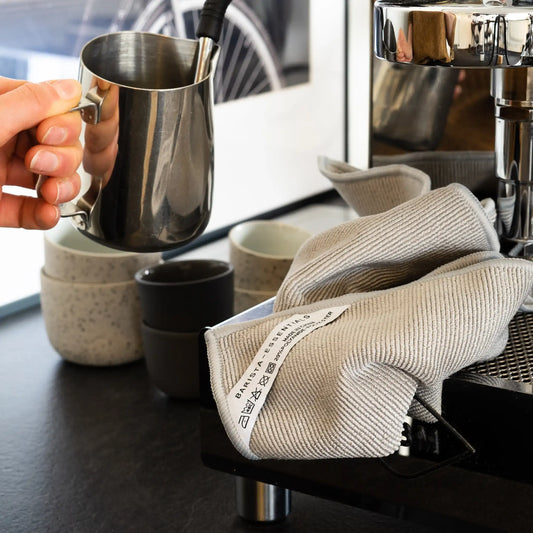
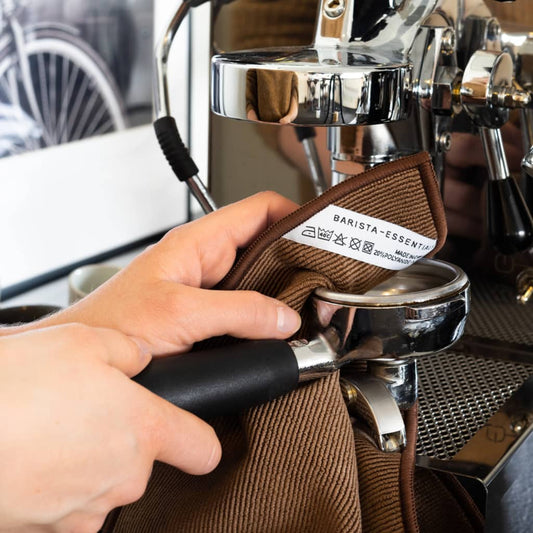
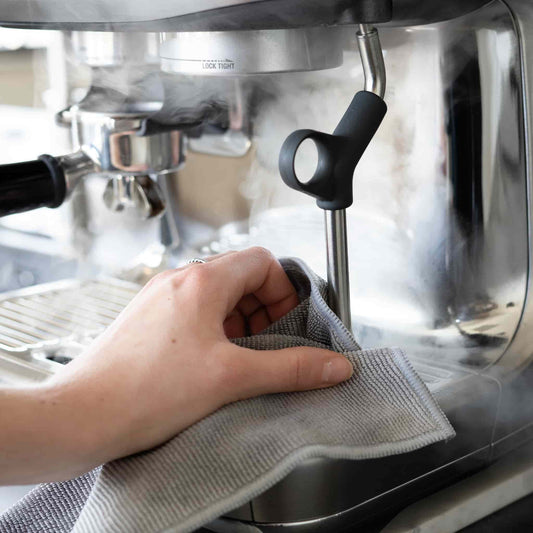
Rinse the used basket according to the maintenance instructions and dry it for the next dose with a clean barista cloth. The two-packs are available in three colors; the six-piece set helps you keep your cloths for different tasks separate. Do not use a cloth for coffee grounds for your steam wand at the same time.

When comparing, use the same bean and start with a fixed dose. Then change one setting and taste the difference. A suitable tamper must be able to move freely in the chosen basket. For replacing the entire holder, use the separate portafilter selection guide.

A blind filter has a different task

A blind filter has a closed bottom and is exclusively for the prescribed cleaning of a suitable machine. You do not make coffee with it. That is why blind filters are not listed among the brewing baskets. Read about the 58mm blind filter when that maintenance method is suitable.

My advice as Geert-Jan: first choose a suitable base and learn to adjust your espresso with it. Only get a precision or convex basket when you know which change you want to explore. On the product pages you will find the specific version; at Barista Essentials, check the chosen size and conditions again before ordering.

Frequently Asked Questions

Do I need a new filter cartridge right away?

No. If your current filter works well and suits your coffee, keep using it. Replace it for a specific reason: damage, a different required capacity, or a deliberate switch from press filter to single-wall.

Are two layers the same as dual-wall?

No. The two-layer precision pod here has an extra filter layer. A dual-wall pressure filter pod builds up the flow differently. Choose based on the described design, not just on the word ‘two’.

Does 58 mm fit every machine with that size?

Not automatically. Also check the rim, depth, and filter holder construction. A replacement filter holder may differ from the original. If in doubt, have the supplier confirm your specific combination.

Can I keep my current prescription with a convex lens?

Expect to dial in again. The other form may require a different grind and dose. Keep your bean the same, change one setting at a time, and assess the flavor. Use a suitable naked portafilter.

Why are there cloths between the containers?

A clean and dry portafilter is essential when preparing your next espresso. The cloths help with this step. If you already have suitable, clean cloths, you don't need to buy an extra set.

I have another question

Is your question not listed? Contact us. We are happy to help you choose the right product.

Collection: Espresso filter baskets: choose size, basic or precision

Which filter basket do you need for your espresso? Start with the size of your own portafilter, and then choose between a standard single-wall basket, a precision basket, or a convex version. Keep your current basket if it works well. Geert-Jan helps you choose below and explains why a different shape requires re-dialing in.

Advice from Geert-Jan de Baristaman. You order from Barista Essentials; the supplier handles payment, delivery, and returns. Through the partner link, Geert-Jan may receive a commission without you paying any more.

RVS convex filterbakje met taps toelopende binnenkant